Table of Contents
Why Rock Breaking Is Becoming the Biggest Bottleneck in Mining Projects
If you are involved in mining, tunneling, or large-scale excavation, you already know that drilling and blasting are only part of the job. The real challenge often starts after blasting—when oversized rock, hard formations, and compacted materials must be broken down into manageable sizes.
This is where many projects begin to lose efficiency.
In real underground and surface mining operations, secondary breaking can account for a significant portion of total operational downtime. Industry discussions on platforms like Mining Technology and engineering reports from Engineering News-Record consistently highlight one key issue: inefficient rock breaking leads to cascading delays in loading, hauling, and processing.
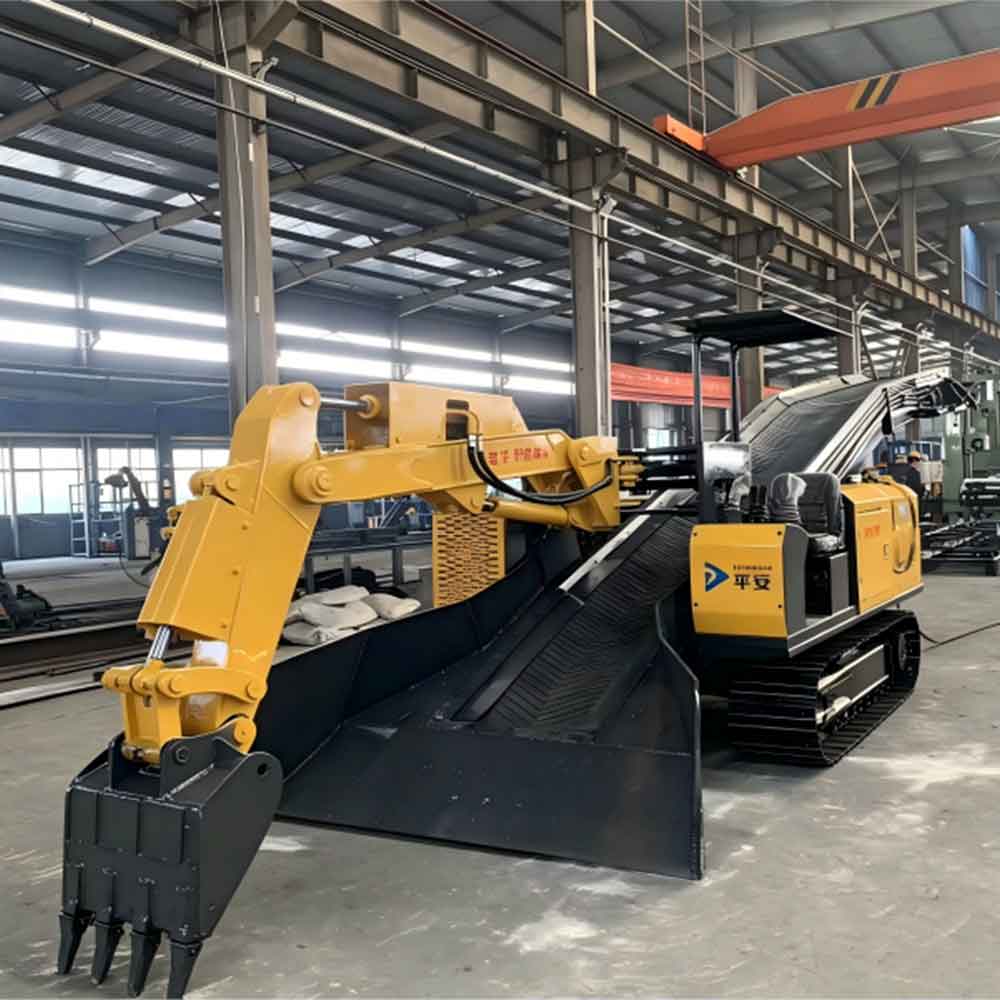
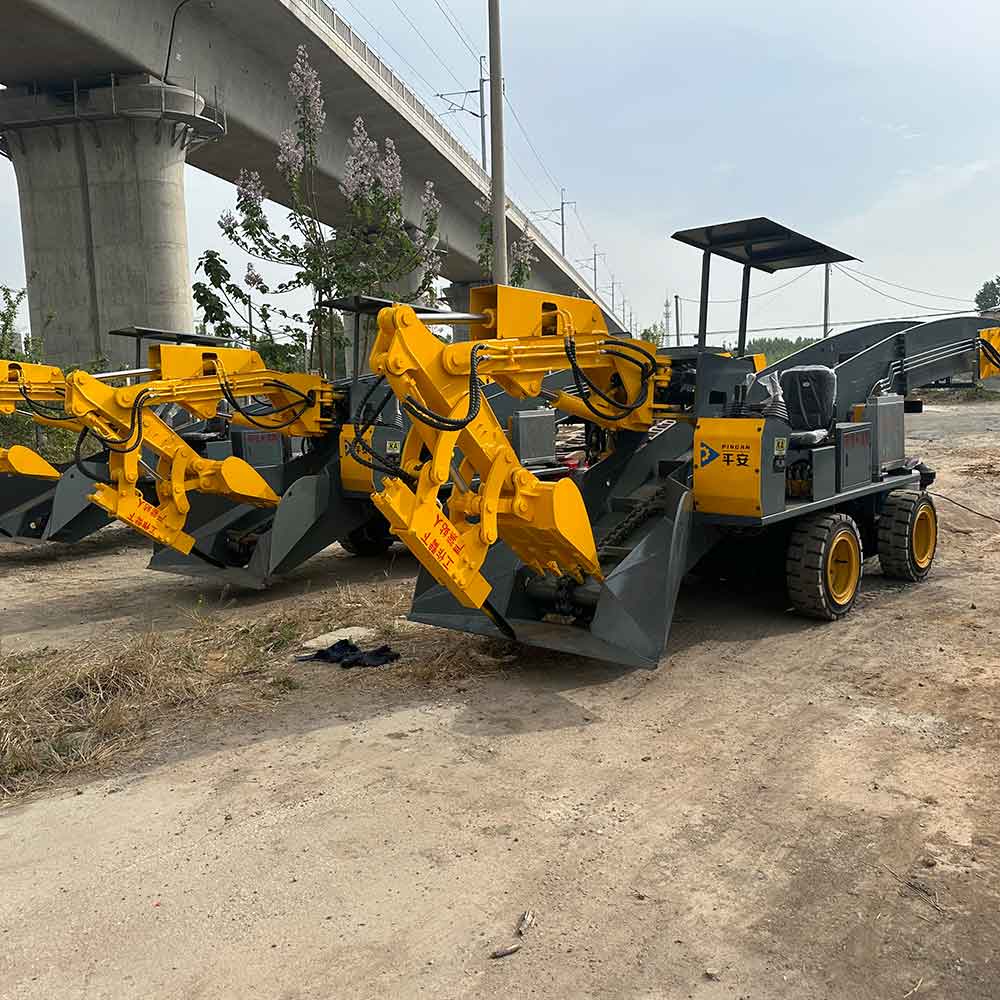
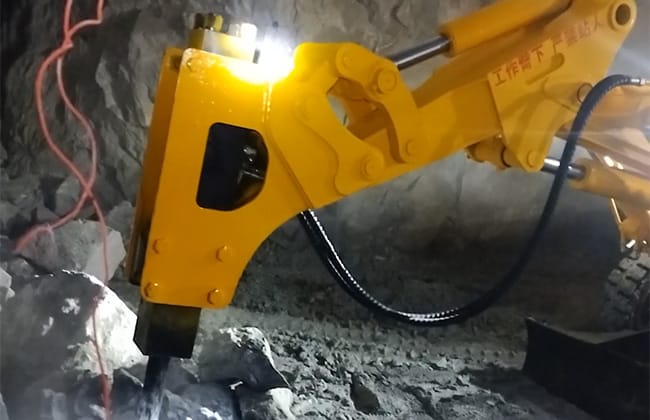
The mining tracked hydraulic breaker is designed specifically to solve this problem by providing mobile, high-impact, and continuous rock breaking capability in demanding environments.
Unlike handheld or stationary breakers, tracked hydraulic systems allow you to move directly into the working face, reducing relocation time and increasing operational continuity.
What Is a Mining Tracked Hydraulic Breaker?
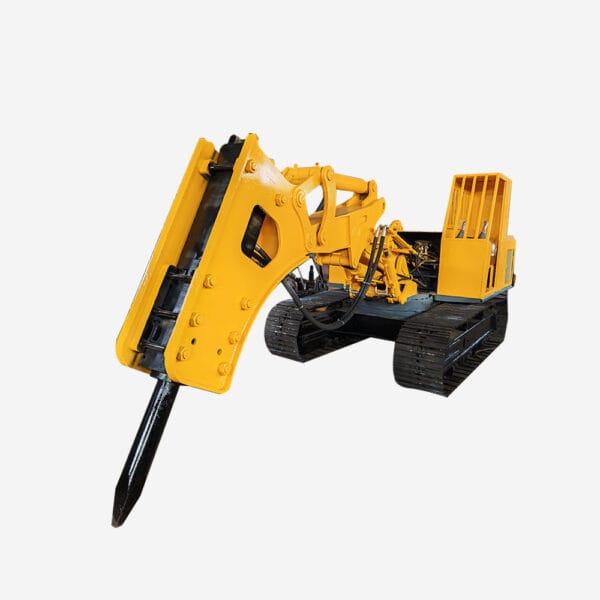
A mining tracked hydraulic breaker is a mobile rock-breaking machine mounted on a tracked chassis and powered by a hydraulic impact system. It is designed to break:
- Oversized blasted rock
- Hard rock formations
- Compact ore blocks
- Tunnel obstructions
- Secondary crushing material
Why Tracked Design Matters in Mining Operations
One of the biggest limitations of traditional hydraulic breakers is mobility. Fixed or semi-mobile systems require repositioning support, which reduces productivity.
Tracked hydraulic breakers solve this by combining:
1. Full Mobility in Rough Terrain
The tracked chassis allows movement across:
- Loose rock piles
- Uneven mining floors
- Muddy excavation zones
- Sloped underground paths
2. Direct-to-Face Operation
Instead of transporting material to a breaker, the machine moves directly to the rock source.
3. Reduced Setup Time
No external rigging or relocation systems are needed.
4. Continuous Workflow Capability
Breaking can continue while loaders and trucks operate in parallel.
Engineering Structure Behind Hydraulic Breaking Power
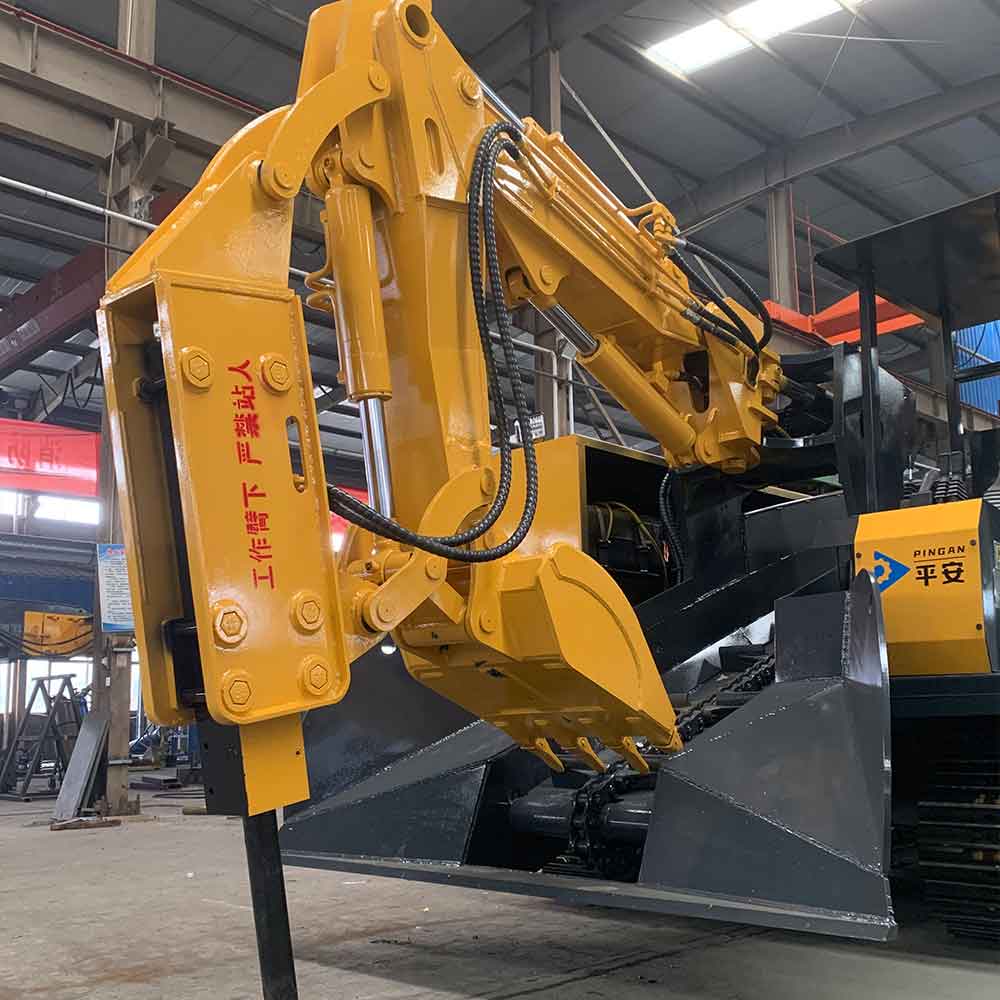
The effectiveness of a mining tracked hydraulic breaker comes from its hydraulic impact system combined with reinforced structural engineering.
High-Pressure Hydraulic System
Hydraulic energy is converted into rapid impact force, allowing repeated high-energy strikes on hard rock surfaces.
Reinforced Boom and Arm System
Designed to withstand continuous vibration and impact stress in mining environments.
Impact Tooling System
Specialized chisel tools focus force into small surface areas to maximize fracture efficiency.
Stabilized Track Base
Ensures balance during high-impact operations, reducing machine recoil and improving precision.
Key Advantages in Real Mining Applications
1. Eliminates Oversized Rock Bottlenecks
After blasting, oversized rock is one of the biggest obstacles in excavation workflows. If not broken quickly, it blocks loading equipment and slows transportation cycles.
A tracked hydraulic breaker solves this by immediately reducing rock size at the source.
2. Improves Loading Efficiency
When rock is properly broken, downstream equipment such as loaders and trucks operate more efficiently with fewer interruptions.
This creates a smoother material flow across the entire mining chain.
3. Reduces Equipment Idle Time
In many mining operations, loaders often wait for rock to be broken before they can continue working. A mobile breaker eliminates this waiting period.
4. Enhances Safety in Hazardous Zones
Manual secondary breaking exposes workers to:
- Falling rock
- Dust exposure
- Unstable surfaces
Mechanized breaking reduces direct human involvement in dangerous zones.
Real-World Case Example: Mining Workflow Optimization
In a mid-scale mining excavation scenario, operations initially relied on stationary breaking methods.
Before Optimization:
- Frequent equipment repositioning delays
- Rock accumulation at excavation face
- Loader idle time up to 25–30% of shift
- Inefficient material flow
After Introducing Tracked Hydraulic Breaker:
- Continuous breaking at excavation face
- Loader idle time reduced significantly
- Material flow became consistent
- Secondary crushing delays minimized
The biggest improvement was not only speed but also workflow synchronization between breaking and loading operations.
Comparison Table: Traditional vs Tracked Hydraulic Breaker
| Factor | Traditional Breaker | Mining Tracked Hydraulic Breaker |
|---|---|---|
| Mobility | Limited | High |
| Setup Time | Long | Minimal |
| Rock Handling Efficiency | Moderate | High |
| Workflow Continuity | Interrupted | Continuous |
| Labor Requirement | Higher | Lower |
| Safety Exposure | Higher | Reduced |
| Terrain Adaptability | Limited | Excellent |
Where Mining Tracked Hydraulic Breakers Are Used
Surface Mining Operations
- Overburden rock breaking
- Ore fragmentation
- Secondary crushing operations
Underground Mining
- Tunnel face rock reduction
- Blockage removal
- Oversized material processing
Infrastructure Excavation
- Tunnel construction
- Rock trenching
- Foundation excavation support
Technical Factors You Should Evaluate Before Selection
Impact Energy Requirements
Different rock hardness levels require different hydraulic impact force ranges.
Mobility Requirements
Tracked systems are preferred for highly uneven terrain or continuous movement needs.
Boom Reach and Working Radius
Ensure the machine can access full working face without repositioning.
Hydraulic System Stability
Stable hydraulic flow ensures consistent breaking performance.
Maintenance Accessibility
Easy access to hydraulic components reduces downtime.
Maintenance Strategy for Long-Term Performance
To ensure operational reliability in harsh mining environments, maintenance is essential.
Daily Checks
- Hydraulic hose inspection
- Tool wear condition
- Track system condition
Weekly Maintenance
- Lubrication of moving joints
- Hydraulic pressure calibration
- Cooling system inspection
Monthly Maintenance
- Structural bolt tightening
- Full system diagnostic check
Proper maintenance significantly extends machine lifespan and reduces unexpected downtime.
Industry Trend: Why Mobile Hydraulic Breaking Is Growing
Across industry platforms like International Mining and engineering discussions on LinkedIn, professionals are highlighting a key shift:
Mining operations are moving toward continuous-flow excavation systems.
This means breaking, loading, and hauling must operate in synchronized cycles without interruption.
Tracked hydraulic breakers fit perfectly into this trend by eliminating relocation delays and improving cycle integration.
Why the Mining Tracked Hydraulic Breaker Matters
This machine is not just a breaking tool—it is a workflow optimization system.
It improves:
- Excavation speed
- Material flow efficiency
- Equipment utilization rates
- Safety conditions
- Operational continuity
In modern mining environments, efficiency is no longer optional. It is a competitive requirement.
Final Insight
The mining tracked hydraulic breaker represents a major step forward in excavation efficiency. By combining mobility with high-impact breaking power, it removes one of the most common bottlenecks in mining operations—secondary rock processing.
For modern mining projects where time, safety, and productivity matter, this equipment is no longer optional. It is a core part of an optimized underground and surface workflow system.
FAQ
What is a mining tracked hydraulic breaker used for?
It is used to break oversized rock and hard materials in mining, tunneling, and excavation environments.
Why use a tracked system instead of fixed breakers?
Tracked systems offer mobility, allowing direct operation at the excavation face without repositioning delays.
Can it be used underground?
Yes, it is widely used in underground mining and tunneling operations.
What is its biggest advantage?
Continuous mobility combined with high-impact breaking efficiency.
Does it improve safety?
Yes, it reduces the need for manual rock breaking in hazardous zones.
What industries use it?
Mining, tunneling, hydropower, and infrastructure excavation industries.