
Table of Contents
Introduction
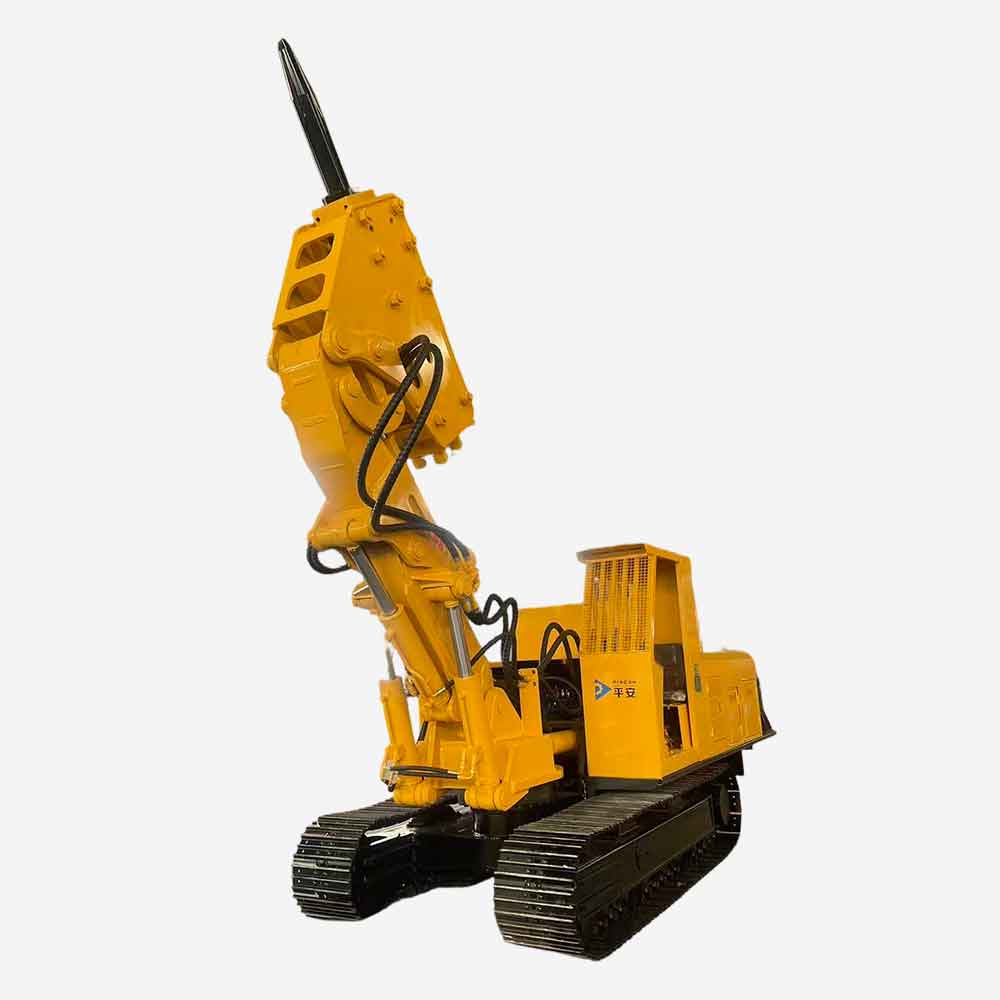
A hydraulic breaker may look simple from the outside: a carrier positions the hammer, hydraulic power drives the internal mechanism, and repeated impacts fracture rock. Underground, however, reliable breaking depends on a much more precise relationship between the breaker, hydraulic circuit, carrier, working tool and material.
This is why choosing a hydraulic breaker by impact power alone can lead to disappointing results.
A breaker that is too large for the carrier may affect machine stability. A hydraulic circuit with unsuitable flow can prevent the breaker from operating correctly. Excessive back pressure may increase heat and reduce efficiency. Poor tool contact wastes impact energy, while incorrect operating technique can accelerate wear even when the equipment itself is correctly selected.
For mining and tunneling operations, these details matter even more because space is limited and equipment often works close to excavation, loading and transportation machinery.
The most important factors include:
- Hydraulic oil flow and operating pressure
- Breaker and carrier compatibility
- Return pressure and hydraulic temperature
- Impact energy and impact frequency
- Tool diameter and tool condition
- Correct working angle and contact pressure
- Carrier stability
- Rock strength and fracture structure
- Lubrication and contamination control
- Hose, seal and bushing condition
- Underground maneuverability
- Maintenance accessibility
- Coordination with loading and haulage equipment
A well-selected hydraulic breaker should therefore do more than break hard material. It should deliver repeatable impact performance without placing unnecessary stress on the carrier or hydraulic system.
What Is a Hydraulic Breaker?
A hydraulic breaker is a percussion tool powered by a hydraulic system and commonly mounted on an excavator or specialized carrier. It converts hydraulic energy into repeated mechanical impacts that are transferred through a working tool into rock or another hard material.
The breaker typically contains an internal piston that moves repeatedly during operation. When the piston strikes the upper end of the tool, impact energy travels through the tool and enters the material at a concentrated contact point.
Repeated impacts create and extend fractures until the material separates.
This makes a hydraulic breaker fundamentally different from a drill.
A drill creates a hole by cutting, crushing or abrading material.
A breaker concentrates repeated impacts into a smaller area to fracture a larger mass.
It also differs from a crusher. Crushers generally receive excavated material and reduce it between mechanical surfaces, whereas a hydraulic breaker can act directly on oversized rock, exposed formations or localized hard sections before the material reaches the next stage.
For underground operations, that makes the breaker especially useful where large fragments would otherwise interrupt excavation or material handling.
How Hydraulic Energy Becomes Breaking Force
Understanding the hydraulic circuit is essential when evaluating breaker performance.
The carrier supplies pressurized hydraulic oil through an auxiliary circuit. That oil enters the breaker and drives its internal operating cycle. The piston accelerates, strikes the tool and then returns so another impact can occur.
This cycle repeats rapidly during operation.
Several variables influence how effectively the process works.
Oil flow determines how much hydraulic fluid reaches the breaker over time.
Operating pressure influences the energy available to drive the internal mechanism.
The internal piston determines how that energy is converted into impact.
The working tool transfers the impact into the rock.
The carrier provides the structural reaction force that keeps the breaker positioned correctly.
If one part of this system is poorly matched, the entire breaking process becomes less efficient.
A breaker cannot compensate indefinitely for insufficient hydraulic flow.
A carrier cannot operate efficiently if the breaker demands more hydraulic capacity than the machine can provide.
A correctly powered breaker can still perform poorly if the tool repeatedly loses contact with the material.
For this reason, hydraulic breaker performance should always be considered as an energy-transfer system rather than a hammer specification alone.
Oil Flow and Operating Pressure Must Match the Breaker
Hydraulic flow and pressure are among the first technical parameters that should be checked during equipment selection.
Every breaker is designed to operate within a defined hydraulic range.
If oil flow is too low, the internal cycle may become slower or less consistent. Breaking productivity may decrease even though the breaker itself is mechanically capable of delivering higher performance.
Excessive oil flow can create a different problem.
Forcing more hydraulic oil through the system than the breaker is designed to handle does not automatically produce proportionally greater impact. Instead, it may increase heat, place additional demand on valves and hoses, or cause the breaker to operate outside its intended range.
Pressure also needs to remain suitable.
The hydraulic circuit must generate enough operating pressure for effective breaker operation without exceeding the safe working requirements of the breaker and carrier.
This relationship is why hydraulic breaker specifications normally include both recommended oil-flow and pressure ranges. Hydraulic breaker references similarly emphasize matching breaker operating weight, oil flow and pressure to the host excavator or carrier.
When reviewing a machine, you should therefore compare:
- Carrier auxiliary hydraulic flow
- Breaker required oil flow
- Carrier operating pressure
- Breaker operating pressure
- Hose diameter
- Control valve capacity
- Return-line arrangement
- Hydraulic cooling capacity
- Filtration performance
Compatibility across the complete circuit matters more than maximizing one value.
Why Return Pressure and Hydraulic Temperature Matter
The hydraulic system does not end when oil reaches the breaker.
Fluid must also return efficiently.
Excessive resistance in the return circuit can increase back pressure. This may affect breaker behavior, generate additional heat and increase stress within the hydraulic system.
Several factors can contribute to return restriction.
Hoses may be undersized.
Connections may create unnecessary resistance.
Valves may not provide enough flow capacity.
The return path may not be configured appropriately for continuous breaker operation.
Hydraulic temperature provides another useful indicator.
Breaking creates repeated high-load hydraulic cycles. If the system cannot dissipate heat effectively, oil temperature can increase.
High temperature can affect oil viscosity and the performance of seals and hydraulic components. Persistent overheating should therefore be treated as a symptom requiring investigation rather than something that is simply accepted as normal breaker operation.
When temperature begins changing, operators should consider the complete hydraulic system.
Is the breaker operating within its intended flow range?
Is the cooling system clean?
Is the oil condition suitable?
Is return pressure higher than expected?
Has the workload changed?
Are hoses or valves restricting flow?
The purpose of monitoring is not simply to stop the machine when a temperature limit is reached. It is to understand why its operating behavior has changed.
Carrier Matching Determines Breaker Stability
Hydraulic compatibility is only one side of the relationship between the breaker and carrier.
Mechanical compatibility is equally important.
Every impact creates forces that must be reacted through the breaker housing, boom, carrier structure and undercarriage.
If the carrier is too light for the breaker, machine movement can absorb part of the impact that should be entering the rock.
The operator may see bouncing, unstable positioning or excessive movement during breaking.
This reduces efficiency.
It can also make tool positioning more difficult.
A stable carrier provides a better platform for energy transfer. The boom maintains controlled pressure on the breaker, while the undercarriage keeps the machine positioned against the reaction forces created during operation.
Tracked carriers can be especially useful underground because their relatively large ground contact area can support stability and mobility on demanding tunnel floors.
However, carrier weight alone is not enough.
Boom geometry matters.
Hydraulic capacity matters.
Machine balance matters.
Working range matters.
The relationship between breaker mass and carrier structure must therefore be evaluated as a complete package.
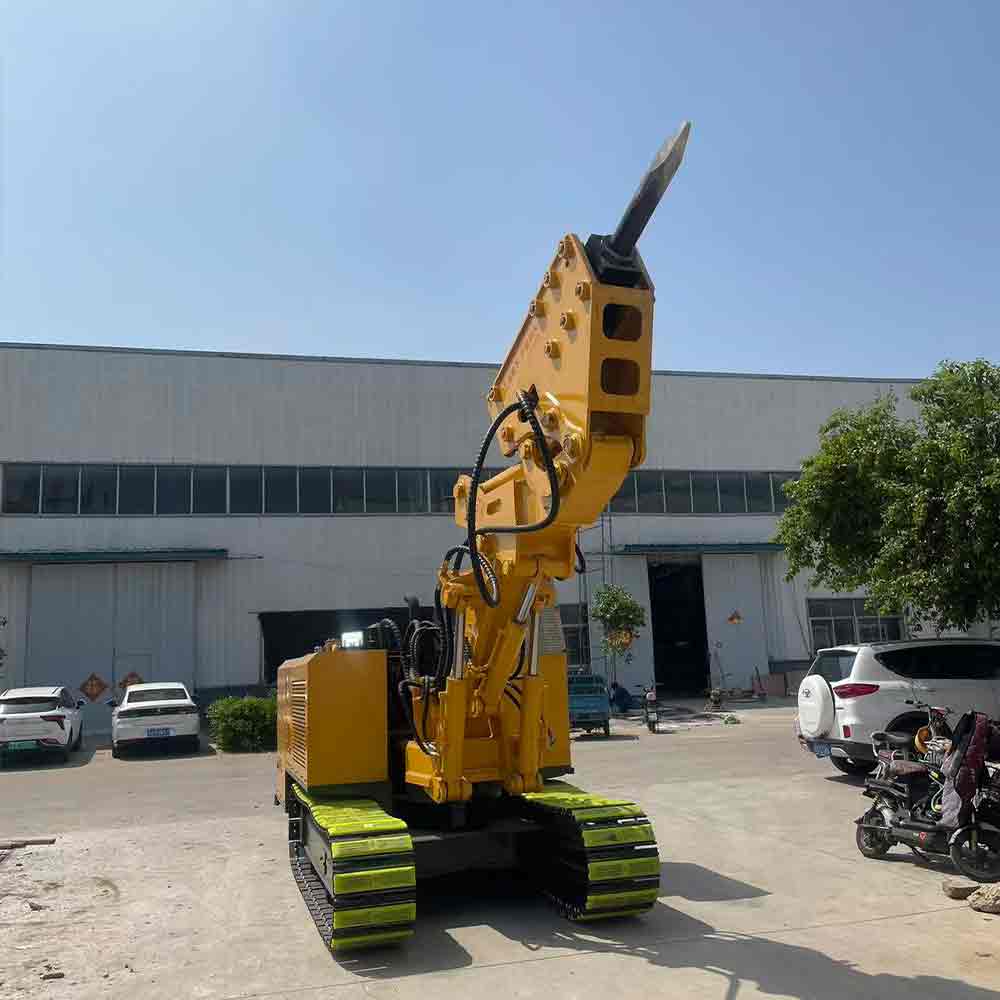
PingAn Machinery’s Mining Tracked Hydraulic Breaker uses a dedicated crawler platform designed around tunnel and confined-space applications, illustrating why underground breaker selection often needs to consider the complete machine rather than the hammer alone.
Impact Energy and Impact Frequency Are Not the Same
Two hydraulic breakers can behave differently even when they appear similar in overall size.
One important difference is the relationship between impact energy and impact frequency.
Impact energy describes the energy delivered by an individual blow.
Impact frequency describes how frequently those blows occur.
Higher frequency can be useful when material fractures readily and repeated impacts can quickly extend existing cracks.
More massive or resistant material may depend more heavily on sufficient energy per blow.
Neither parameter should be considered independently.
A high-frequency breaker delivering inadequate energy may strike repeatedly without developing fractures efficiently.
A high-energy breaker used incorrectly may generate unnecessary vibration while producing limited additional fragmentation.
The correct relationship depends on:
- Rock strength
- Rock mass structure
- Existing joints
- Fragment size
- Tool type
- Carrier stability
- Required final fragment size
This is another reason a hydraulic breaker cannot be selected from a single specification.
The real objective is effective fracture development.
If the material breaks quickly and predictably, the breaker is transferring energy effectively.
If the tool remains on the same point for a long period without meaningful cracking, the operator should investigate the material, tool position and machine settings rather than assuming that additional hammering will automatically solve the problem.
Rock Structure Can Matter as Much as Rock Strength
Operators often focus first on whether the rock is hard or soft.
That is important, but breaking behavior also depends heavily on structure.
Rock containing visible joints or existing fractures may separate efficiently when impacts are positioned near those weaknesses.
A large piece of homogeneous, massive material may behave very differently.
The breaker has to create a fracture path before the material begins separating.
Abrasiveness also influences long-term performance because it affects wear at the tool and surrounding contact surfaces.
When assessing a hydraulic breaker application, consider:
| Evaluation Factor | Why It Matters |
|---|---|
| Rock strength | Influences required breaking energy |
| Natural joints | Can provide easier fracture paths |
| Existing cracks | Help determine tool positioning |
| Abrasiveness | Influences tool and bushing wear |
| Fragment size | Affects required breaking intensity |
| Material confinement | Changes how impact energy travels |
| Final required size | Determines when further breaking is unnecessary |
| Downstream equipment | Determines acceptable fragment dimensions |
Good operators use this information continuously.
They do not simply place the breaker in the middle of every rock and continue striking.
Edges, cracks, joints and thinner sections can often provide more effective starting points.
The operator’s ability to read the material remains an important part of hydraulic breaker productivity.
Correct Tool Contact Makes a Major Difference
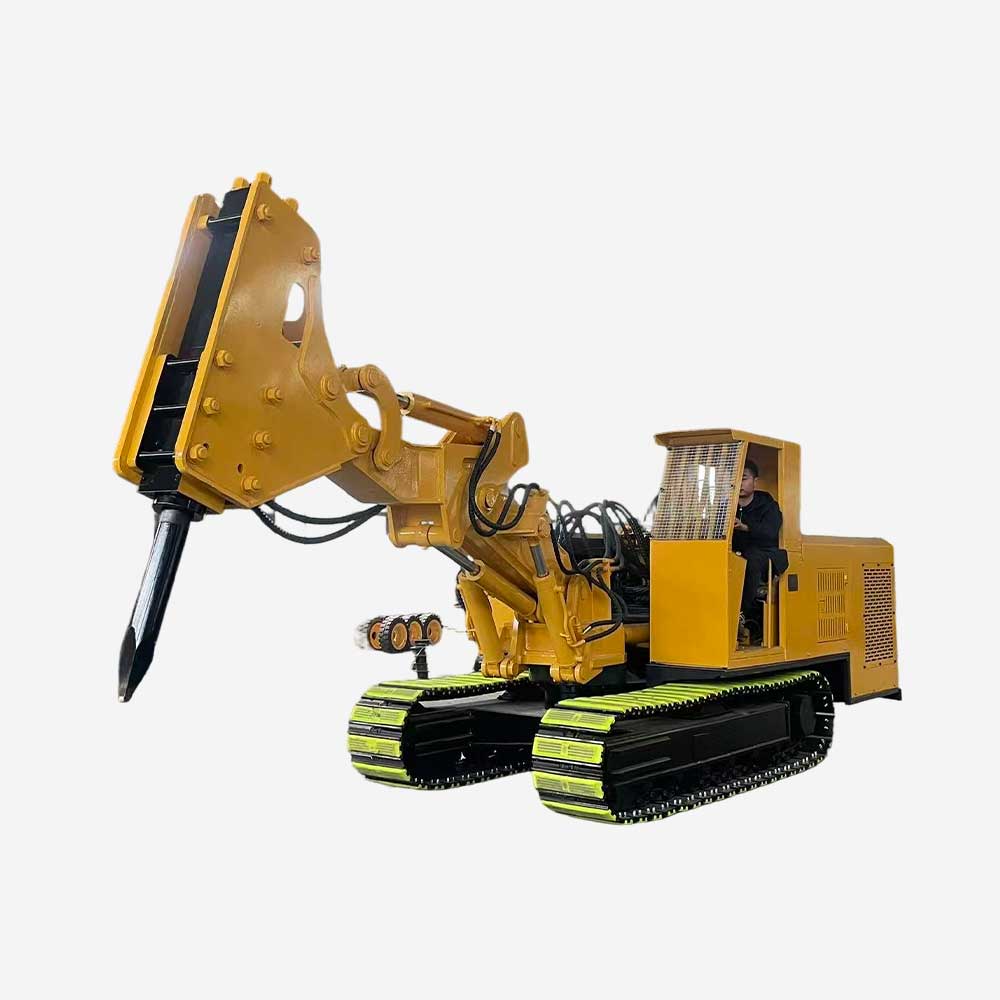
One of the most basic operating principles is also one of the most important: impact energy needs a stable path into the rock.
The working tool should be positioned firmly against the material before sustained breaking begins.
If contact is poor, the breaker cannot transfer energy efficiently.
Instead of entering the rock, part of the mechanical energy may be absorbed as unwanted movement or stress within the breaker and carrier.
Working angle also matters.
The tool should generally be positioned so the impact travels in the intended breaking direction.
Severe side loading can introduce bending forces into components designed primarily to transmit axial impacts.
This is particularly important for the working tool and bushings.
Operators should therefore avoid using the breaker as a lever.
The tool may appear strong enough to pry apart partly fractured material, but impact tools are designed primarily for repeated striking rather than sustained lateral bending.
Correct technique usually involves:
- Identify a useful fracture point.
- Position the tool correctly.
- Apply controlled carrier pressure.
- Begin breaking with stable contact.
- Observe whether cracks are developing.
- Reposition when necessary.
- Stop once the required fragment size has been reached.
This approach generally produces more useful work than simply keeping the breaker active continuously.
Why Blank Firing Should Be Avoided
A hydraulic breaker is most effective when the tool is transferring energy into material.
When the breaker operates without proper tool contact, the impact energy has no normal external load to absorb it.
This condition is commonly referred to as blank firing or dry firing.
Repeated blank firing can place unnecessary stress on internal components and should be minimized through correct operating technique.
The operator should therefore pay attention to what happens immediately after the rock fractures.
Once the tool suddenly loses resistance, breaker operation should stop rather than continuing to hammer freely.
This may seem like a small operational detail, but repetitive breaker work can involve thousands of impacts.
Poor habits repeated throughout every shift can have a much larger effect on component condition than one isolated event.
Smart operating technique is therefore also a form of maintenance.
The goal is to make each active breaking period produce useful fracture work.
Lubrication Is Essential for Tool and Bushing Life
The working tool repeatedly slides and impacts within the breaker bushings.
This creates a demanding contact condition.
Lubrication helps reduce friction between these surfaces and supports more predictable tool movement.
Insufficient lubrication can accelerate wear.
Contamination can create another problem.
Underground working areas contain dust, broken rock and fine abrasive material. If contaminants enter moving interfaces, wear can increase.
Routine maintenance should therefore inspect both lubrication condition and tool surfaces.
Useful checks include:
- Is lubrication reaching the required contact area?
- Is the tool surface unusually dry?
- Is there visible scoring?
- Is wear even around the tool?
- Is movement inside the bushing becoming excessive?
- Are dust seals or protective components damaged?
- Has the tool shape changed significantly?
Tool inspection should also include cracks or surface damage.
A worn tool does more than increase replacement requirements. It can affect how impact energy is delivered into the rock.
Maintenance therefore has a direct relationship with breaking performance.
Hoses, Connections and Seals Need Routine Attention
The breaker itself may receive most of the attention, but hydraulic connections around it experience repeated movement and vibration.
Hoses flex as the carrier boom moves.
Connections experience pressure cycles.
Seals operate continuously inside a dynamic system.
These components should be included in routine inspection.
A small hydraulic leak may initially appear to be only a housekeeping issue, but fluid loss can indicate seal, hose or connection problems that need attention.
Operators should look for:
- Hose abrasion
- Cracking
- Loose fittings
- Leakage
- Damaged protective sleeves
- Unusual hose movement
- Oil contamination around connections
- Changes in breaker response
Hose routing is particularly important underground.
Restricted working spaces increase the possibility that hoses can contact surrounding material or machine structures during boom movement.
Adequate protection and routing reduce this risk.
Maintenance teams should also avoid treating every loss of breaker performance as an internal breaker fault.
The hydraulic supply circuit should be checked as part of diagnosis.
A restriction, pressure problem or carrier hydraulic issue may produce symptoms that appear to originate in the breaker.
Underground Hydraulic Breakers Need Compact Working Geometry
Surface equipment can often reposition in relatively open areas.
Underground machinery has far less freedom.
Tunnel width and height can restrict the overall carrier.
The breaker boom needs enough room to reach material.
The machine must maintain stability while working.
Loading and transportation equipment may need access through the same roadway.
Ventilation, cables and utilities can further reduce usable space.
This means hydraulic breaker selection for underground work should consider more than overall machine dimensions.
Important measurements include:
- Transport width
- Working width
- Overall height
- Tail swing
- Boom reach
- Vertical breaker reach
- Horizontal breaker reach
- Turning radius
- Ground clearance
- Maximum working gradient
PingAn’s existing tracked hydraulic breaker guide focuses specifically on mobile breaking in mining and tunneling environments, where the ability to move directly toward the working area can reduce repeated repositioning.
Working envelope matters just as much as transport envelope.
A machine can fit through a tunnel and still be unsuitable if the boom cannot reach the required areas while maintaining a proper breaker angle.
Hydraulic Breaker Performance Should Be Measured by the Complete Workflow
Breaking output by itself does not determine underground productivity.
Imagine that a hydraulic breaker reduces oversized rock quickly, but the resulting material still cannot be loaded efficiently.
The breaker may have completed its individual task, but the production problem remains.
The desired result is material that matches downstream handling requirements.
This means the breaker, loader and transportation equipment should be considered together.
If the loader can handle fragments below a certain practical size, continuing to break material well below that requirement may add operating time without improving the next stage.
Overbreaking can therefore be inefficient.
The goal is not the smallest possible fragment.
It is the correct fragment size for the workflow.
This is particularly important where the hydraulic breaker is used for secondary breaking.
The machine should remove the oversized pieces that interrupt material flow and then allow loading to continue.
The complete underground cycle might include excavation, secondary breaking, mucking, loading and transport.
Each stage affects the others.
A good breaker setup reduces delays across that complete process.
Smart Monitoring Can Improve Hydraulic Breaker Maintenance
Modern underground equipment is increasingly able to record its operating condition rather than relying entirely on manual observation.
For hydraulic breakers, useful information may include:
- Hydraulic pressure
- Hydraulic oil temperature
- Operating hours
- Breaker working time
- Machine alarms
- Carrier load
- Fault history
- Maintenance intervals
This information becomes most useful when it is reviewed as a trend.
One high temperature reading may be caused by a temporary heavy working period.
A temperature that continues rising under similar loads suggests something has changed.
The same principle applies to hydraulic pressure and operating behavior.
Condition monitoring allows maintenance personnel to compare the current machine with its own previous behavior.
This can help teams identify developing problems earlier.
However, monitoring should support inspection rather than replace it.
Sensors cannot directly assess every wear surface.
A system may identify changing hydraulic behavior, but technicians still need to inspect hoses, tools, bushings, mounts and structural components.
The strongest maintenance approach combines equipment data with physical inspection and operator feedback.
How to Diagnose Reduced Hydraulic Breaker Performance
When a breaker appears weaker than normal, immediately assuming internal failure can lead to unnecessary work.
Diagnosis should proceed systematically.
Start with the carrier.
Is the machine delivering the expected hydraulic flow and pressure?
Check hydraulic temperature.
Has the system become unusually hot?
Inspect hoses and connections.
Is there leakage or restriction?
Look at the tool.
Is it badly worn or damaged?
Check lubrication and bushing condition.
Then consider the material.
Has the rock changed?
A breaker may appear weaker simply because it has entered a more massive or less fractured section.
Operator technique should also be considered.
Is the tool maintaining contact?
Is the carrier applying suitable pressure?
Is the breaker being positioned near useful fracture points?
A practical diagnostic sequence helps separate hydraulic, mechanical, geological and operating causes.
This is much more effective than replacing components by trial and error.
How to Select a Hydraulic Breaker for Underground Work
A practical selection process starts with the job rather than the breaker model.
First, define the material.
Identify typical rock strength, fragment size, fracture condition and abrasiveness.
Second, define the breaking task.
Will the breaker mainly perform secondary breaking?
Will it work directly on exposed rock?
How frequently will it operate?
Third, evaluate the carrier.
Check machine weight, boom capability, hydraulic flow, operating pressure and stability.
Fourth, review the hydraulic circuit.
Confirm that valves, hoses, filtration and cooling are appropriate for breaker operation.
Fifth, measure the underground working space.
The carrier should be able to enter, position, turn and operate without unnecessary interference.
Sixth, consider the required tool configuration.
Tool diameter and shape should suit the material and intended fracture behavior.
Seventh, evaluate maintenance access.
Lubrication points, hoses, bushings and tools should be serviceable under real operating conditions.
Finally, consider the complete production process.
Determine what fragment size the loader and transport system can handle and avoid selecting breaking capacity without considering those downstream requirements.
The most suitable hydraulic breaker is therefore not necessarily the largest or highest-energy option.
It is the system that matches the carrier, hydraulic circuit, material and underground workflow.
Common Hydraulic Breaker Selection Mistakes
One common mistake is oversizing the breaker.
A larger hammer can appear attractive, but if the carrier cannot provide enough hydraulic flow or physical stability, actual performance may be poor.
Another mistake is ignoring return-line conditions.
Supply pressure receives most of the attention, but hydraulic oil also needs an efficient route back through the system.
A third mistake is assuming all hard rock requires the same breaker configuration.
Natural fractures and abrasiveness can change breaking behavior significantly.
Poor tool selection is another issue.
The working tool should reflect how the material needs to fracture.
Machine dimensions are also easy to underestimate.
An underground breaker needs enough room not only to travel but also to position its boom and maintain a suitable working angle.
Another mistake is treating operator technique as secondary.
Incorrect contact, side loading, unnecessary blank firing and prolonged hammering on an ineffective point can reduce productivity even when the equipment has been correctly selected.
Finally, maintenance accessibility should never be left until after deployment.
A breaker working underground needs practical access for lubrication, inspection and hydraulic servicing.
Conclusion
A hydraulic breaker is a relatively straightforward machine in principle, but efficient underground operation depends on many details working together.
Hydraulic flow and pressure need to match the breaker.
The return circuit must allow oil to move without unnecessary restriction.
The carrier needs sufficient stability to transfer impact energy into the rock.
The working tool needs correct contact and lubrication.
Rock structure must be considered alongside rock strength.
Hoses, bushings, seals and connections need regular inspection.
Underground dimensions have to support both machine travel and actual breaker movement.
Most importantly, the breaker must support the complete excavation and material-handling process.
The strongest hydraulic breaker is not necessarily the one delivering the largest individual impact.
The better machine is the one that can repeatedly transfer useful energy into the required material while remaining compatible with its carrier, hydraulic circuit and working environment.
As monitoring technology develops, operators will gain more information about hydraulic temperature, operating history and equipment condition. That information can make maintenance more targeted, but it does not replace correct machine selection and disciplined operating practices.
For underground operations, reliable rock breaking still begins with engineering fundamentals: match the hydraulic system correctly, maintain stable tool contact, understand the material and select equipment around the real tunnel rather than a specification sheet.
FAQ
What is a hydraulic breaker used for?
A hydraulic breaker converts hydraulic power into repeated impacts for breaking rock and other hard material. In underground work, it is commonly used for oversized-rock reduction, secondary breaking and localized excavation. Its suitability depends on material conditions, carrier stability and hydraulic-system compatibility.
How do I match a hydraulic breaker to a carrier?
Check carrier operating weight, auxiliary oil flow, hydraulic pressure, boom capacity and machine stability against the breaker’s required operating range. Hose sizing, return pressure, cooling and filtration should also be reviewed. A mechanically suitable breaker can still perform poorly when the hydraulic circuit is mismatched.
Why does a hydraulic breaker overheat?
High hydraulic temperature can result from demanding operating cycles, unsuitable oil flow, restricted return paths, cooling problems or poor hydraulic condition. The cause should be diagnosed from the complete carrier-breaker circuit rather than the hammer alone. Persistent overheating can affect oil, seals and component reliability.
How can hydraulic breaker tool life be extended?
Maintain correct lubrication, inspect bushings regularly and keep the tool properly aligned with the material. Avoid excessive side loading, unnecessary blank firing and using the tool as a lever. Tool wear should also be monitored for scoring, cracks and uneven surfaces so developing problems can be corrected before major damage occurs.
What should I check before using a hydraulic breaker underground?
Confirm tunnel dimensions, machine maneuverability, carrier stability, hydraulic flow and pressure, boom reach, working angle and material conditions. Also review ventilation, hoses, maintenance access and downstream loading requirements. The breaker should fit both the physical tunnel and the complete underground production workflow.