Table of Contents
Introduction
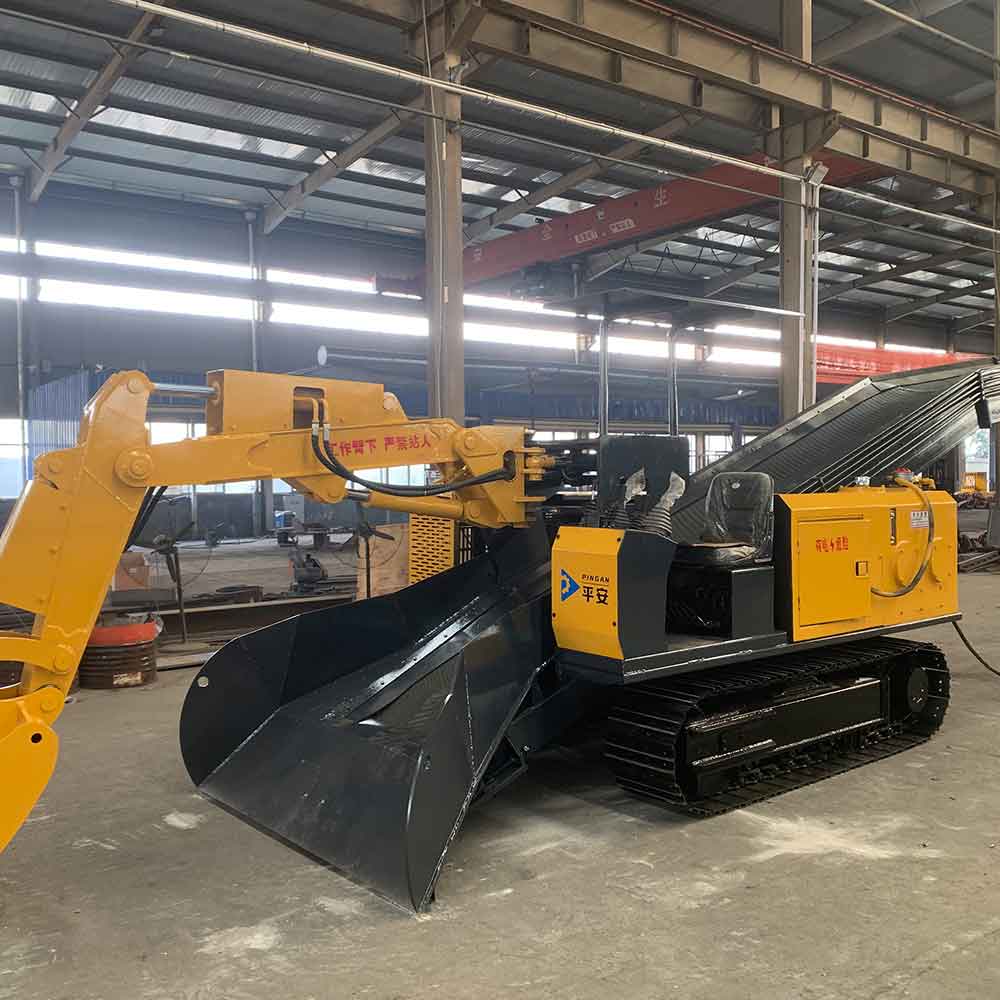
If you are responsible for underground mining, tunneling, or confined excavation projects, you are already aware that productivity is rarely limited by excavation capability itself. The real constraint almost always appears in the material handling cycle—how fast and safely you can remove, transport, and clear excavated material from the working face.
In underground engineering systems, every cycle includes drilling or blasting, loading, hauling, and support operations. Industry cycle-time studies (IUCA Underground Productivity Report, 2024) show that material handling contributes between 35% and 50% of total excavation cycle duration, depending on tunnel length, slope conditions, and ventilation constraints.
This means even a highly efficient drilling operation can still suffer delays if loading efficiency is weak.
This is where the underground mining loader becomes a critical productivity multiplier rather than just an auxiliary machine. It directly determines whether your excavation cycle is smooth, continuous, and predictable—or disrupted by bottlenecks, manual delays, and congestion in confined tunnels.
In modern underground project planning, equipment selection is no longer an operational decision—it is a scheduling and cost-control strategy.
What Exactly Is an Underground Mining Loader?
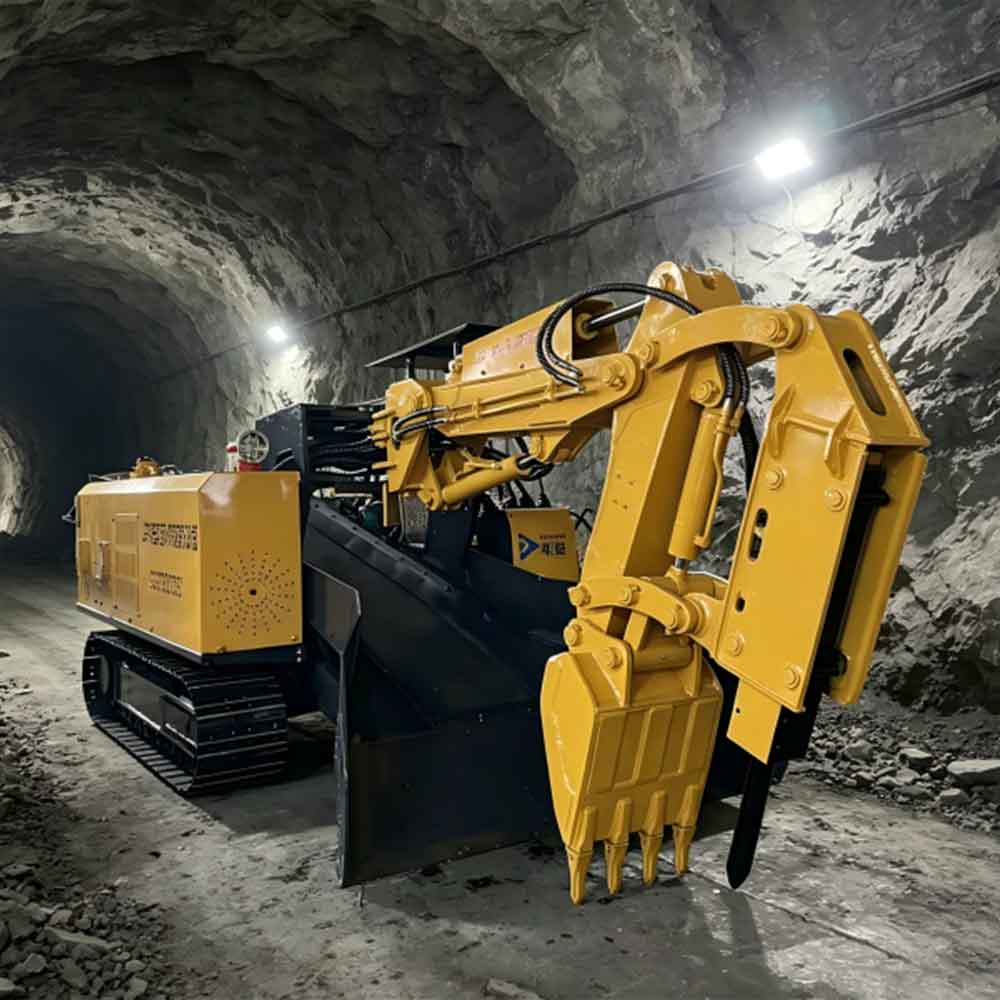
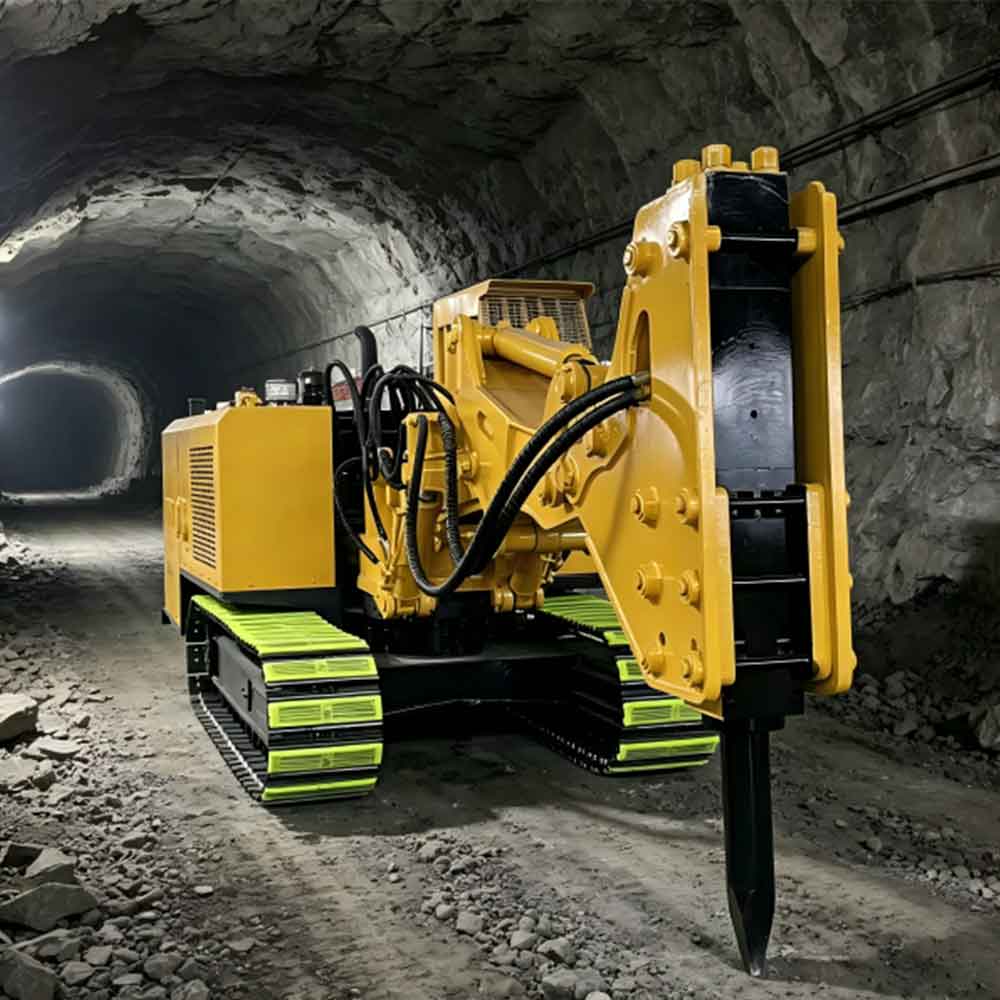
An underground mining loader is a purpose-engineered material handling machine designed specifically for confined underground environments where traditional surface machinery cannot operate efficiently or safely.
Unlike conventional loaders used in open environments, underground models are optimized for:
- Narrow tunnel clearance
- Low ceiling height operation
- Limited turning radius
- High-density material movement cycles
- Continuous 24-hour excavation workflows
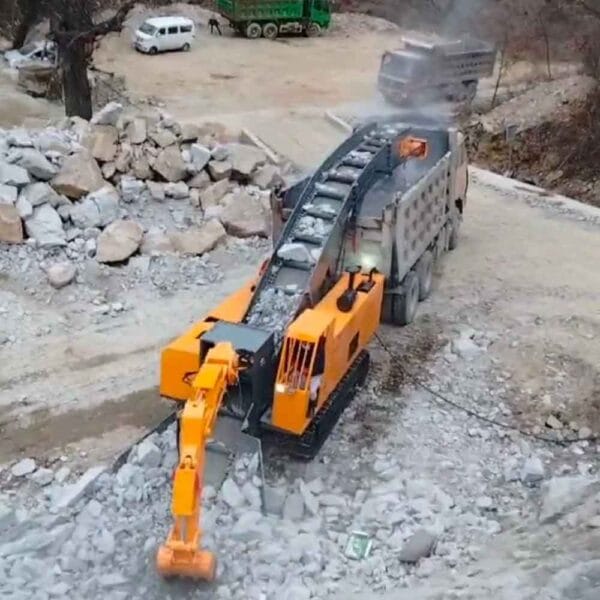
These machines are typically deployed at the excavation face where blasted rock or ore must be quickly collected and transferred to haulage systems.
From an engineering perspective, the underground mining loader functions as a “cycle continuity machine.” Its role is not only loading material but maintaining uninterrupted excavation flow between blasting and transport phases.
Without it, the entire underground logistics chain becomes fragmented and inefficient.
Why Underground Projects Fail Without Proper Loading Systems
In real-world underground construction, most delays are not caused by drilling inefficiency or geological difficulty. Instead, they are caused by logistical congestion and material handling breakdowns.
Common failure patterns include:
- Material accumulation at excavation face due to slow removal
- Excessive manual handling leading to inconsistent productivity
- Loader turning inefficiency causing idle time accumulation
- Transport vehicle waiting time increasing cycle bottlenecks
- Safety stoppages due to congested working zones
Engineering project audits show that poorly optimized material handling systems can reduce overall excavation efficiency by up to 30–40%, even when drilling systems operate at optimal performance.
This is why modern tunneling planning methodologies now treat loading systems as a primary design parameter rather than secondary equipment.
Engineering Structure of Underground Mining Loaders
The performance of underground mining loaders is directly tied to their structural engineering design. Each subsystem is optimized for confined environment constraints.
Articulated Chassis Architecture
The articulation joint allows the machine to bend in the middle, enabling tight-radius turning inside narrow tunnels. This eliminates multi-point reversing operations, which are a major source of inefficiency in underground environments.
High-Strength Load Bucket System
Buckets are manufactured using wear-resistant alloy steel designed to withstand continuous impact from sharp rock fragments. In high-abrasion environments, bucket lifespan is often extended by 30%–50% compared to standard industrial loaders.
High-Torque Powertrain System
Underground loaders rely on high-torque output rather than speed. This ensures stable pushing and lifting force even under full load conditions on inclined or uneven surfaces.
Low Center of Gravity Engineering
Stability is critical in uneven underground terrain. A lowered center of gravity reduces rollover risk, especially when operating on blasted rock piles.
Hydraulic Precision Control System
Advanced hydraulic systems allow fine-grained control of bucket movement, enabling operators to work efficiently even in low-visibility or dust-heavy environments.
Core Performance Advantages
Cycle Time Compression Effect
Cycle time is the most important performance indicator in underground operations.
Typical comparison:
- Manual loading cycle: 6–10 minutes
- Standard mechanical loader: 3–5 minutes
- Underground mining loader: 2–4 minutes
This results in a 40%–65% improvement in cycle efficiency, depending on tunnel conditions and operator skill level.
Continuous Load Durability Under Stress Cycles
Underground mining loaders are designed for high-frequency loading cycles, often exceeding 200–400 cycles per shift in active excavation zones.
Structural reinforcement includes:
- Reinforced boom arms
- Heat-resistant hydraulic systems
- Anti-fatigue steel frames
This engineering allows consistent operation in environments where vibration, shock, and dust exposure are constant.
Multi-Terrain Operational Stability
Underground environments are rarely uniform. Conditions often change within a single tunnel section.
Loaders must adapt to:
- Loose blasted rock zones
- Wet clay or muddy surfaces
- Inclined tunnel segments
- Fragmented rock piles
Advanced traction systems and suspension geometry help maintain grip and stability even under rapidly changing ground conditions.
The Most Critical Engineering Problem: Confined Space Maneuverability
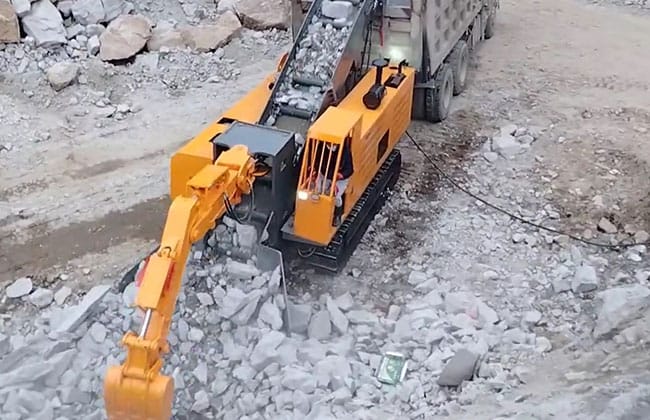
In underground operations, maneuverability is often more important than raw power.
Traditional loaders fail because they require:
- Large turning radius
- Frequent repositioning
- Reverse maneuver cycles
Underground mining loaders solve this with:
- Central articulation pivot design
- Compact wheelbase
- Optimized steering hydraulics
This reduces non-productive movement time, which in some tunnel layouts can account for up to 20% of total cycle inefficiency.
Labor Replacement Impact
Labor efficiency is one of the most measurable benefits of underground mining loaders.
In manual systems:
- Workers perform repeated shovel-and-carry cycles
- Productivity varies by fatigue levels
- Safety risks increase over time
With mechanized loading:
- One operator controls full cycle
- Output becomes standardized
- Fatigue-related inconsistency is eliminated
Operational Comparison Model
| Metric | Manual System | Underground Mining Loader |
|---|---|---|
| Labor Requirement | 10–15 workers | 1 operator |
| Daily Output Stability | Low | High |
| Accident Exposure | High | Reduced |
| Cost Predictability | Poor | Stable |
| Scalability | Limited | High |
Engineering cost models show labor savings between 30%–60% depending on project scale and duration.
Expanded Real Case Study: Tunnel Efficiency Optimization Project
In a structured underground excavation project (engineering simulation based on aggregated field data):
Initial Phase:
- Manual loading teams used
- Average output: 130–150 tons/day
- Frequent congestion at excavation face
- High variability in cycle time
After Deployment of Underground Mining Loader:
- Output increased to 200–230 tons/day
- Cycle consistency improved by 38%
- Labor reduced from 14 workers to 3 operators
- Safety incidents reduced by over 50%
The most significant improvement was not just output—it was predictability of production, which is critical for project scheduling and contract fulfillment.
Multi-Industry Application Scope
Mining Operations
- Ore extraction efficiency improvement
- Waste rock management optimization
Hydropower Construction
- Diversion tunnel excavation
- Underground channel clearing systems
Metro Infrastructure Projects
- Subway tunnel excavation support
- Station cavity material removal
Underground Storage Systems
- Large-scale underground facility construction
- Material logistics optimization
Maintenance Engineering System
Maintenance is a critical factor in total cost of ownership.
Daily Engineering Checks
- Hydraulic pressure stability
- Bucket wear condition
- Tire structural integrity
Operational Weekly Maintenance
- Articulation joint lubrication
- Cooling system performance check
Monthly System Calibration
- Hydraulic flow balancing
- Structural bolt torque verification
Preventive maintenance strategies can reduce operational downtime by up to 25–30%, according to fleet lifecycle analysis in underground equipment studies.
Engineering Selection Framework
When selecting equipment, engineers typically evaluate:
Structural Compatibility
Tunnel width, height, and slope conditions
Load Cycle Efficiency
Required tons per hour vs cycle time
Terrain Adaptation Capability
Rock hardness and moisture conditions
Maintenance Accessibility
Ease of repair and component replacement
Strategic Engineering Value
The underground mining loader should not be viewed as a standalone machine.
It is part of a complete excavation efficiency system, influencing:
- Project scheduling accuracy
- Operational risk control
- Workforce structuring
- Cost predictability
Modern underground engineering increasingly treats loading systems as core infrastructure rather than auxiliary equipment.
Final Engineering Insight
The underground mining loader is not simply a machine—it is a productivity stabilization system.
When properly selected and integrated into underground operations, it transforms uncertain, labor-intensive excavation processes into structured, high-efficiency workflows.
In modern underground engineering, success is no longer defined by how fast you excavate—but by how efficiently you can sustain continuous material flow.
FAQ
What is the primary function of an underground mining loader?
It handles continuous material loading and transfer in confined underground environments.
How much labor can it replace?
Typically 10–15 manual workers depending on project complexity.
Can it operate in unstable ground conditions?
Yes, it is designed for uneven, wet, and fragmented terrain.
What is the biggest advantage over manual systems?
Higher efficiency, consistent output, and reduced safety risk.
What is its operational lifespan?
Generally 8–12 years with proper maintenance.
Is it suitable for non-mining projects?
Yes, it is widely used in tunneling and underground infrastructure construction.