Table of Contents
Introduction

Rock excavation is one of the most demanding processes in underground mining and tunnel construction. Unlike surface projects, underground environments often involve limited working space, complex geological conditions, and strict requirements for equipment reliability. To overcome these challenges, specialized excavation tools are required to deliver consistent breaking performance while maintaining operational flexibility.
A hydraulic rock breaker is an essential piece of equipment used for breaking hard materials such as rock, concrete, and other dense formations through hydraulic impact force. By converting hydraulic energy into powerful mechanical impacts, this equipment helps operators handle difficult excavation tasks more efficiently.
In modern underground engineering, the selection of rock-breaking equipment is not only based on impact power. Factors including rock hardness, working conditions, equipment compatibility, maintenance requirements, and overall excavation workflow all influence performance. A properly selected hydraulic rock breaker can improve excavation efficiency and support safer underground operations.
As mining and tunneling projects continue to develop toward deeper and more complex environments, hydraulic excavation technology has become increasingly important for improving productivity and adapting to challenging working conditions.
What Is a Hydraulic Rock Breaker?
A hydraulic rock breaker is a hydraulic-powered impact tool designed to break hard materials through repeated high-energy impacts. It is commonly installed on excavators, underground equipment, or other compatible machinery to perform controlled rock-breaking operations.
Unlike traditional mechanical tools that rely mainly on direct force, a hydraulic rock breaker uses hydraulic pressure to move an internal piston at high speed. The piston transfers impact energy through the tool bit, creating cracks and fractures inside the material until it can be removed more easily.
The main components of a hydraulic rock breaker usually include:
- Hydraulic cylinder
- Piston assembly
- Tool bit
- Control valve
- Accumulator system
- Housing structure
Each component contributes to stable performance during excavation. The hydraulic system provides power, while the tool bit delivers the impact directly to the working surface.
In underground mining and tunnel construction, hydraulic rock breakers are especially valuable because they can perform targeted rock removal in areas where larger excavation equipment may not be suitable.
How Does a Hydraulic Rock Breaker Work?
The working principle of a hydraulic rock breaker is based on converting hydraulic energy into mechanical impact energy.
When hydraulic oil enters the breaker system, it creates pressure that drives the piston movement. The piston moves rapidly inside the cylinder and strikes the tool bit, transferring impact force into the rock surface. Continuous impacts gradually weaken the internal structure of the material, allowing it to be separated and removed.
The complete working process usually includes three stages:
First, hydraulic power is generated by the carrier machine and transferred to the breaker system. The hydraulic circuit controls pressure and flow to maintain stable operation.
Second, the piston converts hydraulic energy into impact movement. The repeated movement creates strong mechanical force that reaches the rock through the tool bit.
Finally, the fractured material is removed through loading and transportation equipment. In underground operations, this process is often combined with other excavation machinery to create a continuous workflow.
The development of hydraulic technology has significantly improved heavy excavation equipment. According to the principles of hydraulic machinery, fluid power allows machines to generate high force while maintaining relatively compact structures, which is why hydraulic systems are widely used in demanding engineering applications.
Main Applications of Hydraulic Rock Breakers
Hydraulic rock breakers are widely used in underground mining, tunneling, and rock excavation projects because they provide flexible breaking capability in difficult environments.
Underground Mining Operations
In underground mining, rock conditions can change significantly between different areas. Some sections may contain extremely hard formations that require additional breaking operations before excavation can continue.
A hydraulic rock breaker helps remove hard rock sections, prepare excavation areas, and support tunnel development activities. Its compact design allows it to operate in restricted underground spaces where larger machines may face limitations.
Tunnel Construction Projects
Tunnel construction often requires equipment that can adapt to changing geological conditions. Even when the main excavation process is already established, unexpected hard rock sections may require additional breaking support.
Hydraulic rock breakers provide a practical solution because they allow operators to focus on specific areas without changing the entire excavation system.
Quarry and Rock Engineering Applications
Beyond underground projects, hydraulic rock breakers are also used for controlled rock removal, demolition preparation, and engineering applications where precise breaking performance is required.
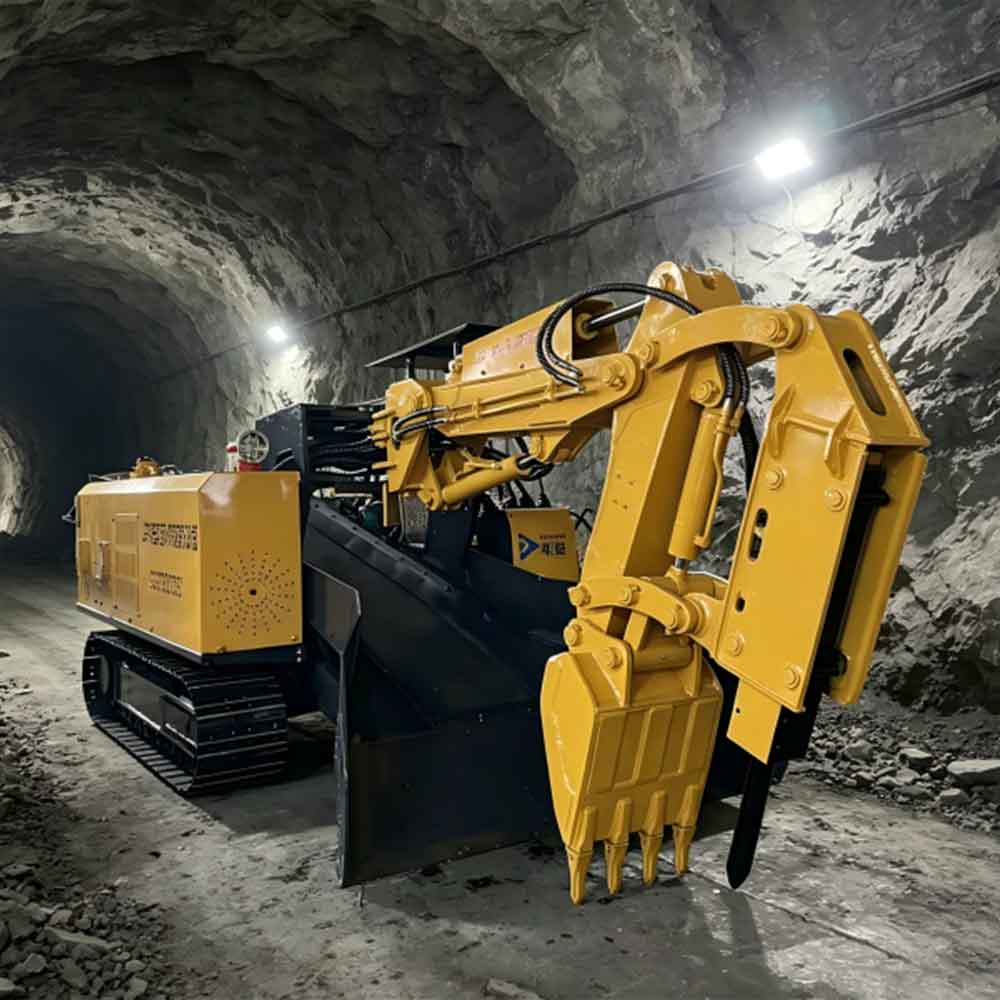
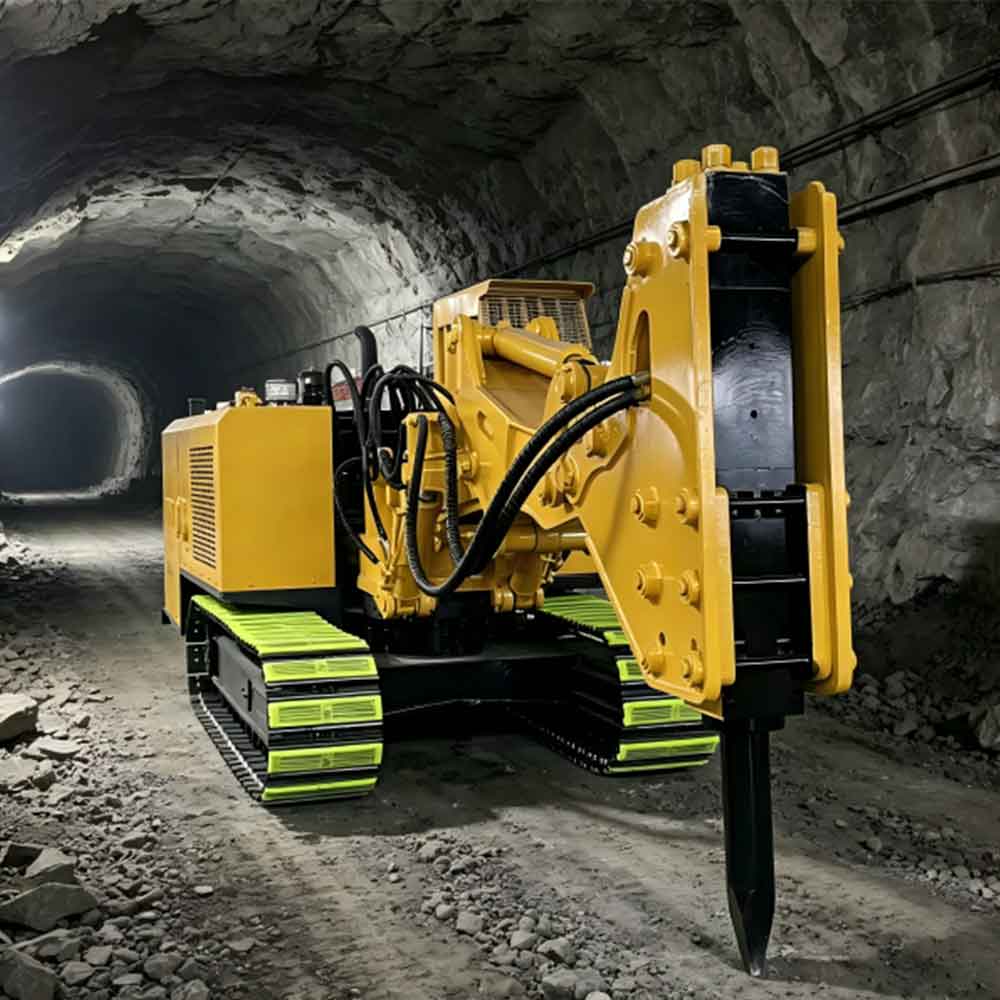
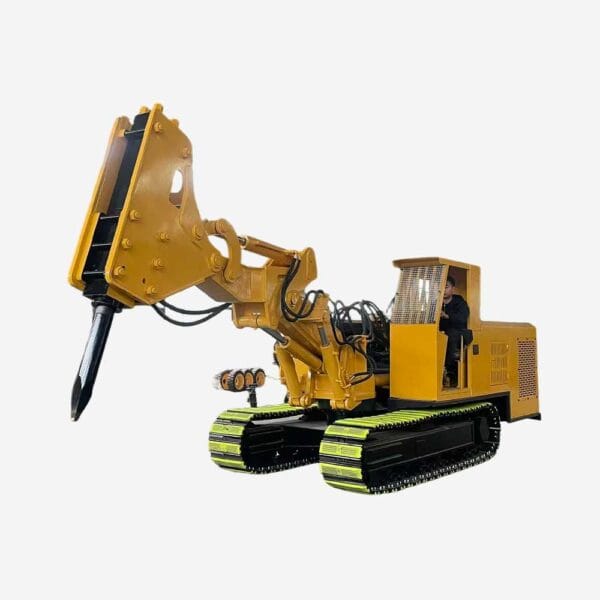
For underground projects that require efficient rock handling and excavation support, integrated solutions such as mining tracked hydraulic breaker equipment can provide reliable performance in challenging working environments.
Advantages of Using Hydraulic Rock Breakers
Hydraulic rock breakers provide several advantages that make them suitable for modern excavation operations.
Strong and Controlled Impact Performance
One of the main benefits of a hydraulic rock breaker is its ability to deliver consistent impact force. The hydraulic system allows operators to apply controlled power according to different material conditions.
This is particularly important in underground environments because excessive force may damage equipment, while insufficient impact may reduce excavation efficiency.
Better Adaptability in Limited Spaces
Underground construction areas often have narrow passages and restricted movement conditions. Compact hydraulic breaking equipment can operate in these environments more effectively than large-scale machinery.
This flexibility makes hydraulic rock breakers suitable for projects where equipment mobility and precise operation are important.
Improved Excavation Efficiency
By reducing dependence on manual rock-breaking methods, hydraulic rock breakers help create a more stable excavation process.
When combined with loading and transportation equipment, they support a more organized workflow where rock breaking, material removal, and tunnel development can operate together.
Key Factors When Choosing a Hydraulic Rock Breaker
Selecting the right hydraulic rock breaker requires careful consideration of technical and operational factors.
Rock Conditions
Rock hardness is one of the most important factors affecting equipment selection. Different geological conditions require different impact energy levels and tool configurations.
Equipment designed for softer materials may not provide sufficient performance in extremely hard rock environments.
Equipment Compatibility
The hydraulic system of the breaker must match the carrier equipment. Incorrect compatibility may affect operating stability, impact performance, and component durability.
Operators should evaluate hydraulic pressure, flow requirements, mounting structure, and overall machine configuration before selecting equipment.
Working Environment
Underground environments create additional challenges, including dust, vibration, limited space, and continuous operation requirements.
A suitable hydraulic rock breaker should provide reliable performance under these conditions while maintaining easy maintenance access.
The following table summarizes key factors when selecting equipment:
| Selection Factor | Importance |
|---|---|
| Rock hardness | Determines required impact energy and tool selection |
| Hydraulic compatibility | Ensures stable operation with carrier equipment |
| Working space | Influences equipment size and maneuverability |
| Operating frequency | Affects excavation efficiency |
| Maintenance design | Supports long-term reliability |
Hydraulic Rock Breaker Compared With Other Excavation Equipment
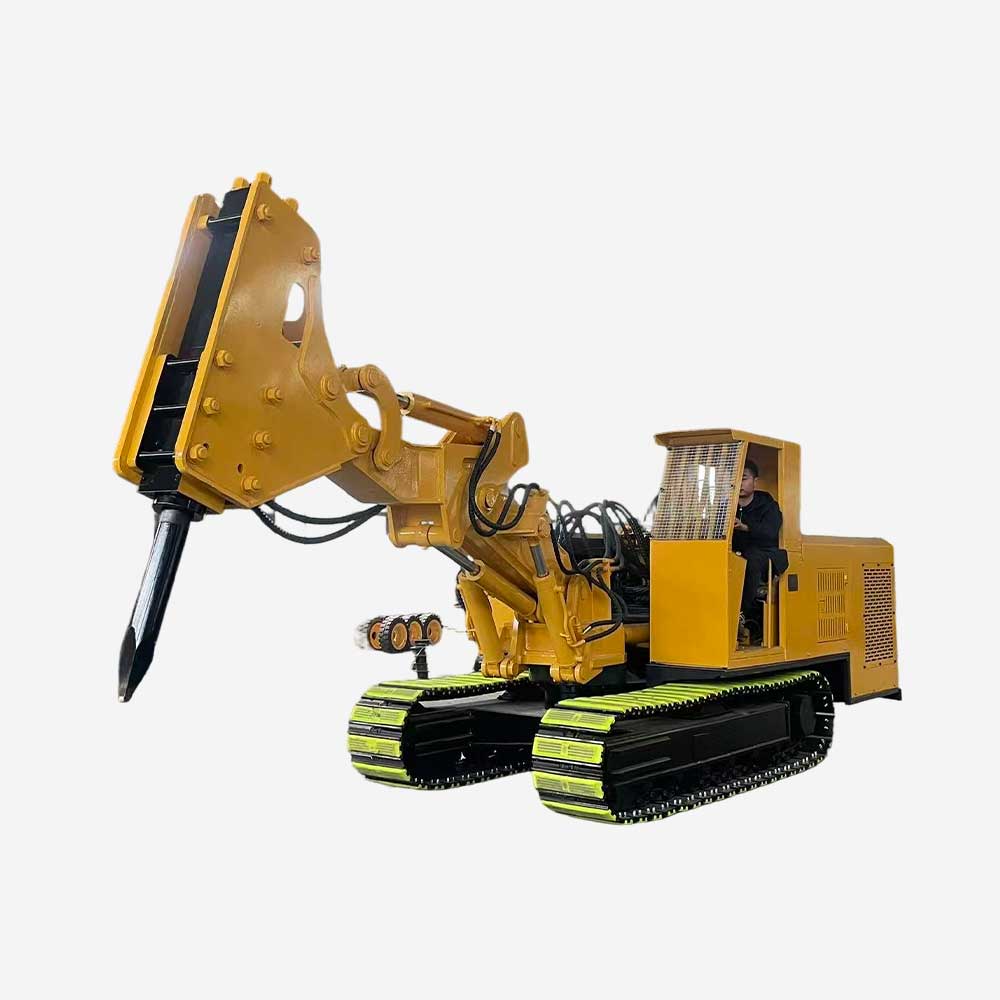
Different excavation methods are designed for different working conditions. Understanding the differences helps project teams choose suitable equipment.
| Equipment Type | Main Function | Suitable Application |
|---|---|---|
| Hydraulic Rock Breaker | Breaks hard materials through hydraulic impact | Hard rock excavation and targeted breaking |
| Tunnel Boring Machine | Performs continuous tunnel excavation | Large-scale tunnel development |
| Roadheader | Cuts and excavates rock mechanically | Underground mining and tunneling |
| Excavator Bucket | Performs general digging and loading | Surface excavation and softer materials |
A hydraulic rock breaker provides flexibility because it focuses on targeted breaking operations. Compared with continuous excavation machines, it can respond more easily to changing geological conditions.
For example, tunnel boring machines are highly effective for large continuous projects, but they may not be suitable when excavation conditions change frequently. Hydraulic rock breakers provide additional adaptability for complex environments.
Role of Hydraulic Rock Breakers in Underground Mining Efficiency
Underground mining requires equipment that can maintain productivity while operating under difficult conditions. Rock-breaking performance directly affects excavation progress because hard formations can slow down the entire workflow.
Hydraulic rock breakers improve efficiency by allowing operators to remove difficult rock sections without interrupting the complete excavation process.
After rock breaking, material handling becomes another important stage. Equipment such as mucking loader can support the removal and transportation of excavated materials, creating a more complete underground excavation workflow.
This combination of breaking and loading equipment helps improve coordination between different excavation stages.
Maintenance Requirements for Hydraulic Rock Breakers
Proper maintenance is essential for maintaining hydraulic rock breaker performance and extending equipment service life.
Regular inspection should focus on:
- Tool bit condition
- Hydraulic connections
- Lubrication system
- Mounting components
- Internal wear parts
Because underground environments often involve dust, vibration, and continuous operation, equipment components may experience increased stress. Preventive maintenance helps identify potential problems before they affect productivity.
Operators should also follow proper operating procedures. Incorrect positioning, excessive pressure, or unsuitable working methods may increase component wear and reduce efficiency.
Technology Trends in Hydraulic Rock Breaking Equipment
The future development of hydraulic rock breakers is closely connected with intelligent monitoring, improved materials, and optimized energy use.
Modern excavation equipment increasingly incorporates monitoring technologies that help operators understand machine performance and identify maintenance requirements earlier.
Manufacturers are also improving hydraulic systems to achieve better impact efficiency while reducing unnecessary energy loss. Stronger materials and improved component designs continue to enhance equipment durability.
In underground construction, the combination of hydraulic breaking technology with intelligent excavation systems will create more efficient and adaptable solutions for complex projects.
How Hydraulic Rock Breakers Support Modern Excavation Solutions
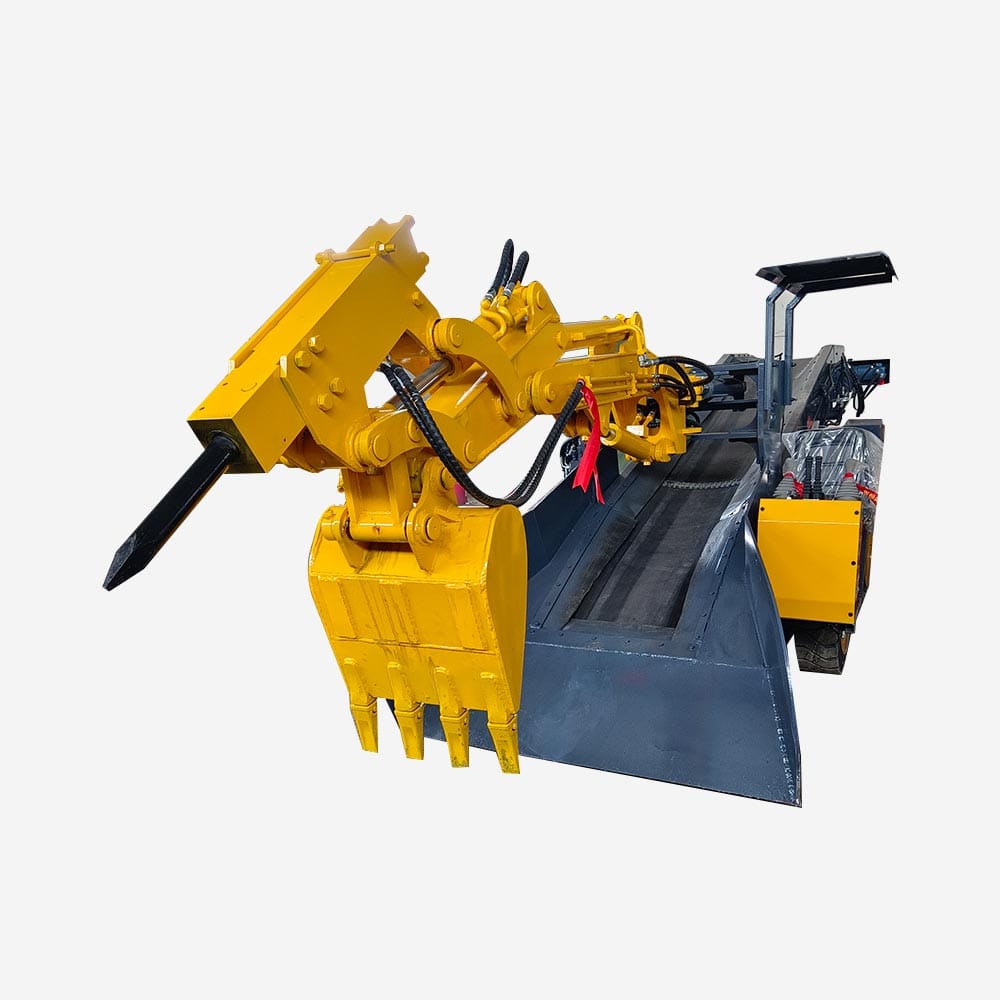
As underground projects become more technically demanding, equipment must provide both power and operational flexibility.
Hydraulic rock breakers support modern excavation by providing controlled breaking capability, improving workflow coordination, and reducing the need for manual intervention in difficult areas.
Their ability to work together with other underground equipment makes them an important part of complete excavation systems. From initial rock breaking to material transportation, coordinated equipment solutions help improve overall project efficiency.
Conclusion
A hydraulic rock breaker is an important tool for modern underground excavation because it provides reliable impact performance, operational flexibility, and adaptability in challenging environments.
By converting hydraulic energy into controlled mechanical force, hydraulic rock breakers help operators handle difficult rock conditions while improving excavation efficiency. Understanding their working principles, applications, and selection factors allows project teams to make better equipment decisions.
As underground mining and tunnel construction continue to evolve, hydraulic rock breaking technology will remain an important solution for achieving safer, more efficient, and more reliable excavation operations.
FAQ
What is a hydraulic rock breaker used for?
A hydraulic rock breaker is used to break hard materials such as rock and concrete through hydraulic impact force. It is widely applied in underground mining, tunneling, and excavation projects.
How does a hydraulic rock breaker work?
A hydraulic rock breaker converts hydraulic energy into mechanical impact energy. A piston moves rapidly and transfers force through a tool bit to fracture hard materials.
Why are hydraulic rock breakers suitable for underground projects?
They are suitable because they provide strong breaking performance, flexible operation, and the ability to work effectively in restricted underground environments.
What factors affect hydraulic rock breaker performance?
Performance depends on rock hardness, hydraulic system compatibility, equipment design, operating conditions, and regular maintenance practices.
Can hydraulic rock breakers work with underground mining equipment?
Yes. Hydraulic rock breakers can be integrated with compatible underground equipment to support rock breaking, excavation preparation, and material handling processes.
Need Help Choosing the Right Hydraulic Rock Breaker?
If you’re unsure which hydraulic rock breaker is suitable for your underground mining or excavation project, our experienced team is ready to provide professional guidance. Contact us today for a reliable equipment solution designed around your working conditions and operational requirements. Ensure your excavation process is efficient, stable, and prepared for future challenges.