
Table of Contents
Introduction
Mining trucks are often evaluated by payload, engine power and body capacity, but these specifications explain only part of their real performance. In an operating mine, a truck creates value only when it moves material through repeated loading, travel and dumping cycles without creating unnecessary waiting between excavation, loading and haulage equipment. A higher-capacity truck may reduce the number of trips required, but that advantage can quickly disappear if the loader takes too long to fill it, the haul route restricts its movement or the dumping area becomes congested.
This system-level view is becoming increasingly important in 2026 as mining operations use more equipment monitoring, digital dispatching and condition-based maintenance to understand where transportation time is actually being lost. Modern mining trucks are therefore developing beyond simple heavy-duty transport vehicles. Their performance increasingly depends on how effectively payload, route conditions, mechanical reliability and operational data work together.
Key factors that influence mining truck performance include:
- Payload matched to actual material volume
- Compatibility between truck and loading equipment
- Loaded and empty cycle time
- Gradeability and powertrain response
- Braking performance on declining routes
- Vehicle width, height and turning radius
- Truck body geometry and material characteristics
- Tire, suspension and chassis condition
- Maintenance accessibility and equipment availability
- Real-time monitoring and fleet dispatch
- Coordination with excavation and material-handling equipment
Understanding these relationships makes it easier to select mining trucks according to the complete haulage process rather than relying on one headline specification.
Why Mining Trucks Are Critical to Material Flow
Mining trucks connect excavation with the next stage of the production process. Once rock, ore or other material has been excavated and loaded, it needs to move away from the working area quickly enough for excavation equipment to continue operating. If trucks are unavailable or poorly scheduled, loaders begin waiting for empty vehicles. If too many trucks arrive at the loading point at the same time, vehicles queue while only one is being filled. In both cases, expensive equipment is operating below its useful capacity even though every individual machine may be mechanically capable of higher output.
This is why mine haulage should be viewed as a flow problem rather than simply a transportation task. Excavation determines how quickly material becomes available, loaders determine how quickly trucks can be filled, haul routes determine travel time and dumping facilities determine how quickly vehicles can return for another cycle. Mining trucks sit at the center of these relationships, so relatively small delays in truck scheduling can influence the productivity of several other machines.
A productive haulage system therefore aims for consistent material movement rather than maximum utilization of one individual truck. The best result occurs when trucks arrive when loaders are ready, complete the haul route without unnecessary interruption and return at a rate that matches continuing material production.
Payload Should Match the Complete Loading Cycle
Payload is one of the most important mining truck specifications because it determines how much material can be transported during each trip. However, larger payload does not automatically create a more efficient operation. Truck capacity needs to match the loading equipment closely enough that vehicles can be filled within a practical number of passes without leaving the loader idle or forcing trucks to wait excessively.
If a small loader is paired with a much larger truck, filling the body can require many bucket cycles. The truck spends a larger share of its operating time stationary rather than transporting material. The opposite mismatch can occur when a large-capacity loader works with trucks that are too small. The loader may fill each vehicle quickly but then spend substantial time waiting for another truck to position itself.
Material density adds another consideration because body volume and payload weight are not interchangeable. Lower-density material may fill the body before the truck reaches its permitted payload, while denser material can reach the weight limit even when the body does not appear completely full. Truck selection should therefore consider both expected material weight and how the material occupies the body during loading.
The most effective payload is consequently not the largest figure available. It is the capacity that allows the loading machine, truck fleet and haul route to operate at compatible rates throughout repeated cycles.
Mining Trucks Need to Be Selected Around Cycle Time
Maximum travel speed rarely provides a useful picture of mining truck productivity because a truck cycle includes much more than driving. Loading, positioning, loaded travel, dumping, empty return and waiting time all contribute to the total period required before the vehicle is ready to receive another load.
A truck may travel quickly along a straight route but still produce a long overall cycle if it spends several minutes waiting at the loader. Another truck may have a lower maximum speed but maintain more consistent cycle times because it is better matched to route gradients, loading capacity and dumping conditions. For fleet planning, this consistency can be more valuable than short periods of high travel speed.
Cycle time also reveals bottlenecks that are not immediately visible from equipment specifications. If loaded travel represents most of the cycle, haul-road improvements or truck performance may deserve attention. If waiting at the loader dominates the cycle, changing truck specifications alone may have little effect. If trucks queue at the discharge area, increasing fleet size could actually make the system less efficient.
For this reason, mining truck performance should be measured over complete operating cycles rather than individual stages. The objective is to reduce avoidable delays while maintaining predictable loading, travel and discharge performance.
Underground Mining Trucks Require a Different Design Balance
Mining trucks used underground face much tighter dimensional restrictions than machines operating in open working areas. Tunnel height limits overall vehicle height, roadway width restricts body and chassis dimensions, and intersection geometry influences the turning radius that can be used practically. At the same time, the vehicle still needs enough payload capacity and structural strength to make each transportation cycle worthwhile.
This creates an engineering trade-off between carrying capacity and maneuverability. Increasing the dimensions of an underground truck may allow a larger body, but it can also reduce clearance around corners, increase repositioning time or restrict passing space between vehicles. A truck that is technically capable of entering a tunnel may still be inefficient if its working clearance is so limited that drivers need repeated corrections during every trip.
Low-profile design is therefore especially important in underground haulage. The chassis, cab, body and powertrain need to be packaged within a restricted envelope while maintaining enough ground clearance and stability for uneven mine roads. PingAn Machinery’s mining trucks are structured around underground material transportation, where capacity must be balanced with the physical limits of confined haul routes.
For underground operations, truck size should therefore be defined by usable capacity within the available roadway rather than by maximum external dimensions.
Powertrain Performance Depends on the Actual Haul Route
Mining trucks spend much of their working life carrying heavy loads over routes that may include repeated gradients, corners and uneven surfaces. Powertrain performance should therefore be evaluated under realistic loaded conditions rather than through peak power figures alone.
An uphill section is a useful example. A loaded truck needs sufficient torque and power to maintain a practical speed without placing excessive stress on the drivetrain. If the vehicle slows dramatically on every climb, the additional travel time becomes part of every haulage cycle. Across a fleet operating continuously, those repeated delays can significantly affect material movement.
The empty return cycle creates different operating requirements because the truck is lighter and may travel in the opposite direction of the same gradients. A well-matched powertrain needs to perform predictably in both conditions rather than being optimized only for one stage of the route.
Vehicle weight, payload, rolling resistance and route gradient all interact with power demand. This is why engine or motor output should be considered together with the actual haul profile. The most useful mining truck is not necessarily the one with the greatest installed power, but the one capable of maintaining stable loaded performance throughout the expected operating route.
Braking and Retarding Performance Are Equally Important
Moving a loaded mining truck uphill requires power, but controlling the same vehicle downhill requires effective braking. As truck mass increases, the energy that must be controlled during a descent also increases, making braking and retarding capability fundamental to both operating consistency and equipment safety.
Repeated downhill braking creates heat, and long declines can place sustained demand on the braking system. A truck that cannot control loaded speed effectively may need to travel considerably more slowly, increasing cycle time while also placing greater thermal demand on braking components. The haul route should therefore be considered during vehicle selection rather than treating braking performance as an isolated safety feature.
Operators also influence how effectively these systems work. Consistent approach speeds and correct use of available retarding functions help reduce unnecessary braking demand, while aggressive acceleration followed by repeated heavy braking adds stress without necessarily reducing total cycle time.
For productive mine haulage, acceleration and braking should therefore be considered together. A powerful mining truck only creates value when it can control that payload just as predictably as it can move it.
Truck Body Design Should Match the Material
Mining truck bodies experience repeated loading impacts, abrasive material contact and large changes in load distribution. Their geometry and construction influence how easily material enters the vehicle, how evenly it is distributed and how effectively it leaves during dumping.
Material characteristics play an important role in this relationship. Large irregular fragments may create concentrated impacts when dropped into the body, while fine material behaves differently during loading and discharge. Highly abrasive material can also increase wear in areas that experience repeated contact.
The body needs sufficient strength to withstand these conditions, but simply adding more material is not always the best engineering solution. Additional structural weight can reduce the amount of the vehicle’s total capacity that remains available for payload. Strategic reinforcement and suitable wear protection can therefore be more useful than increasing thickness uniformly across the entire body.
Loading distribution also deserves attention because repeated concentration of material in one area can create uneven axle loading and localized structural stress. Operators and loading-equipment drivers can support longer-term truck performance by filling the body consistently instead of treating every load as a simple question of total weight.
Haul Route Conditions Directly Affect Mining Truck Performance
A mining truck cannot be evaluated independently from the road on which it operates. Surface condition, gradient, curve radius, roadway width and drainage all affect travel speed, vehicle stability, tire loading and mechanical stress. The same truck can therefore produce very different cycle times on two routes of similar length.
Rough surfaces force drivers to reduce speed and increase dynamic loading through the suspension and chassis. Sharp turns require additional braking and acceleration, while narrow sections can prevent vehicles from passing and create temporary queues. Severe gradients increase power demand in one direction and braking demand in the other.
Underground roads add further restrictions because tunnels may leave relatively little space beside the vehicle. Poor surface conditions combined with limited lateral clearance can make accurate truck positioning more difficult, particularly during loaded travel.
Route maintenance should consequently be considered part of fleet productivity. Improving a repeatedly problematic section of roadway may increase the performance of every truck using that route, whereas purchasing a more powerful vehicle addresses only one part of the system.
Tires, Suspension and Chassis Determine Long-Term Availability
Mining trucks operate through thousands of repeated loading and travel cycles, so long-term performance depends heavily on how well the vehicle manages dynamic loads. Tires maintain contact with the road, suspension systems absorb part of the movement created by uneven surfaces and the chassis carries loads between the body, powertrain and ground.
Tire condition can influence traction, stability and equipment availability. Sharp material, uneven road surfaces and repeated overloading can accelerate damage, while unsuitable inflation or loading practices may affect how forces are distributed through the tire. Because a truck cannot contribute to haulage while undergoing an unplanned tire repair, tire management has a direct connection with fleet capacity.
The chassis faces a similar long-term challenge. Loading impacts, uneven travel, acceleration, braking and cornering create repeated stresses rather than one single maximum load. Structural design must therefore account for fatigue and recurring load paths, especially around high-stress mounting and welded areas.
Suspension connects these systems by controlling how road inputs reach the vehicle structure. Effective suspension performance contributes not only to operator comfort but also to more stable tire contact and reduced shock loading through the chassis.
Maintenance Should Be Based on Duty, Not Hours Alone
Operating hours provide a useful maintenance reference, but they do not fully describe how hard mining trucks have worked. Two vehicles can record similar operating time while experiencing very different route gradients, payload patterns, road conditions and waiting periods.
A truck repeatedly climbing steep grades under heavy load may place greater demand on its powertrain and cooling systems than another truck working on a flatter route. A vehicle operating on a rough roadway can experience different tire, suspension and structural wear even if both trucks complete similar numbers of hours.
Maintenance planning therefore becomes stronger when scheduled inspection is combined with actual operating condition. Brake response, temperatures, fault records, tire condition and driver observations can help technicians identify which systems deserve closer attention.
The aim is not to eliminate preventive maintenance. Scheduled inspection remains essential for consistent fleet management. Condition information simply adds context, allowing maintenance teams to understand whether a particular truck is developing differently from others in the fleet.
This approach can improve equipment availability because maintenance decisions become more closely connected to the real duty each vehicle has experienced.
Smart Monitoring Is Changing Mining Truck Fleet Management
Mining trucks are increasingly becoming sources of operational information rather than simply transportation assets. Payload, vehicle position, cycle time, waiting time, system temperature and fault records can help supervisors understand why fleet performance changes from one shift or operating period to another.
The real value comes from connecting these measurements. A truck with a longer cycle time may appear to have a mechanical performance problem, but location data could show that the vehicle repeatedly waits at the loader. Another truck may show increasing travel time only on one part of the route, suggesting that road conditions rather than the vehicle itself are responsible.
This allows fleet management to separate equipment problems from process problems. Maintenance teams can focus on actual vehicle abnormalities, while operations teams can investigate dispatching, route congestion or loading delays.
Smart monitoring also supports more consistent payload management. Repeated overloading may initially increase the material carried by individual trips, but it can also place additional stress on tires, brakes, suspension and structural components. Monitoring provides better visibility into whether trucks are operating within the intended range across repeated cycles.
In this sense, smarter mining trucks are not simply more automated vehicles. They are vehicles that provide more useful information for managing the complete haulage process.
Fleet Dispatch Matters as Much as Individual Truck Performance
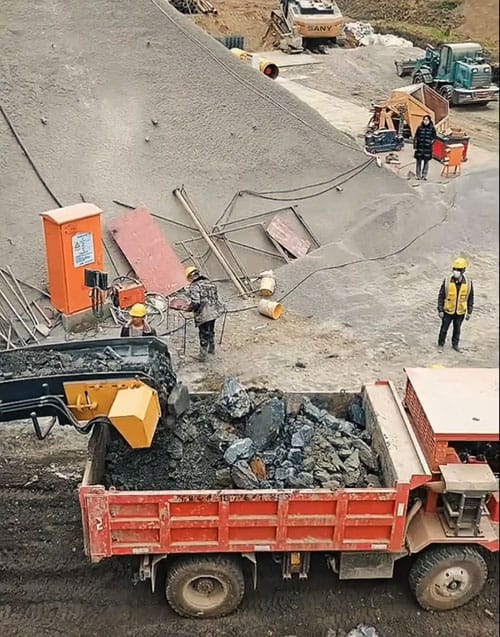
A highly capable mining truck can still spend much of its working period waiting if fleet dispatch is poorly coordinated. The number and timing of trucks need to reflect loading capacity, haul distance and average cycle time so that vehicles arrive at useful intervals rather than forming queues.
Too few trucks can leave the loading machine idle because material is ready but no vehicle is available. Too many trucks create the opposite problem, with vehicles waiting to load or dump. Increasing fleet size beyond the balanced requirement can therefore raise congestion without increasing total material movement.
Dispatching becomes more complicated when route conditions or cycle times change. A temporary delay at a dumping point can affect several trucks behind it, while one vehicle leaving the cycle for maintenance can create a shortage elsewhere.
Real-time fleet information can help supervisors respond to these changes more effectively by adjusting where trucks are sent and how transport capacity is distributed. The wider development of haul trucks increasingly reflects this system-oriented approach, where vehicle capability and fleet management together determine productive haulage.
The useful performance unit is therefore not one truck. It is the coordinated fleet.
Mining Trucks vs Other Material Haulage Methods
Mining trucks provide flexibility because routes can often be changed more easily than fixed transportation systems. They can serve different loading points, move between working areas and adapt as excavation advances. This flexibility is particularly useful where the location of material production changes regularly.
Fixed conveyors offer a different advantage because they can move material continuously along established routes. However, they require infrastructure and are less easily repositioned when working areas change. Load-haul-dump equipment can also combine loading and short-distance transportation, but it serves a different operating role from dedicated mining trucks on longer haul cycles.
The correct material-handling strategy may therefore use more than one method. A loader can collect material near the working face, mining trucks can transport it through the main haul route and a fixed system may take over at another stage.
For confined underground applications, existing underground mining trucks demonstrate why dedicated haulage vehicles continue to be useful where repeated transport between excavation areas and transfer points is required.
Equipment selection should consequently consider where each transportation method performs best rather than trying to make one system handle every stage.
How to Select Mining Trucks for a Real Operation
Selecting mining trucks should begin with material flow requirements rather than with a truck catalogue. The operation first needs to understand how much material is produced, how quickly loading equipment can fill a vehicle and how far that material needs to travel. Route gradients, roadway dimensions and dumping conditions then establish the mechanical and geometric requirements that trucks must satisfy.
Once these operating conditions are clear, payload can be evaluated realistically. The selected truck should be large enough to use available loading capacity efficiently without becoming so large that filling, maneuvering or route clearance creates new delays. Powertrain and braking requirements should reflect the actual route, while body design should match the density and fragmentation characteristics of the transported material.
Maintenance support should also be considered before the fleet begins operation. Tires, braking components, drivetrain systems and structural areas all require access and inspection, and the maintenance team needs enough capacity to keep the planned number of trucks available.
A practical comparison can be organized as follows:
| Selection Factor | What Should Be Evaluated | Why It Matters |
|---|---|---|
| Payload | Material weight per trip | Determines useful transport capacity |
| Loader compatibility | Bucket size and loading time | Prevents loading bottlenecks |
| Tunnel or road dimensions | Width, height and clearance | Determines vehicle suitability |
| Turning radius | Intersections and loading areas | Affects maneuverability |
| Gradient | Loaded and empty route profile | Influences power and braking |
| Body design | Material density and fragmentation | Affects loading and discharge |
| Tire configuration | Road condition and vehicle load | Influences traction and availability |
| Suspension | Uneven-road operation | Controls dynamic loading |
| Braking | Downhill operating conditions | Supports controlled loaded travel |
| Cycle time | Complete loading-to-return period | Determines fleet productivity |
| Maintenance access | Routine service and inspection | Influences availability |
| Monitoring | Payload, faults and operating data | Supports fleet decisions |
This method helps prevent a common selection mistake: comparing trucks according to specifications without first understanding the transportation system in which they will operate.
Common Mining Truck Selection Mistakes
One of the most common errors is assuming that a larger payload automatically produces better productivity. If loading equipment cannot fill the truck efficiently or the haul route is too restricted for its dimensions, the additional capacity can increase waiting and maneuvering time instead of improving material movement. Payload needs to be considered together with loading rate, route geometry and fleet size.
Another mistake is focusing primarily on engine output while giving less attention to braking, route gradients and road conditions. Mining trucks operate through a complete travel cycle, and the ability to control a loaded vehicle downhill can be just as important as its climbing performance. The truck should therefore be matched to both directions of the haul route.
Maintenance capacity is also sometimes underestimated during fleet planning. A theoretical fleet size assumes that every vehicle is available, but real operations include inspections, scheduled servicing and occasional repairs. Mining truck selection should therefore consider not only how many vehicles are needed during ideal conditions but how the system will continue operating when individual trucks temporarily leave the cycle.
Finally, truck selection should not be isolated from the rest of the mine. Loaders, excavation machinery, road design and dumping capacity all influence how efficiently the fleet can work. When these elements are evaluated together, vehicle specifications become easier to interpret in practical terms.
What Is Changing in Mining Trucks in 2026?
The development of mining trucks is increasingly focused on improving consistency rather than simply increasing mechanical capacity. Digital payload monitoring, fleet dispatch systems and condition information are making it easier to identify where trucks are overloaded, waiting unnecessarily or developing maintenance problems.
Automation is also influencing haulage, particularly in operations where routes and loading points follow repetitive patterns. However, the value of automation depends on the surrounding infrastructure and operating process. Automating an inefficient haulage layout does not remove the underlying bottleneck.
Powertrain technology continues to develop as well, with greater attention being paid to how energy is used across loaded climbs, empty returns and repeated braking cycles. These improvements are meaningful when they reduce operating interruptions or allow trucks to maintain more consistent performance across the route.
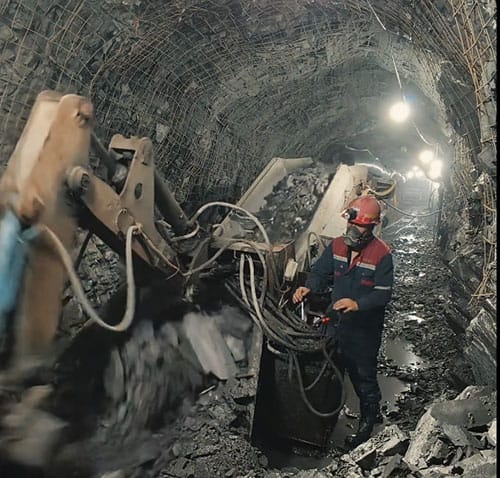
For underground mining trucks, compact design remains equally important. Smart technology does not change tunnel geometry, so vehicle dimensions, maneuverability and maintainability continue to define whether a truck can work effectively in confined conditions.
The most significant change is therefore the combination of mechanical engineering and operational information. Mining trucks are becoming easier to monitor and coordinate, but their productivity still depends on getting the basic equipment match right first.
Conclusion
Mining trucks play a central role in maintaining material flow between excavation, loading and downstream handling. Their productivity depends on far more than carrying the largest possible payload. A useful truck must be filled efficiently, travel predictably, handle gradients safely, maneuver within the available route and remain mechanically available through repeated operating cycles.
Payload, powertrain performance, braking, body design, tires and chassis durability all contribute to this result, but their value depends on how well the truck fits the wider haulage system. Loading equipment needs enough capacity to fill vehicles without excessive delays, haul routes need to support the selected truck dimensions and fleet size needs to remain balanced with average cycle time.
For underground operations, the relationship between capacity and physical space becomes even more important. Truck height, width and turning geometry can directly influence cycle performance, so the largest vehicle is not necessarily the most productive vehicle. The objective is to achieve the highest practical material movement within the available underground envelope.
Digital monitoring and smarter fleet dispatch are improving how mining trucks are managed in 2026, particularly by making waiting time, payload variation and equipment condition more visible. These technologies provide useful information, but they do not replace correct truck selection or well-designed haul routes.
The strongest mining truck strategy therefore begins with the complete material-handling process. When truck capacity, loading equipment, route conditions, maintenance and fleet coordination are designed around the same production objective, haulage becomes more consistent and the entire mining workflow benefits.
FAQ
What are mining trucks used for?
Mining trucks transport rock, ore and other bulk material between excavation, loading, transfer and processing areas. Their effectiveness depends on payload, route conditions and cycle time rather than carrying capacity alone. Correctly matched trucks help prevent excavation and loading equipment from waiting for available haulage.
How do I choose the right mining trucks?
Start with required material movement, loader capacity, haul distance, gradients and roadway dimensions. Then compare payload, powertrain, braking, turning radius and maintenance needs. The best truck is the one that completes consistent cycles while matching loading equipment and the physical limits of the haul route.
Why are underground mining trucks different?
Underground mining trucks must operate within restricted tunnel height, width and turning space while maintaining practical payload capacity. Their chassis, body and powertrain are therefore packaged more compactly than large surface vehicles. Maneuverability and clearance can be as important as payload in confined haulage.
How can mining trucks improve haulage efficiency?
Efficiency improves when payload, loading time, travel time and fleet size are balanced. Reducing queues and unnecessary waiting can produce greater gains than increasing maximum truck speed. Monitoring cycle data also helps operators identify whether delays come from vehicles, loading equipment, routes or dumping points.
What maintenance is most important for mining trucks?
Mining truck maintenance should cover tires, brakes, powertrain, suspension, structural areas and operating fluids while also considering actual vehicle duty. Trucks working on steep or rough routes can experience different wear even with similar operating hours, so scheduled maintenance works best when combined with condition monitoring.