
Table of Contents
Introduction
A huge mining truck is one of the most recognizable pieces of heavy equipment in material haulage, but its real value is not determined by physical size alone. Payload, powertrain performance, braking capability, route conditions, loading compatibility, structural durability and cycle efficiency all determine whether a large truck actually improves mining productivity.
In high-volume operations, transportation can become the link between excavation and the next stage of material processing. When trucks are poorly matched to loading equipment or haul routes, excavation machinery may wait for empty trucks while loaded trucks queue at dumping points. A vehicle with an impressive nominal payload can therefore contribute less than expected if the complete haulage system is unbalanced.
The term huge mining truck also needs some context. In surface mining, it often refers to extremely large off-highway haul trucks built around very high payload capacities. Underground operations follow a different engineering logic because tunnel width, height, turning radius, ventilation and gradients place strict limits on vehicle dimensions. In these environments, the most effective truck is not necessarily the physically largest truck but the highest practical payload that can move safely and consistently through the available route.
The main factors that determine effective mining truck performance include:
- Payload capacity and actual payload utilization
- Truck body and chassis design
- Powertrain performance under load
- Gradeability on mine haul routes
- Braking and retarding capability
- Tire condition and ground interaction
- Loading equipment compatibility
- Turning radius and maneuverability
- Haul-road or tunnel dimensions
- Cycle time and waiting time
- Structural fatigue and maintenance
- Vehicle condition monitoring
- Fleet-level coordination
Understanding these relationships helps explain why successful mine haulage depends on much more than selecting the biggest truck available.
What Is a Huge Mining Truck?
A huge mining truck generally refers to a heavy-duty off-highway vehicle engineered to transport large quantities of rock, ore, overburden or other bulk material within a mining operation. These trucks are designed around repeated high-load cycles rather than normal road transportation.
The broader category of haul truck includes heavy-duty off-road vehicles specifically engineered for demanding mining and construction environments. Payload capacity is one of their defining characteristics, but their chassis, tires, braking systems, dump bodies and powertrains are also developed around continuous operation under substantial loads.
The word “huge,” however, should not become the only selection criterion. Mining trucks operate in very different environments. A large surface haul route may provide enough width and turning space for an extremely large rigid truck, while an underground tunnel may demand a lower, narrower and more maneuverable machine.
For this reason, useful capacity should always be considered together with the operating environment. A truck that carries more material per trip but cannot move efficiently through corners, gradients or restricted loading areas may create longer cycle times rather than better productivity.
Bigger Payload Does Not Automatically Mean Better Productivity
Payload capacity is normally one of the first numbers considered when evaluating a huge mining truck. In theory, carrying more material per trip should reduce the number of trips required to move a given volume.
In practice, payload only creates value when the rest of the haulage system can use it efficiently.
Consider a loading machine that requires many bucket passes to fill an oversized truck. The truck may spend too much time stationary at the loading point. Alternatively, if the loading equipment is extremely large but the trucks are too small, several vehicles may need to queue continuously to absorb excavation output.
The better objective is equipment matching.
A useful truck should receive its load within a reasonable number of loading passes, travel efficiently along the haul route, discharge without unnecessary delay and return for the next cycle with minimal waiting.
Payload should therefore be evaluated as part of a repeating cycle rather than as an isolated specification.
A truck that consistently completes well-balanced cycles can move more useful material during a working period than a larger vehicle that repeatedly waits, queues or operates below its intended payload.
Truck Body Design Influences Useful Payload
The dump body is not simply a container placed on the chassis. Its geometry influences loading, material retention, weight distribution and discharge behavior.
A larger body can increase carrying volume, but volume and payload are not the same measurement. Low-density material may fill the body before the truck reaches its allowable payload, while dense material may reach the weight limit before the body is physically full.
This distinction matters because mining trucks often handle materials with different densities and fragment sizes.
Body shape also affects how material enters during loading. Poor loading distribution can create uneven axle loads and unnecessary structural stress. During discharge, the body should allow material to leave predictably without requiring excessive vehicle repositioning.
Structural weight matters as well. A stronger body needs to withstand repeated loading impacts and abrasion, but unnecessary body weight reduces the proportion of total vehicle capacity available for payload.
Effective design therefore balances capacity, wear resistance and structural mass.
The ideal mining truck body is not necessarily the largest. It is the body that matches the material, payload target and loading process while remaining durable enough for repeated mine cycles.
Powertrain Performance Should Be Evaluated Under Load
A huge mining truck needs significant power, but maximum engine or motor output tells only part of the story.
Mining trucks spend much of their operating life loaded, climbing grades, accelerating after loading points and controlling speed on descents. The powertrain must therefore provide usable performance across the complete route rather than simply achieving a high peak power rating.
Loaded grade performance is particularly important.
A truck that maintains suitable speed on level sections but slows dramatically on repeated uphill segments can increase overall cycle time. When several trucks operate on the same route, one slow loaded vehicle can influence the movement of the wider fleet.
Powertrain selection also interacts with vehicle weight.
As payload increases, the machine needs enough traction and power to maintain predictable movement without creating excessive stress or unnecessary energy consumption.
The most useful performance question is therefore not how powerful the huge mining truck is in isolation. It is whether the truck can maintain an appropriate loaded speed across the actual route while remaining within its intended operating limits.
Braking Becomes More Important as Truck Mass Increases
Moving a loaded mining truck is only half of the transportation problem. The machine also needs to slow and stop predictably.
This becomes increasingly important as vehicle mass increases.
A heavily loaded truck traveling downhill contains substantial kinetic and potential energy. Braking systems need to manage that energy repeatedly during normal operation rather than only during emergency stops.
Long downhill sections can place particularly high demands on braking and retarding systems. Depending on vehicle design, service brakes may work together with other retarding mechanisms to control speed and reduce unnecessary heat accumulation.
Route design and operator behavior therefore influence braking performance.
Approaching a long descent at an inappropriate speed can create greater braking demand than necessary. Operating the truck within the intended speed range allows the braking and retarding systems to work more consistently.
Maintenance is equally important. Brake performance should be inspected as part of routine vehicle management because changes in braking response can influence both safety and cycle consistency.
For a huge mining truck, the ability to control loaded mass is just as important as the ability to move it.
Haul Route Design Can Determine Truck Productivity
A mining truck spends much of its productive life traveling between loading and dumping locations. The route itself therefore becomes part of the machine system.
Gradients affect loaded speed and power demand. Corners influence braking and acceleration. Surface condition affects traction, tires and suspension. Narrow sections can cause vehicles to slow or wait. Poorly designed loading and dumping approaches can add unnecessary maneuvering.
This means two identical trucks can produce very different results on different routes.
A smooth, well-designed haul route allows the vehicle to operate more consistently. A rough route with severe gradients and repeated tight turns can increase cycle time while placing additional stress on tires, chassis components and the powertrain.
Route length matters, but it should not be considered alone.
A slightly longer route with smoother gradients and fewer interruptions may sometimes support more predictable truck cycles than a shorter but difficult path.
For underground operations, the route becomes even more restrictive. Tunnel height, roadway width, turning radius, gradients and passing space directly limit vehicle dimensions. PingAn Machinery’s mining truck range is designed around underground haulage, where available payload has to be balanced against confined-space mobility rather than maximum external dimensions.
Huge Mining Truck and Underground Mining Truck Are Different Design Problems
The phrase huge mining truck often creates an image of an extremely large surface haul truck, but underground trucks solve a different engineering problem.
Surface operations may allow vehicles to become wider, taller and heavier as payload increases. Underground tunnels set much stricter dimensional boundaries.
An underground mining truck needs to fit beneath the available roof clearance while leaving sufficient operational space. Width needs to allow safe travel through the roadway, and turning geometry has to match intersections and working areas. Vehicle height, wheelbase and body dimensions therefore become central design factors.
This changes how “large capacity” should be interpreted underground.
The objective is not simply to maximize tonnage per vehicle. The objective is to maximize useful transport capacity within the tunnel envelope.
A truck that carries slightly more but struggles through turning points may have a longer cycle time than a more compact machine. The larger vehicle may also reduce passing space or interfere with other equipment using the same roadway.
For confined operations, the best mining truck is therefore often the largest practical truck rather than the largest possible truck.
Loading Equipment and Truck Capacity Must Be Matched
Mining truck productivity begins before the vehicle starts moving.
The loading stage has a major influence on cycle time.
An excavator or loader transfers material into the truck body through repeated passes. The relationship between bucket capacity and truck payload determines how many passes are required.
If the truck is very large relative to the loading equipment, loading time may become excessive. The loader spends too long filling one vehicle while other trucks wait.
If the truck is too small, the loading machine may not use its capacity effectively, and a larger number of truck movements may be needed.
The ideal relationship depends on material density, bucket fill, truck body geometry and the wider production target.
Consistent loading is also important for structural reasons.
Material should be distributed so that axle loading remains appropriate. Large rocks dropped repeatedly into the same area can increase local impact loading on the body.
This is why haulage efficiency cannot be optimized from the truck specification alone. Excavation and loading machinery determine how effectively the truck’s capacity can actually be used.
Cycle Time Is More Important Than Maximum Truck Speed
A huge mining truck may have an impressive maximum speed, but mine productivity depends on total cycle time.
A typical truck cycle includes loading, loaded travel, maneuvering at the discharge point, dumping, empty return travel and positioning for the next load.
Waiting time can appear between any of these stages.
A truck may wait because loading equipment is occupied.
It may queue behind another vehicle.
It may slow because of road conditions.
It may wait at a dumping location.
It may require additional maneuvering before reaching the loading position.
These delays accumulate throughout the shift.
For this reason, reducing nonproductive waiting can sometimes improve haulage output more effectively than increasing vehicle speed.
A mining truck that operates consistently at controlled speeds with little waiting can achieve a shorter average cycle than a faster truck operating in a poorly coordinated fleet.
This is one reason fleet monitoring has become increasingly valuable. Recording loading time, travel time, dumping time and waiting periods helps operators identify where the real bottleneck exists.
How Payload, Route and Cycle Time Work Together
Mining truck performance becomes easier to understand when the major operating factors are considered together.
| Evaluation Factor | Why It Matters | Poorly Matched Result |
|---|---|---|
| Payload | Determines material moved per trip | Underloading or excessive truck size |
| Loader capacity | Determines loading duration | Long loading queues |
| Haul distance | Influences travel portion of cycle | Higher total cycle time |
| Gradient | Affects loaded speed and power demand | Slow climbs and greater drivetrain stress |
| Road condition | Affects traction and vehicle movement | Tire wear and speed reduction |
| Turning geometry | Determines maneuverability | Repositioning and delays |
| Braking capability | Controls loaded downhill movement | Reduced route speed |
| Dumping area | Influences discharge time | Queuing and maneuvering |
| Truck availability | Determines usable fleet capacity | Production interruptions |
| Fleet coordination | Balances trucks with loading output | Waiting at either end of the route |
The most productive configuration is not the row with the largest individual value. Productivity comes from balancing the entire table.
That principle applies whether the operation uses extremely large surface haul trucks or more compact underground mining vehicles.
Tire Performance Has a Major Effect on Huge Mining Truck Operation
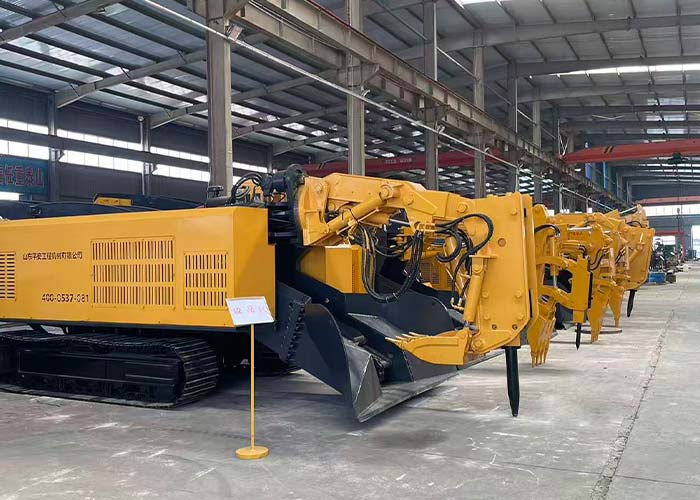
The tires of a large mining truck carry enormous loads while repeatedly traveling over demanding surfaces.
Their role goes beyond simply supporting vehicle weight.
Tires influence traction, ride behavior, vehicle stability and the ability to transfer power to the ground. Their condition can also influence equipment availability because tire problems may require the truck to leave the haul cycle.
Road conditions therefore have a direct relationship with tire performance.
Sharp rock fragments, uneven surfaces and repeated high-impact sections can increase damage. Poorly maintained routes can also create additional heat and mechanical loading.
Payload management matters as well.
Repeated overloading increases stress throughout the vehicle, including at the tire-ground interface.
Operators should therefore treat tires as part of the haulage system rather than as isolated consumable components.
Route maintenance, correct loading, controlled speed and inspection all contribute to more predictable tire behavior.
For a huge mining truck, preventing avoidable tire-related downtime can be just as important as improving engine performance.
Structural Durability Depends on Repeated Load Cycles
A mining truck frame experiences a demanding combination of loads.
The vehicle carries heavy material, travels over uneven ground, accelerates, brakes, turns and receives repeated impacts during loading.
These forces do not occur once. They repeat throughout the machine’s working life.
Structural engineering therefore needs to consider fatigue as well as maximum load.
A frame may easily withstand one fully loaded trip but still develop problems if stress repeatedly concentrates around the same welded joint or mounting area.
Dump bodies face similar conditions.
Material dropped from loading equipment creates impact loading, while abrasive material gradually wears contact surfaces.
Good mining truck design places reinforcement where loads require it while avoiding unnecessary weight elsewhere.
Inspection should focus particularly on areas exposed to repeated stress. Changes around welds, mounting points, suspension interfaces and body supports can provide early evidence of developing structural issues.
The objective is not simply to make every component heavier. It is to create a structure capable of handling repeated working cycles efficiently.
Suspension and Ride Control Influence More Than Comfort
Suspension is sometimes discussed mainly in relation to operator comfort, but its influence extends further.
A mining truck traveling over uneven surfaces experiences vertical and lateral movement. The suspension helps manage those loads and controls how forces move through the chassis.
A well-controlled vehicle can maintain better tire contact with the road and reduce unnecessary shock loading on structural components.
Operator fatigue matters as well.
Mining haulage involves repetitive cycles, and excessive vibration can make sustained vehicle control more demanding. Cab design, seating, visibility and ride behavior therefore contribute indirectly to operating consistency.
This does not mean that a huge mining truck should be expected to behave like an on-road vehicle.
Mining trucks work in fundamentally different environments.
The objective is controlled heavy-duty movement rather than passenger-car comfort.
A stable vehicle allows the operator and machine systems to perform more predictably throughout repeated haul cycles.
Overloading Can Reduce Rather Than Increase Productivity
Carrying more material in one trip can appear to be an easy way to improve haulage output.
Repeated overloading can produce the opposite result.
Additional mass increases demand on the powertrain during acceleration and climbing. It places greater load on brakes during downhill travel. Tires experience additional stress, and structural components operate under higher loads.
Truck body and suspension systems are also affected.
A temporarily larger payload therefore needs to be considered against the longer-term effect on equipment condition and cycle performance.
Consistent payload management is generally more useful than maximizing individual loads.
A properly loaded truck can operate within its intended performance range and produce more predictable cycle times.
Modern payload monitoring can support this process by giving operators and fleet managers clearer information about how much material individual trucks are actually carrying.
The goal is not maximum weight on every trip.
It is maximum sustainable material movement across the operating period.
Maintenance Strategy Should Follow Actual Truck Duty
Scheduled maintenance remains essential for a huge mining truck, but calendar or operating-hour intervals do not tell the complete story.
Two trucks with the same operating hours may experience very different workloads.
One may travel mainly on moderate grades with consistent payloads. Another may repeatedly operate on steep routes, rough surfaces and heavy loading cycles.
Their maintenance requirements may therefore develop differently.
Condition monitoring can add useful context by tracking operating temperatures, system pressures, fault histories and other vehicle data.
Operators contribute another source of information. Changes in braking response, steering behavior, vibration or power delivery may be noticed during normal operation before they become obvious during scheduled inspection.
Maintenance planning works best when these sources are combined.
Routine inspection provides consistency. Machine data provides trends. Operator observations provide practical context.
This allows maintenance teams to identify developing issues earlier rather than waiting for a major component fault to interrupt haulage.
Smart Monitoring Is Changing Mine Haulage
Modern mining trucks increasingly produce useful operational data.
Vehicle location, payload, cycle time, fuel or energy use, system temperatures, fault conditions and waiting periods can all contribute to fleet management.
The greatest value comes when these individual measurements are connected.
For example, a truck with longer cycle times may initially appear to have a performance problem. Location and waiting-time data may reveal that the actual delay occurs at the loading point.
A rise in energy consumption may result from mechanical deterioration, but it may also be associated with changes in route condition or payload.
Data therefore needs context.
Fleet management systems can help operators distinguish truck-related problems from process-related problems.
This represents an important shift in how huge mining truck performance is evaluated.
Instead of asking only whether each vehicle is operating, management teams can examine how efficiently the entire fleet is moving material.
That broader view often reveals productivity opportunities that are invisible in individual machine specifications.
Electrification and Automation Are Changing Truck Design
Mining truck technology continues to develop beyond traditional mechanical systems.
Electric drive, hybrid systems, automated functions and increasingly sophisticated control technology are influencing how mine haulage is engineered.
Automation can help manage repetitive operating patterns, particularly on routes where loading and dumping points remain relatively consistent.
Driver-assistance systems can also provide information about vehicle proximity, route position and operating conditions.
Electrification introduces another engineering dimension because energy storage, charging or power supply infrastructure becomes part of fleet planning.
However, technology should not be adopted simply because it is new.
The same fundamental questions remain relevant.
Can the truck maintain the required cycle?
Does it match the loading system?
Can it handle the route?
Can technicians maintain it?
Does the supporting infrastructure fit the operation?
Smart technology provides the greatest value when it improves one of these practical outcomes rather than merely adding complexity.
Why Underground Haulage Requires a Different Definition of “Huge”
For underground operations, capacity has to be measured against space.
PingAn’s existing discussion of underground mining trucks emphasizes the importance of confined tunnels and low-clearance environments, which illustrates why underground vehicle engineering cannot follow the same dimensional logic as giant surface haul trucks.
An underground truck needs enough clearance to operate safely while still carrying a useful payload. Its turning geometry needs to work at intersections. The dump body needs enough space to raise or discharge within the working area. The vehicle also needs to coexist with loaders, excavation machinery and ventilation infrastructure.
Increasing truck size can therefore create diminishing returns.
At some point, additional payload may reduce maneuverability enough to increase cycle time.
This leads to a useful distinction.
In surface haulage, huge can describe physical scale and extreme payload.
In underground haulage, the more relevant objective is maximum effective capacity within a restricted envelope.
For equipment selection, that difference is critical.
How to Select the Right Mining Truck Capacity
Truck selection should begin with expected material movement rather than vehicle size.
The operation needs to understand how much material excavation and loading equipment can produce during a working period. The haul route then determines how quickly each truck can complete a cycle.
From there, engineers can estimate how much truck capacity is required to keep material moving without creating excessive waiting.
Tunnel or road dimensions establish another boundary. Vehicle width, height, turning radius and dumping requirements all need to fit the route.
Gradient affects powertrain and braking requirements, while road condition influences tires and suspension.
Loading compatibility should then be checked. The truck body and payload should allow the loading machine to fill the vehicle efficiently without excessive passes.
Maintenance capability also matters. A larger or more complex truck provides little advantage if service infrastructure cannot support it effectively.
The correct capacity is therefore the result of several constraints working together.
This is why mining truck selection should be treated as a haulage-system calculation rather than a search for the highest payload specification.
Common Mistakes When Evaluating a Huge Mining Truck
A frequent mistake is assuming that the largest payload automatically provides the lowest number of transport cycles and therefore the highest productivity. This ignores loading time, route limitations, maneuvering and vehicle availability. The truck needs to fit the entire operating process before payload becomes useful.
Another mistake is focusing on engine power while underestimating braking and route conditions. High loaded performance on an uphill section creates little advantage if the truck has to operate unnecessarily slowly elsewhere because route geometry or braking requirements were not considered during selection.
Mine planners can also underestimate the relationship between truck and loader capacity. An oversized truck matched with a much smaller loader may spend too much time being filled, while undersized trucks can create excessive vehicle traffic around a high-capacity loading machine.
Maintenance is another area that should be considered before equipment deployment. Tire service, braking systems, drivetrain components, structural inspection and condition monitoring all influence long-term availability. A truck only moves material while it is available to enter the haul cycle.
The strongest equipment decision therefore comes from balancing payload, route, loading and maintenance requirements rather than maximizing one specification.
What Defines an Efficient Huge Mining Truck?
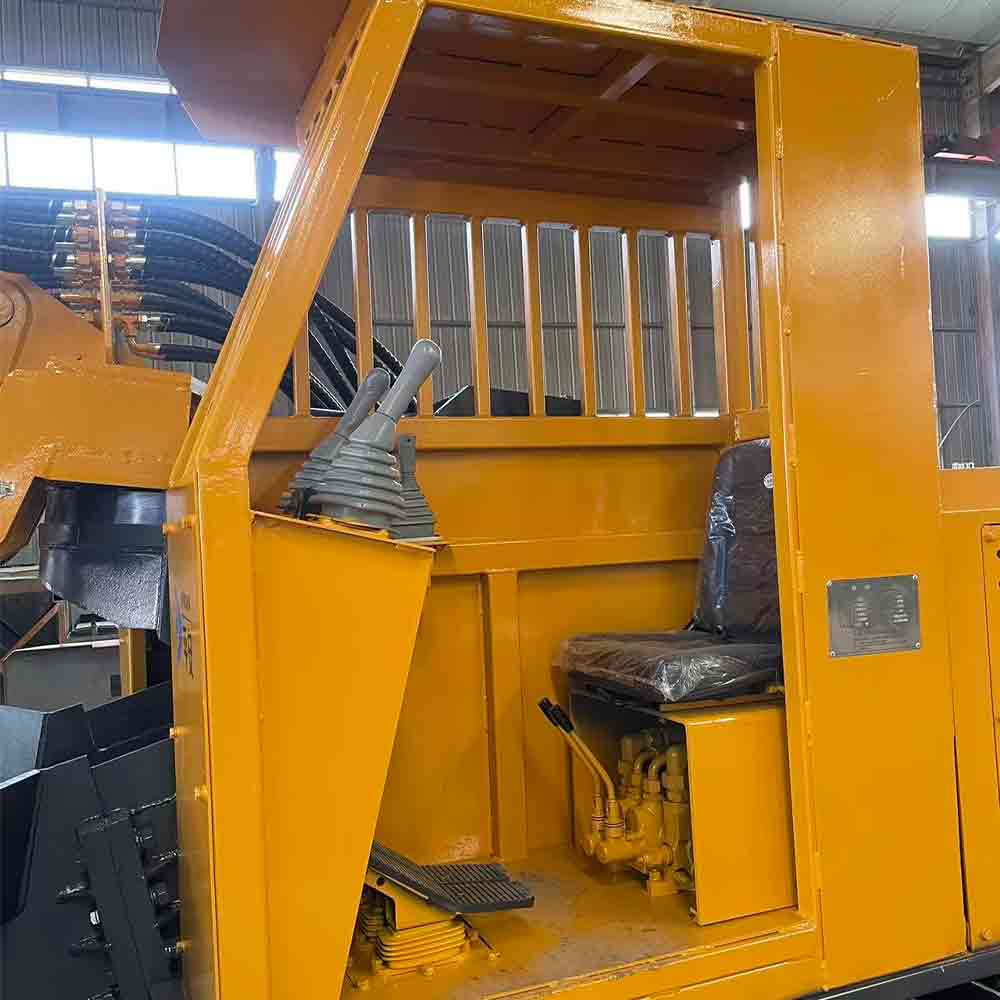
An efficient huge mining truck is not necessarily the vehicle that carries the largest single load.
It is the truck that moves the required material through repeated cycles with predictable loading, travel, dumping and maintenance performance.
Payload should be high enough to use available transport capacity effectively but remain compatible with loading machinery.
The powertrain should maintain suitable performance over actual gradients.
Braking systems should manage loaded downhill sections consistently.
The body should match material characteristics.
The chassis and suspension should handle repeated operating loads.
Tires should be suited to route conditions.
Maintenance should be practical enough to support high equipment availability.
Most importantly, the truck should operate as part of a coordinated fleet.
A mine does not gain productivity simply because one vehicle completes a fast cycle. Productivity comes from keeping excavation, loading, haulage and discharge working together.
That is the more useful definition of a high-performance mining truck.
Conclusion
A huge mining truck represents some of the heaviest-duty material transportation engineering used in mining, but physical scale alone does not determine haulage performance.
Payload matters because it determines how much material can move in each trip. Power matters because a loaded truck needs to maintain suitable performance across the route. Braking matters because the same mass needs to be controlled safely on descents. Tire condition, structural durability and maintenance determine how consistently the truck remains available.
Yet these factors only create value when they are integrated with the wider mining process.
Loading equipment needs to fill the truck efficiently. Haul routes need to support its dimensions and performance. Dumping points need to avoid unnecessary queues. Fleet size needs to match excavation output. Maintenance systems need to keep trucks available for repeated cycles.
The definition of the right truck also changes with the mining environment. Extremely large surface trucks can use physical scale to achieve very high payloads, while underground mining requires a different balance between capacity and confined-space maneuverability.
This is why selecting a huge mining truck should never begin with the largest payload number in a specification table.
It should begin with material volume, loading capacity, haul distance, gradients, available space and required cycle time. Once those conditions are understood, vehicle capacity can be matched to the system.
The most productive mining truck is therefore not always the biggest truck. It is the truck that moves the greatest sustainable amount of material while fitting naturally into the complete haulage workflow.
FAQ
What is a huge mining truck?
A huge mining truck is a heavy-duty off-highway vehicle designed to move large quantities of rock, ore or other bulk material within mining operations. Its performance depends on more than payload capacity, because powertrain capability, braking, route conditions, loading compatibility and equipment availability all affect useful haulage output.
How much material can a huge mining truck carry?
Payload varies significantly according to truck class and operating environment. Extremely large surface haul trucks can carry very high payloads, while underground vehicles use lower capacities because tunnel dimensions restrict vehicle size. The correct payload should match loading equipment, route geometry and required cycle performance.
Why are huge mining trucks used instead of smaller trucks?
Larger trucks can move more material per trip and potentially reduce the number of vehicles needed for a given haulage target. However, this benefit depends on loader capacity, road dimensions, gradients and cycle time. A larger truck can become less efficient when it creates long loading times, maneuvering problems or haul-route bottlenecks.
What should be considered when choosing a huge mining truck?
Selection should consider material volume, payload, loading equipment, haul distance, gradients, road or tunnel dimensions, braking, tires, powertrain performance and maintenance capability. Fleet coordination is equally important because the best truck capacity is the one that balances excavation output with loading and transportation cycles.
Are huge mining trucks suitable for underground mining?
Extremely large surface-style haul trucks are generally constrained by underground tunnel dimensions. Underground mining trucks use a more compact design that balances payload with vehicle height, width and turning radius. For underground operations, the goal is usually maximum practical carrying capacity within the available roadway envelope.