
Table of Contents
Introduction
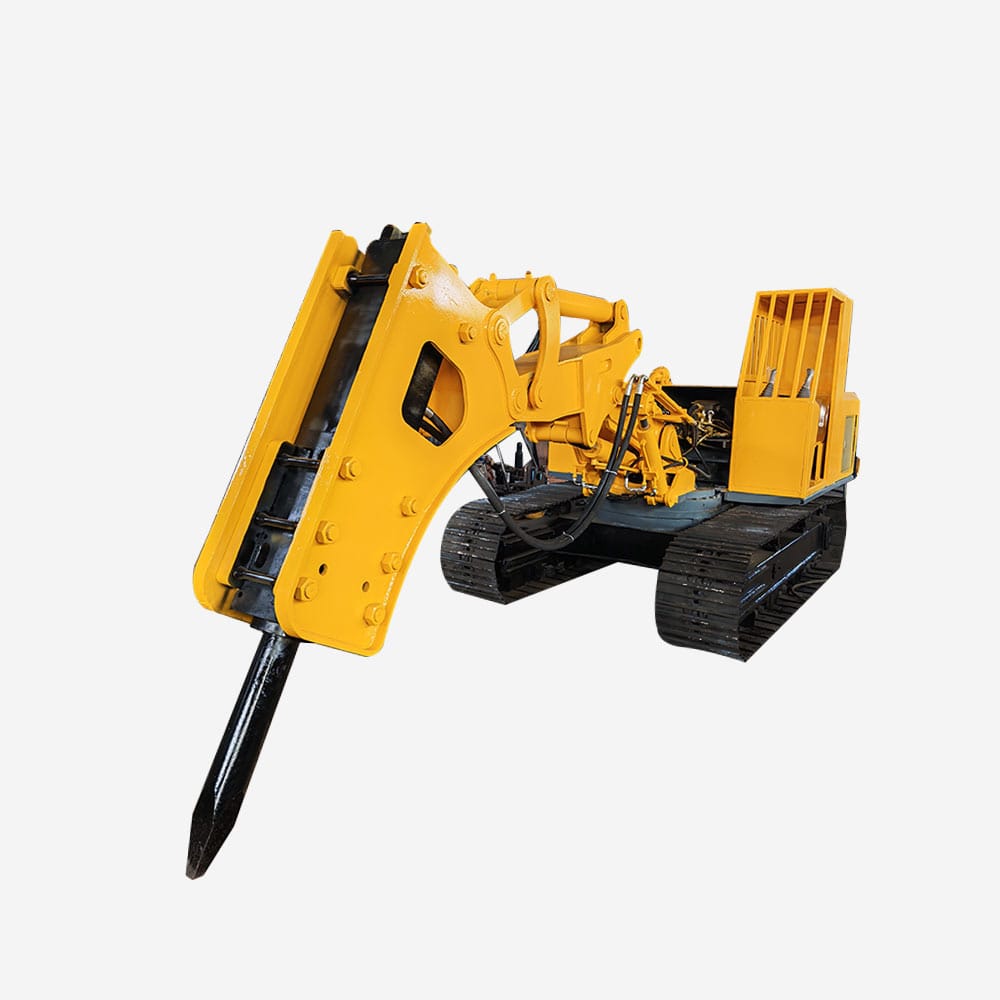
A hydraulic breaker hammer can deliver powerful and repeatable rock fragmentation, but underground performance depends on far more than the nominal size of the hammer. Hydraulic flow, operating pressure, carrier stability, tool condition, rock structure and operator technique all determine how efficiently impact energy reaches the material.
This distinction is important because a breaker can appear to be working normally while a significant part of its energy is being lost through poor tool contact, unsuitable hydraulic settings, excessive machine movement or incorrect positioning. In demanding underground environments, those small inefficiencies can gradually increase tool wear, hydraulic temperature and maintenance requirements while reducing actual breaking output.
A well-matched hydraulic breaker hammer should convert hydraulic energy into controlled mechanical impacts and transfer those impacts into the rock with as little unnecessary energy loss as possible. That requires the breaker, carrier and working environment to be considered as one system rather than three separate decisions.
The main factors that determine performance include:
- Hydraulic flow and operating pressure
- Breaker and carrier compatibility
- Stable tool-to-rock contact
- Rock strength and natural fracture patterns
- Tool shape and condition
- Carrier stability and boom geometry
- Hydraulic temperature and oil condition
- Correct lubrication
- Controlled operating technique
- Suitable maintenance intervals
- Underground working space
- Coordination with loading and material-handling equipment
Understanding these relationships helps operators improve breaking efficiency without relying simply on a larger hammer or more aggressive operating settings.
What Is a Hydraulic Breaker Hammer?
A hydraulic breaker hammer is a percussion device that uses hydraulic energy supplied by a carrier to generate repeated impacts against hard material. It is commonly mounted on excavators or specialized underground carriers and is used for rock fragmentation, secondary breaking, localized excavation and removal of oversized material.
The operating principle of a hydraulic breaker is relatively straightforward. Pressurized hydraulic fluid drives an internal piston, and the piston repeatedly strikes a working tool positioned against the material. The impact travels through the tool and creates concentrated stress inside the rock until cracks develop and the material separates.
Although the principle is simple, efficient energy transfer is not automatic. The breaker must receive suitable hydraulic flow and pressure, the carrier must provide a stable reaction force, and the tool must remain properly positioned against the rock.
This is why two hydraulic breaker hammer systems with similar breaker specifications can perform very differently underground. One may be properly matched to its carrier and work efficiently, while another loses energy through unstable positioning, excessive hydraulic temperature or poor tool contact.
The useful performance of the breaker therefore comes from the complete working system rather than from the hammer alone.
How Impact Energy Reaches the Rock
Understanding the energy path helps explain many common hydraulic breaker hammer problems.
The process begins at the carrier’s hydraulic system. The pump supplies hydraulic fluid to the breaker circuit, where pressure and flow operate the internal mechanism. The piston accelerates and transfers energy to the upper end of the working tool. The tool then concentrates that energy into a relatively small contact area on the rock.
Ideally, most of the usable impact energy enters the material.
In practice, energy can be lost at several points.
If the tool is not firmly seated against the rock, part of the impact may be absorbed by unnecessary movement inside the breaker. If the carrier is unstable, the machine may bounce or shift rather than providing a solid reaction force. If the tool is badly worn, impact transfer may become less consistent. If the hydraulic supply does not match the breaker, the internal impact cycle may not operate as intended.
Effective breaking is therefore fundamentally an energy-transfer problem.
The objective is not to create the greatest possible movement or noise. It is to direct repeated impact energy into a fracture point in the material.
This is also why good operating technique can sometimes improve productivity more than increasing breaker size. Better tool positioning, more stable carrier pressure and intelligent selection of the impact point can allow the same hydraulic breaker hammer to use its available energy more effectively.
Hydraulic Flow and Pressure Must Work Together
Hydraulic flow and operating pressure are central to breaker performance, but they should not be treated as interchangeable measurements.
Flow determines how much hydraulic fluid moves through the breaker circuit over time. Pressure represents the hydraulic force available within the system. The breaker is designed around a suitable range of both.
When hydraulic flow is below the required range, the internal impact cycle may become slower or less consistent. The hammer may continue operating, but breaking performance can fall because the system cannot maintain the intended operating frequency.
Excessive flow does not automatically create better results. Sending more oil through a breaker than its hydraulic system is designed to accept can create additional heat and increase stress on hydraulic components without producing a corresponding increase in useful fracture energy.
Pressure requires the same discipline. The system needs sufficient pressure to operate the breaker correctly, but increasing pressure beyond the intended working range is not an appropriate method for overcoming difficult rock.
A properly matched hydraulic breaker hammer operates within a balanced hydraulic window where the carrier can supply adequate flow and pressure without creating unnecessary heat or overloading other components.
The practical lesson is simple: hydraulic compatibility matters more than maximum hydraulic output.
Why Carrier Matching Affects Breaking Efficiency
The carrier does much more than transport the hydraulic breaker hammer from one rock to another. It also provides hydraulic power, boom control, machine stability and the reaction force required during impact.
If the breaker is too heavy or powerful for the carrier, the machine may move excessively during operation. Instead of directing impact energy into the rock, part of the energy is absorbed through carrier movement and structural vibration.
An oversized breaker can also make precise positioning more difficult. The boom may struggle to maintain the correct contact force, particularly when working near the limits of its reach.
A breaker that is too small can create a different problem. It may require prolonged hammering on material that needs stronger individual impacts, increasing operating time and tool exposure without producing efficient fragmentation.
Correct matching therefore considers the relationship between breaker operating weight, carrier size, hydraulic capability, boom strength and machine stability.
Underground applications make this relationship even more important because the machine may operate on uneven floors or within narrow tunnel profiles. The carrier needs enough stability to support controlled impacts while remaining compact enough to maneuver through the working area.
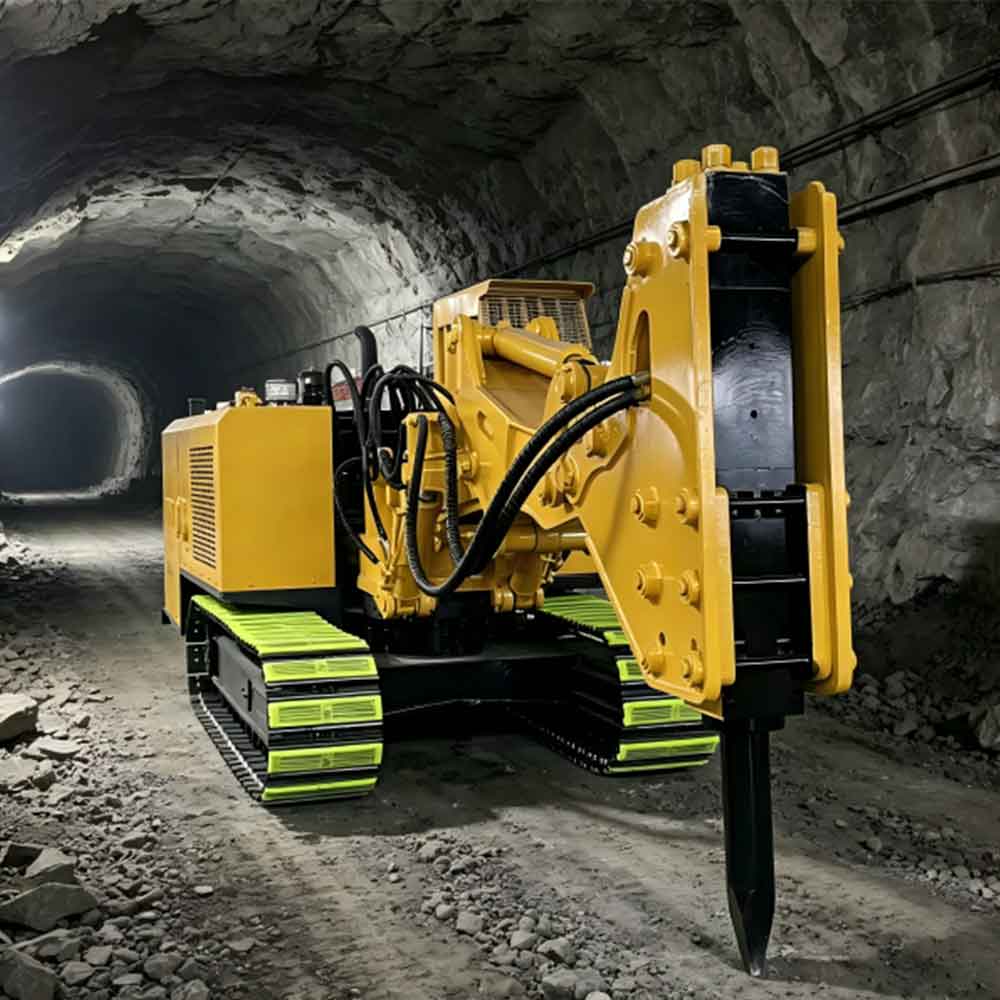
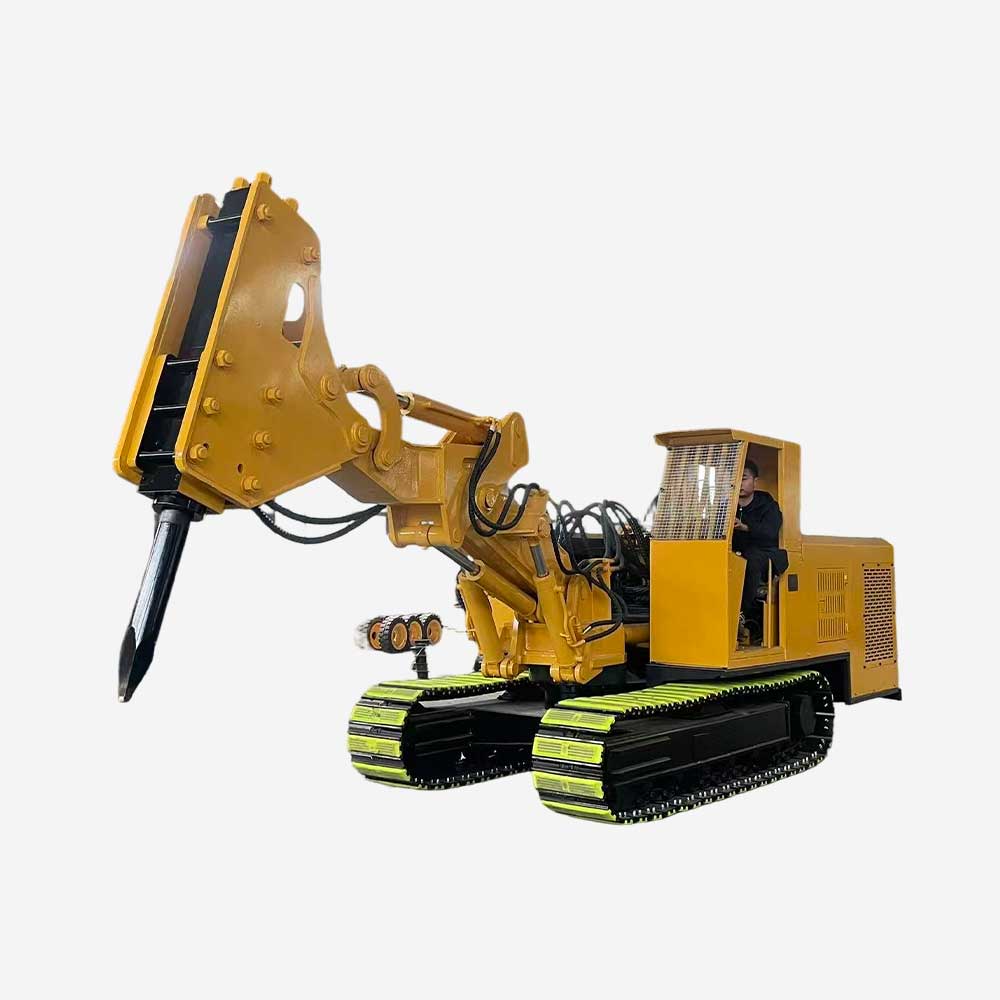
A dedicated Mining Tracked Hydraulic Breaker represents one approach in which mobility, working geometry and hydraulic breaking are considered as parts of the same underground machine rather than treating the hammer as an isolated attachment.
Rock Structure Changes How a Hydraulic Breaker Hammer Should Be Used
Hardness is important, but rock breaking cannot be predicted by hardness alone.
Natural fractures, bedding, joints, grain structure and material confinement can significantly affect how a rock responds to repeated impacts. A hard rock containing an accessible fracture may separate relatively quickly, while a less hard but massive and homogeneous block can require more deliberate breaking.
This is why experienced operators study the material before positioning the hammer.
Visible cracks can provide useful fracture paths. Exposed edges may allow the breaker to create separation more efficiently than repeated impacts at the thickest point of a boulder. Layered material may respond differently depending on the direction in which impact force is applied.
Material confinement also matters. A loose boulder resting on broken material can move when struck, reducing the amount of impact energy available for fracture. Rock that is supported against a stable surface may accept impact energy more effectively.
These differences explain why simply holding the hydraulic breaker hammer on one position for a long time is not always productive. If cracks are not developing, repositioning to another point can often be more effective than continuing to strike the same location.
Good breaker operation therefore combines equipment capability with observation of the material.
Tool Selection Influences Impact Performance
The working tool is the final mechanical connection between the hydraulic breaker hammer and the rock. Its condition and shape have a direct influence on how impact energy enters the material.
Different tool geometries can support different breaking behaviors. A pointed configuration can concentrate impact over a smaller area, while other shapes may be more suitable when the objective is to create separation across a wider section of fractured material.
The correct choice depends on the application rather than on one tool being universally better.
Tool diameter and breaker design must also match correctly. The working tool needs to move as intended within the breaker bushings while remaining sufficiently supported during repeated impacts.
Wear changes this relationship over time.
As surfaces wear, clearance around the tool can increase. Excessive movement can make alignment less stable and increase loading on surrounding components. A heavily worn working end may also transfer impact differently from a correctly maintained tool.
For this reason, tool inspection should focus on more than whether the tool has broken completely. Changes in surface condition, uneven wear, cracking and excessive movement can all indicate that maintenance is becoming necessary.
Replacing or servicing wear components before they develop into larger problems can help maintain more consistent hydraulic breaker hammer performance.
Correct Tool Contact Prevents Wasted Impact Energy
Stable contact is one of the most important operating requirements for a hydraulic breaker hammer.
Before sustained hammering begins, the working tool should be positioned securely against the material. The carrier boom then applies controlled pressure so the tool remains engaged while the breaker operates.
This contact creates the path through which impact energy enters the rock.
When the tool repeatedly separates from the material, the energy-transfer process becomes less effective. Machine movement may increase, and the breaker can experience impacts without the normal resistance provided by the rock.
The operating angle matters as well.
Breaker tools are primarily designed to transfer axial impact. Severe sideways loading introduces forces that the tool and bushings are not intended to experience continuously. Using the working tool to pry or lever partially broken rock may therefore increase wear even when the material appears close to separating.
A better approach is to stop hammering, reposition the tool and create another controlled impact point.
This technique can appear slower than forcing the tool sideways, but it supports more predictable component loading and more efficient use of the breaker’s intended impact mechanism.
Blank Firing Can Shorten Component Life
Blank firing occurs when the hydraulic breaker hammer continues operating without meaningful resistance at the working tool.
This can happen when the rock fractures suddenly and the operator keeps the breaker activated, or when the tool loses proper contact during operation.
Under normal breaking conditions, the material absorbs a significant part of the impact energy. When resistance disappears, the energy must be absorbed elsewhere within the breaker system.
Repeated blank firing can therefore increase unnecessary stress on internal components and should be minimized.
The solution is mainly operational.
Operators need to watch the material and stop the breaker when separation occurs. They should also reposition the tool whenever stable contact cannot be maintained.
This highlights a broader point about breaker reliability. Component life is not determined only by manufacturing quality or maintenance intervals. Operating habits also influence how much unnecessary loading the machine experiences.
A correctly selected hydraulic breaker hammer can still develop avoidable wear if poor operating technique is repeated throughout every working cycle.
Hydraulic Temperature Provides Important Operating Information
Hydraulic temperature is one of the most useful indicators of overall system condition.
A breaker creates repeated high-load hydraulic cycles, so some heat generation is expected. What matters is whether temperature remains within the normal operating behavior of the machine.
A gradual or unexplained increase deserves attention.
The cause may be related to workload, but it can also involve excessive hydraulic flow, restricted return conditions, cooling-system performance, oil condition or other changes within the hydraulic circuit.
The most effective diagnostic approach is to look at temperature together with other operating information.
If temperature increases only during unusually demanding breaking and returns to normal afterward, the system may simply be responding to workload. If temperature remains elevated under normal conditions, maintenance teams have stronger reason to investigate.
This is where equipment monitoring becomes valuable.
Rather than treating one alarm as the complete diagnosis, operators can compare the current condition with normal machine behavior.
Hydraulic breaker hammer maintenance becomes more effective when teams understand trends instead of responding only after a fault becomes severe enough to stop operation.
Return Flow Is as Important as Hydraulic Supply
Breaker discussions often focus heavily on supply flow and pressure, but hydraulic oil must also leave the breaker efficiently.
A restricted return path can increase back pressure and contribute to temperature problems. Hose dimensions, connection design, valve arrangement and the carrier’s hydraulic circuit can all influence this condition.
This is particularly relevant when a breaker is added to a carrier that was not originally configured for sustained hammer operation.
The carrier may technically provide enough hydraulic output, yet the complete auxiliary circuit may still need evaluation to ensure that continuous breaker operation does not create undesirable return restriction.
This is another reason attachment compatibility should be considered at the hydraulic-system level.
Checking only whether the carrier can supply the breaker’s nominal flow does not provide a complete picture.
Hydraulic supply, control, return, filtration and cooling all form part of the same circuit.
A reliable hydraulic breaker hammer needs every stage of that circuit to work together.
Lubrication Is a Small Task With a Large Mechanical Effect
The interface between the working tool and the breaker bushings experiences repeated impact and sliding movement.
Lubrication reduces friction at these contact surfaces and is therefore essential for controlling wear.
Insufficient lubrication can accelerate surface damage and increase friction. Underground environments create an additional challenge because dust and fine abrasive particles may be present around the working area.
Lubrication practices should therefore be accompanied by routine inspection.
Technicians should look at whether the tool surface is receiving adequate grease, whether unusual scoring is developing and whether bushing clearance appears to be increasing.
The lubrication interval should reflect actual breaker use and working conditions rather than being treated as a purely calendar-based task.
A hammer used intensively throughout an excavation shift naturally creates different maintenance requirements from equipment used occasionally for isolated oversized rocks.
This is another example of why operating history matters.
Maintenance works best when it reflects how the hydraulic breaker hammer is actually being used.
Hose Routing and Protection Matter Underground
Hydraulic hoses connect the breaker to the carrier, but they operate in a demanding area of the machine.
The boom moves continuously.
The breaker changes angle.
The carrier travels through restricted spaces.
Broken rock and surrounding structures may be close to the hydraulic lines.
Poor hose routing can create rubbing, excessive bending or exposure to impact.
A hose does not need to fail completely before it becomes a maintenance concern. Abraded outer layers, damaged protection, unusual movement or small leaks can all justify inspection.
Connections should also be checked because repeated vibration can influence fittings over time.
Underground equipment design should provide enough hose flexibility for the full breaker working range without allowing unnecessary contact with surrounding machine structures.
Good routing protects the hydraulic circuit while also making maintenance easier.
Technicians should be able to inspect critical hoses without dismantling large sections of equipment simply to see their condition.
These details may seem secondary compared with impact energy, but reliable hydraulic breaker hammer operation depends on them every day.
Underground Space Changes Breaker Hammer Selection

A surface machine may have significant room to reposition around material. Underground equipment often does not.
Tunnel width and height can restrict the carrier before breaker specifications are even considered. Turning radius can determine whether the machine reaches the working face efficiently. Boom geometry determines whether the hammer can approach rock at a useful angle.
Working envelope is therefore more important than overall machine dimensions alone.
A carrier may fit through the tunnel entrance yet remain unsuitable because it cannot position the hammer where breaking is required.
Space also needs to remain available for surrounding processes.
Ventilation systems, cables, loaders and transportation machinery may all operate within the same underground roadway. A large breaker carrier that blocks material movement can solve one bottleneck while creating another.
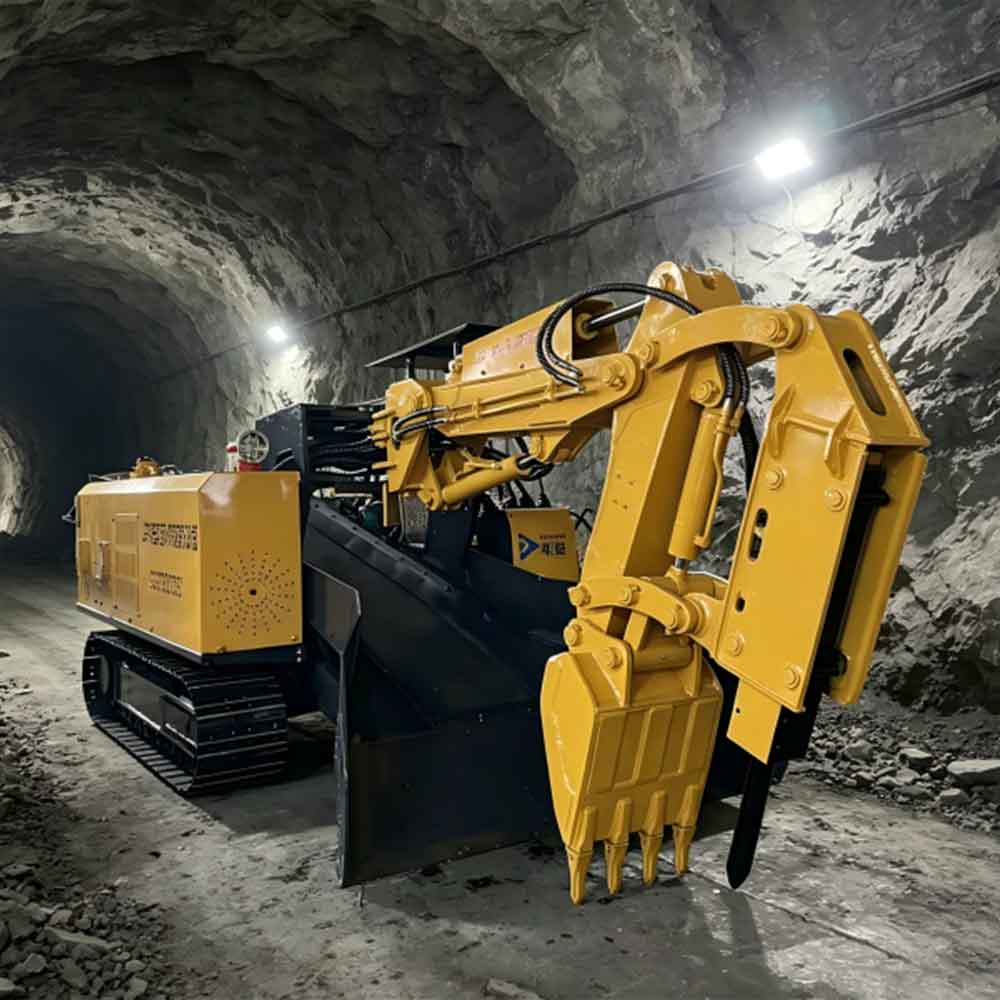
Integrated equipment can be useful where space is especially restricted. A crawler mucking loader with hydraulic hammer combines breaking and material-handling functions within one underground platform, reducing the need to exchange separate machines between certain stages of the cycle.
Whether integrated or separate machinery is preferable depends on the actual workflow, but the principle remains the same: equipment should be selected around usable underground space rather than catalogue dimensions alone.
Hydraulic Breaker Hammer vs Hydraulic Jack Hammer
Hydraulic breaker hammer and hydraulic jack hammer are sometimes used as overlapping search terms, but equipment size and operating context can vary considerably.
In heavy mining and tunneling applications, hydraulic breaker hammer generally refers to carrier-mounted equipment designed to deliver repeated high-energy impacts into hard rock or oversized material. Hydraulic jack hammer can also describe hydraulically powered percussion equipment, including more compact systems.
The more useful distinction is therefore not terminology alone.
Operators should focus on how the equipment is mounted, where hydraulic power comes from, what type of material it is expected to break and how much operating stability the system requires.
For heavy underground rock breaking, carrier compatibility, boom reach and hydraulic capacity are normally more important than the specific naming convention used in product descriptions.
This is particularly relevant when comparing equipment online, where regional or industry terminology may differ.
Technical parameters and working configuration provide a more reliable basis for comparison than the equipment name by itself.
Key Parameters for Hydraulic Breaker Hammer Selection
A balanced selection process considers the material, carrier, breaker and operating environment together.
| Selection Factor | Why It Matters | What to Evaluate |
|---|---|---|
| Rock condition | Determines fracture behavior | Strength, joints, abrasiveness and block size |
| Breaker size | Influences available impact capability | Match to actual breaking task |
| Carrier weight | Supports breaker stability | Suitable operating range and machine balance |
| Hydraulic flow | Drives breaker cycle | Compatibility with breaker requirement |
| Operating pressure | Supports impact mechanism | Correct working range |
| Return circuit | Influences hydraulic efficiency | Back pressure and hose configuration |
| Tool configuration | Controls impact concentration | Shape, diameter and material suitability |
| Boom geometry | Determines usable reach | Working angle and positioning |
| Tunnel dimensions | Controls machine access | Width, height and turning radius |
| Hydraulic cooling | Controls operating temperature | Cooling capacity and working cycle |
| Maintenance access | Influences equipment availability | Tool, hose and lubrication accessibility |
| Material handling | Determines useful fragment size | Loader and transport capability |
The table illustrates why selecting a hydraulic breaker hammer cannot be reduced to one performance number. A breaker with impressive impact specifications may still underperform if hydraulic compatibility, carrier stability or working geometry is poor.
Selection should therefore focus on the weakest relationship in the system rather than on the strongest specification.
Breaking Efficiency Depends on Knowing When to Stop
More hammering does not always mean more productivity.
Once material has been reduced to a size that downstream equipment can handle effectively, additional fragmentation may add no operational value.
This is especially important in secondary breaking.
The purpose of the hydraulic breaker hammer is often to remove oversized pieces that interrupt loading. If the loader can already handle the fragmented rock, continuing to reduce it further uses breaker time without improving material flow.
The desired fragment size should therefore be linked to the next process.
Bucket dimensions, loading method, conveyor limitations and transportation equipment all influence what counts as an acceptable result.
This changes how breaker productivity should be measured.
The goal is not simply the number of impacts delivered or the smallest rock produced.
The real goal is restoring smooth material movement through the underground excavation cycle.
That system-level definition gives operators a much better basis for deciding when breaking is complete.
How Maintenance Problems First Appear
A hydraulic breaker hammer does not always move directly from normal operation to complete failure. Developing problems often create smaller changes first.
Operators may notice that breaking takes longer under familiar conditions. Hydraulic temperature may become higher than normal. Tool movement may increase. Lubrication requirements may change. A hose may begin showing abrasion or minor leakage.
These changes should be interpreted in context.
Reduced performance does not automatically mean the internal breaker mechanism has failed. The material may have changed, the tool may be worn, carrier hydraulic output may be different, or operating technique may be inconsistent.
Effective troubleshooting therefore begins with comparison.
Maintenance teams should consider whether the breaker behaves differently from its normal operating pattern under similar conditions.
Historical information can make this easier. Operating hours, hydraulic temperature, previous faults and service records provide context for deciding whether a change is temporary or developing gradually.
This approach is more useful than immediately replacing parts by trial and error.
How to Diagnose Weak Hydraulic Breaker Hammer Performance
When breaking performance falls, diagnosis should begin with the complete system.
The first consideration is whether the rock itself has changed. A more massive or less fractured material can make a normally performing breaker appear weaker.
If material conditions are comparable, tool condition and positioning should be examined. A badly worn tool, excessive bushing clearance or poor contact can reduce effective energy transfer.
The hydraulic circuit should then be considered. Changes in flow, pressure, oil temperature or return behavior can influence the breaker even when no obvious leakage is visible.
Carrier stability is another factor. If the machine cannot maintain controlled contact with the rock, part of the available energy may be lost through movement.
Looking at these factors together creates a more disciplined troubleshooting process.
Weak breaker performance is rarely solved most effectively by asking only whether the hammer itself is damaged. The better question is which part of the energy-transfer system has changed.
Building a Better Hydraulic Breaker Hammer Maintenance Strategy
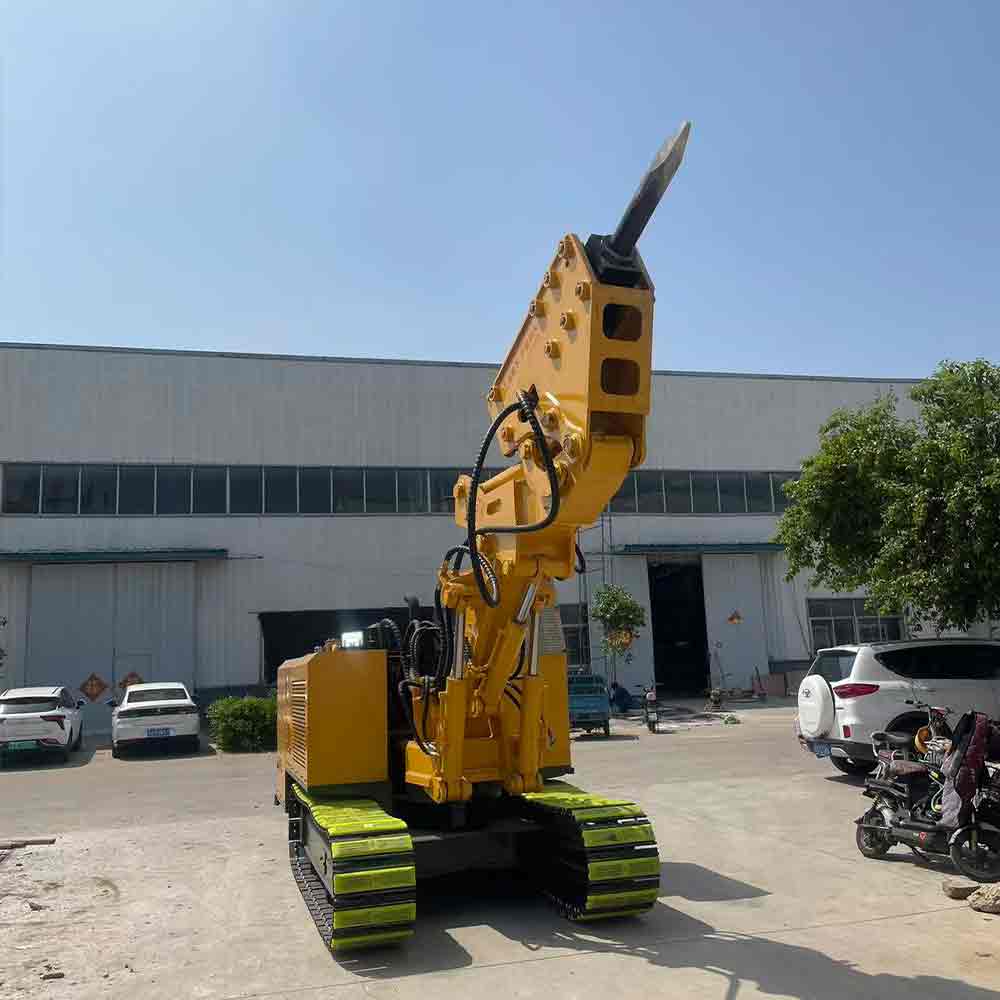
A strong maintenance strategy combines regular servicing with condition-based observation.
Scheduled maintenance remains important because lubrication, wear inspection and hydraulic checks need consistent attention even when no fault is visible.
Condition-based maintenance adds another layer by considering how the machine is actually behaving.
If the breaker is working longer under difficult conditions, inspections may need to become more frequent. If hydraulic temperature changes or tool clearance increases, maintenance teams can respond before the issue develops further.
Operator feedback also deserves attention.
Operators interact with the hammer continuously and can often recognize changes in vibration, sound or impact behavior before a routine inspection occurs.
This practical knowledge becomes even more useful when it is combined with equipment records.
Maintenance should therefore be understood as a feedback process between machine data, physical inspection and operator experience.
That combination provides a stronger foundation for reliable hydraulic breaker hammer operation than relying on a fixed maintenance calendar alone.
Conclusion
A hydraulic breaker hammer performs best when hydraulic power, mechanical stability and operating technique work together.
Impact capability is important, but it is only one part of the breaking system. Hydraulic flow and pressure need to match the hammer. The return circuit needs to move oil efficiently. The carrier needs enough stability to keep impact energy directed into the material. The tool needs correct positioning, lubrication and condition.
Rock characteristics also matter. Natural joints and fractures influence how the material breaks, while abrasiveness affects wear. An experienced operator can use these features to select better impact points instead of relying on prolonged hammering at one location.
Underground conditions make equipment matching even more important. Tunnel dimensions, boom reach and surrounding material-handling equipment all determine whether the hammer can be used effectively in practice.
Maintenance then keeps these relationships working over time. Tool wear, hydraulic temperature, hose condition and operating behavior should be monitored as trends rather than waiting for complete component failure.
The strongest hydraulic breaker hammer is therefore not simply the unit with the largest impact specification. It is the correctly matched system that transfers hydraulic energy efficiently, fits the underground working environment and produces the fragment size needed by the next stage of the excavation process.
When equipment selection, operation and maintenance are approached in this way, rock breaking becomes more predictable and better integrated with the complete underground workflow.
FAQ
What is a hydraulic breaker hammer used for?
A hydraulic breaker hammer is used to fragment hard rock, oversized excavated material and localized hard formations through repeated hydraulic impacts. In underground work, it often supports secondary breaking and excavation by producing material sizes that loaders and transportation systems can handle more efficiently.
How do I choose the right hydraulic breaker hammer?
Selection should consider rock characteristics, carrier weight, hydraulic flow and pressure, breaker operating weight, tool configuration and underground dimensions. The hammer must also match the carrier’s boom and hydraulic circuit. Choosing the largest available breaker does not guarantee the most efficient breaking performance.
Why does a hydraulic breaker hammer lose breaking power?
Reduced performance can result from harder material, poor tool contact, tool or bushing wear, unsuitable hydraulic flow, higher oil temperature, return restriction or unstable carrier positioning. Diagnosis should compare the complete carrier-breaker-rock system rather than assuming that reduced impact automatically means internal hammer failure.
How can I extend hydraulic breaker hammer service life?
Maintain correct lubrication, inspect the working tool and bushings, avoid excessive side loading and minimize blank firing. Hydraulic hoses, fittings, oil condition and operating temperature should also be monitored. Correct carrier matching and stable tool positioning reduce unnecessary mechanical stress during repeated breaking cycles.
What causes a hydraulic breaker hammer to overheat?
Overheating may be associated with prolonged heavy operation, excessive hydraulic flow, restricted return lines, insufficient cooling or poor oil condition. The breaker and carrier hydraulic circuit should be evaluated together. Persistent temperature changes should be investigated rather than treated as a normal result of high-impact operation.