
Table of Contents
Introduction
Underground excavation looks straightforward from the surface: create an opening, remove the broken material and continue advancing. In practice, choosing the right tunnel drilling machine involves far more than selecting the most powerful equipment available.
Tunnel dimensions, rock strength, geological variability, required profile accuracy, material removal capacity, ventilation conditions and supporting equipment all affect which excavation method makes sense.
There is also an important terminology issue. People searching for a tunnel drilling machine may be referring to several different types of underground equipment. In engineering practice, a drilling rig used for drill-and-blast excavation, a tunnel boring machine, and a roadheader perform different functions and use different excavation principles.
Understanding those differences is the first step toward making a practical equipment decision.
This guide covers:
- What a tunnel drilling machine actually means in underground projects
- The main excavation methods used in tunnels
- Differences between drilling rigs, TBMs and roadheaders
- How geology affects machine selection
- Why tunnel dimensions matter
- Cutting, drilling and material-removal considerations
- Equipment coordination during underground excavation
- Automation and condition monitoring
- Maintenance factors that affect long-term performance
- A practical framework for choosing suitable machinery
What Is a Tunnel Drilling Machine?
Tunnel drilling machine is a broad search term commonly used for machinery involved in creating underground passages through rock, mineral formations or other geological materials.
However, not every machine described by this phrase actually drills holes.
Some machines use rotary or percussive drilling tools to create blast holes. Others mechanically cut the tunnel face. Large machines may excavate nearly the complete tunnel cross-section continuously.
The key difference is the excavation mechanism.
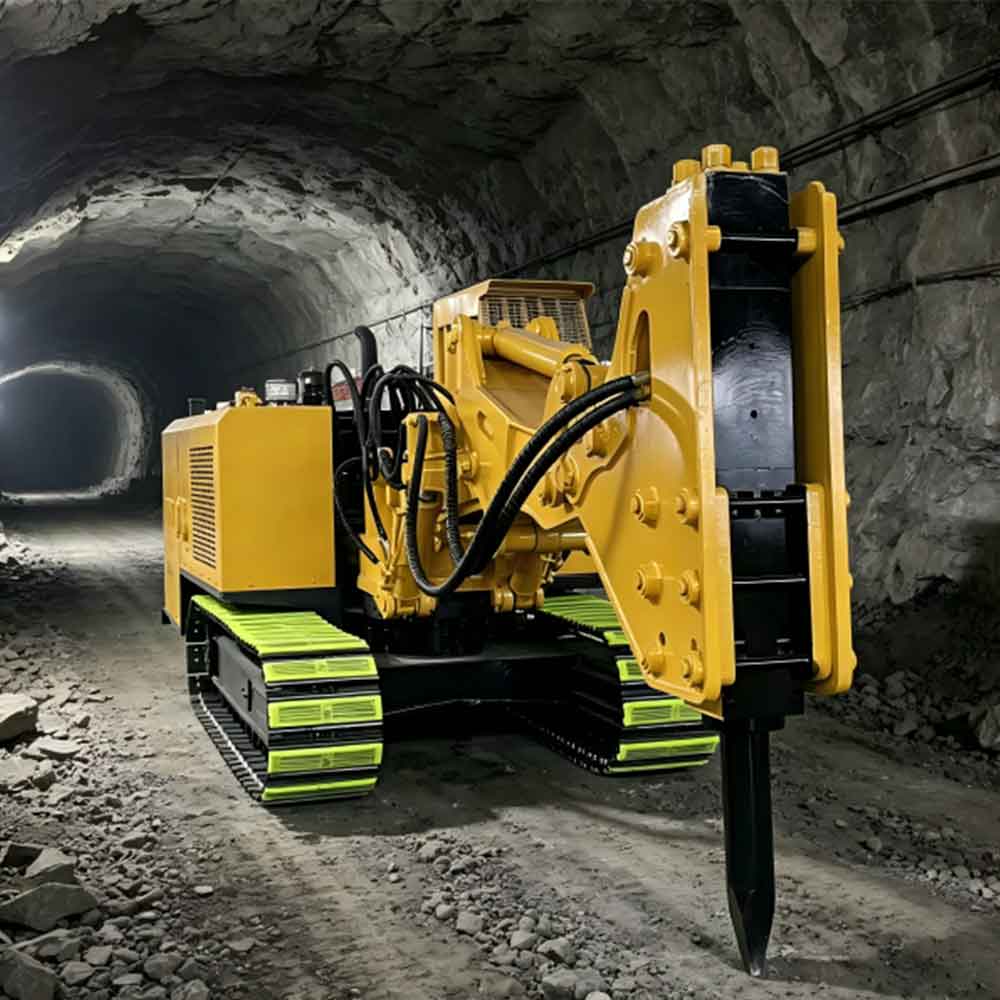
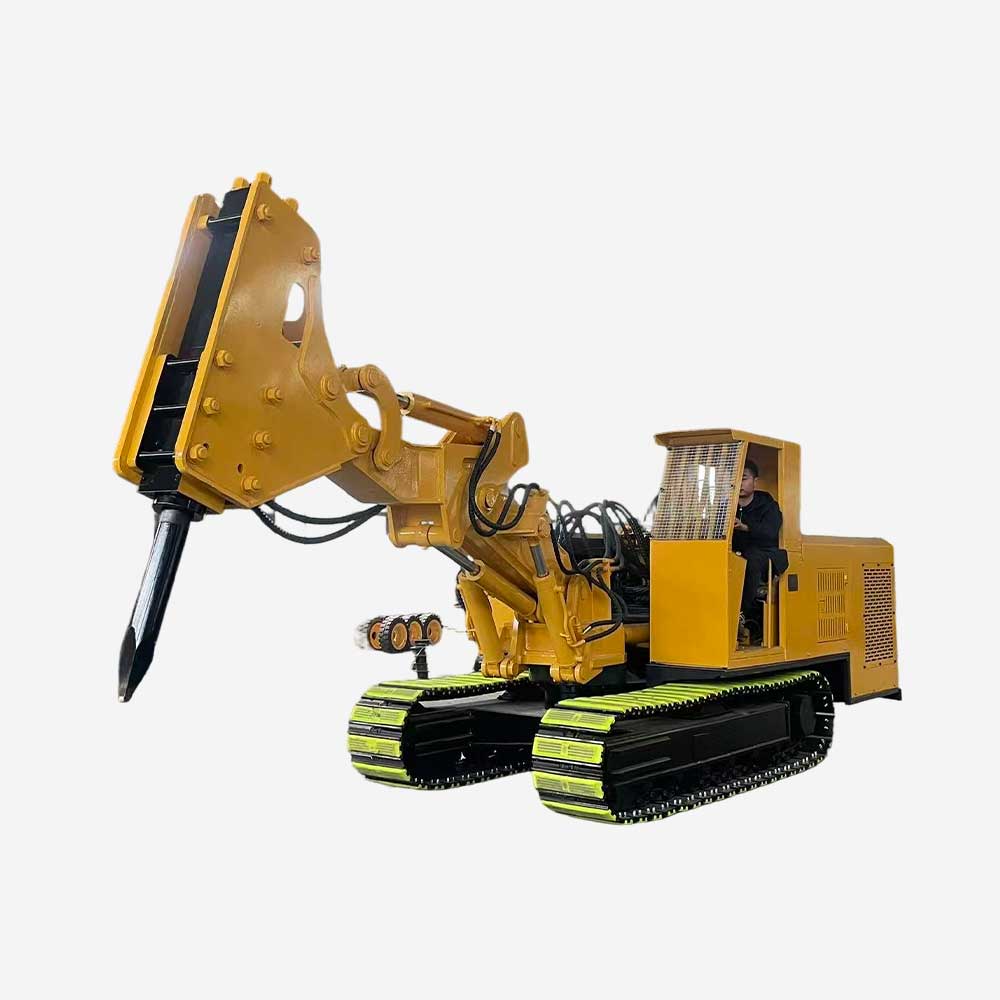
A drilling rig creates a pattern of holes in the tunnel face. These holes are normally part of a drill-and-blast excavation cycle.
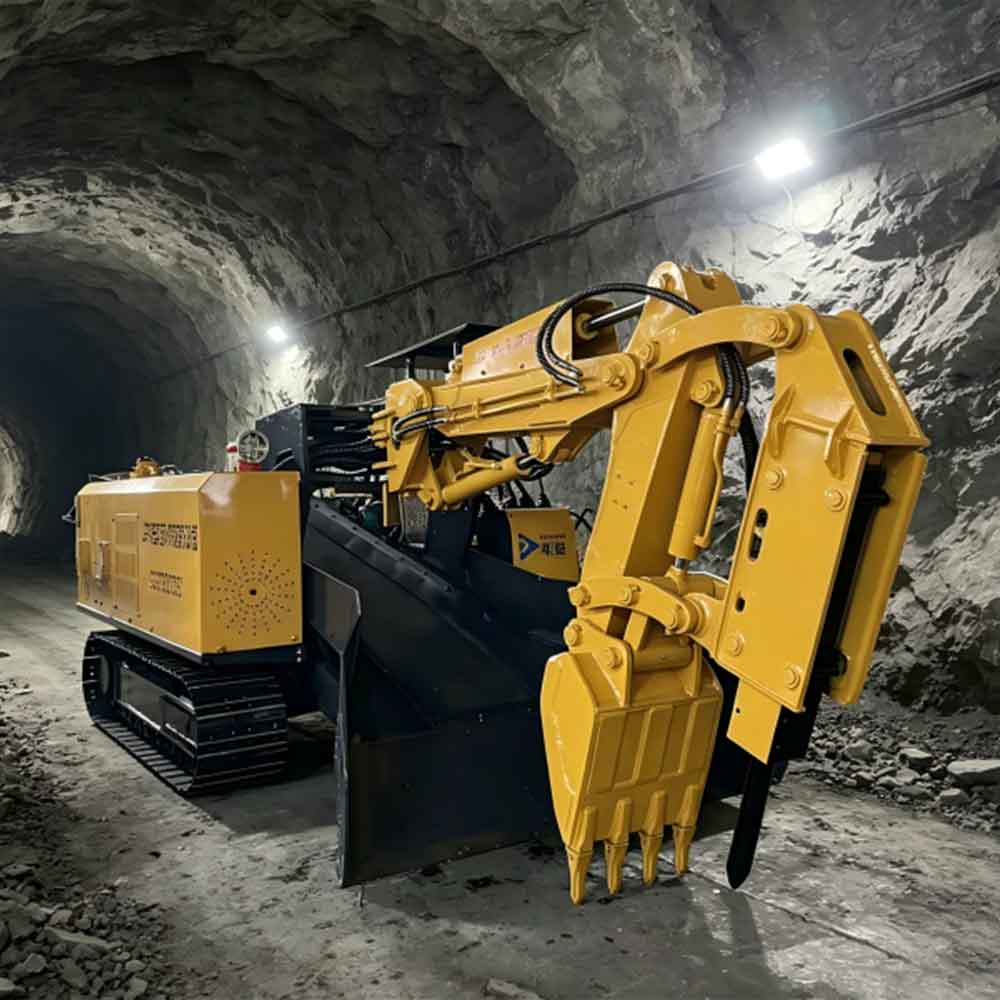
A roadheader uses a rotating cutting head mounted on a boom to mechanically break material from the face.
A tunnel boring machine generally uses a large rotating cutterhead to excavate a circular tunnel profile continuously.
This distinction matters because each machine creates a completely different excavation workflow.
If you are evaluating a tunnel drilling machine, begin by asking what the machine is actually expected to do: drill blast holes, mechanically excavate rock, or perform continuous full-face boring.
How Tunnel Excavation Methods Differ
There is no single tunnel excavation method that performs best in every underground environment.
The practical choice usually depends on the relationship between geology, tunnel geometry, project length and operating requirements.
Drill-and-Blast Excavation
Drill-and-blast excavation uses drilling equipment to create a designed hole pattern in the tunnel face. Explosives are then placed and initiated, after which broken material must be removed before the next cycle begins.
This method can adapt to irregular tunnel shapes and changing geological conditions.
However, excavation takes place in cycles. Drilling, charging, blasting, ventilation, scaling and muck removal must be coordinated carefully.
A tunnel drilling machine used in this system is therefore only one part of the excavation process.
Mechanical Excavation
Mechanical excavation removes rock directly rather than first creating a pattern of blast holes.
Roadheaders are one example.
Their cutting heads continuously remove material from selected areas of the tunnel face, allowing the operator to control the excavation profile progressively.
This can be particularly useful where controlled excavation, restricted underground space or continuous mechanical operation is important.
Full-face tunnel boring represents another mechanical approach, but it operates differently from a roadheader and is normally suited to projects where tunnel geometry and project conditions justify a dedicated boring system.
The correct comparison is therefore not simply “which machine is stronger?”
It is “which excavation system fits the underground conditions?”
Tunnel Drilling Machine vs Roadheader vs TBM
Users frequently compare these equipment categories because all three can participate in tunnel construction. Their roles, however, are substantially different.
| Equipment Type | Main Excavation Principle | Typical Working Pattern | Profile Flexibility | Key Selection Consideration |
|---|---|---|---|---|
| Tunnel drilling rig | Drills blast holes | Cyclic drill-and-blast | High | Drilling accuracy and blast design |
| Roadheader | Mechanical cutting head | Continuous selective excavation | High | Rock cuttability and cutting capability |
| Tunnel boring machine | Full-face mechanical boring | Continuous boring | Lower once configured | Tunnel length, diameter and geology |
| Mucking equipment | Loads excavated material | Supports excavation cycle | Not applicable | Material flow and loading capacity |
The table reveals an important point: a tunnel drilling machine should not be selected independently from the excavation method.
If the operation uses drill-and-blast, drilling accuracy and penetration performance are fundamental.
If continuous mechanical excavation is preferred, a crawler tunnel roadheader may serve a completely different role by cutting the face directly rather than preparing blast holes.
A TBM introduces another operating model, where excavation equipment and tunnel geometry are much more closely integrated.
The equipment decision therefore begins with excavation strategy, not equipment specifications.
How Geology Affects Tunnel Drilling Machine Selection
Geology is one of the strongest factors affecting underground equipment performance.
Two tunnels with similar dimensions can require completely different machinery if their geological conditions differ.
Rock strength matters, but it should not be considered alone.
Rock abrasiveness influences tool wear. Jointing and fractures can affect face stability and breakage behavior. Water can change operating conditions. Variations in geological layers can produce rapidly changing machine loads.
For drilling equipment, geology affects penetration rate, drilling-tool selection and hole stability.
For mechanical cutting equipment, geology affects cutting resistance, cutter consumption, vibration and achievable advance.
For a full-face boring system, changing geological conditions can affect cutter loads, stability and machine utilization.
This means equipment evaluation should be based on representative geological information rather than a single rock-strength number.
A machine that performs well in one section of a tunnel may behave differently after entering a harder or more abrasive formation.
Experienced equipment selection therefore considers both average conditions and expected geological extremes.
Why Tunnel Size and Working Space Matter
Machine dimensions are sometimes treated as secondary specifications. Underground, they can determine whether the equipment is practical at all.
Before selecting a tunnel drilling machine, consider:
- Tunnel width
- Tunnel height
- Required excavation profile
- Turning radius
- Ground clearance
- Maximum working gradient
- Access dimensions
- Space required for support operations
- Space required for muck removal
- Position of utilities and ventilation equipment
A machine may physically fit inside the tunnel but still lack enough room to work efficiently.
Boom movement is a good example.
Drilling or cutting equipment needs sufficient working space to reach the required parts of the tunnel face. If cables, ventilation ducts or supporting structures restrict movement, theoretical working range may not equal usable working range.
The same applies to machine turning and relocation.
Compact underground machinery can therefore offer advantages that are not visible in power specifications alone.
PingAn Machinery’s existing analysis of the small tunnel boring machine also illustrates why confined underground excavation requires equipment dimensions and maneuverability to be considered alongside excavation performance.
Cutting and Drilling Performance Should Be Evaluated in Context
It is tempting to compare machines using one headline specification.
For drilling equipment, that might be drilling speed.
For a roadheader, it might be cutting power.
For another machine, it could be motor output or hydraulic pressure.
Those numbers are useful, but they do not describe complete underground performance.
A tunnel drilling machine works as part of a repetitive production cycle. High drilling speed provides limited benefit if repositioning takes too long or the following blasting and mucking stages cannot keep pace.
The same principle applies to mechanical excavation.
High cutting capability does not automatically produce high tunnel advance if material removal is slow.
A better performance evaluation considers:
- Productive working time
- Positioning and relocation time
- Tool-change requirements
- Material removal time
- Maintenance interruptions
- Ground-support requirements
- Interaction with other equipment
This is why underground excavation should be treated as a system rather than a collection of independent machines.
The equipment with the highest individual output is not always the equipment that produces the best complete excavation cycle.
Material Removal Can Limit Excavation Efficiency
Excavation creates a simple but unavoidable problem: every piece of material removed from the tunnel face has to go somewhere.
This is often overlooked when selecting a tunnel drilling machine.
During drill-and-blast excavation, blasted material must be cleared before the next production cycle can proceed efficiently.
During mechanical cutting, excavated rock may be produced continuously, which makes continuous material handling even more important.
If loading and transportation cannot match excavation output, material begins accumulating near the face.
The excavation machine then waits.
This creates an operational bottleneck even though the primary machine itself is performing correctly.
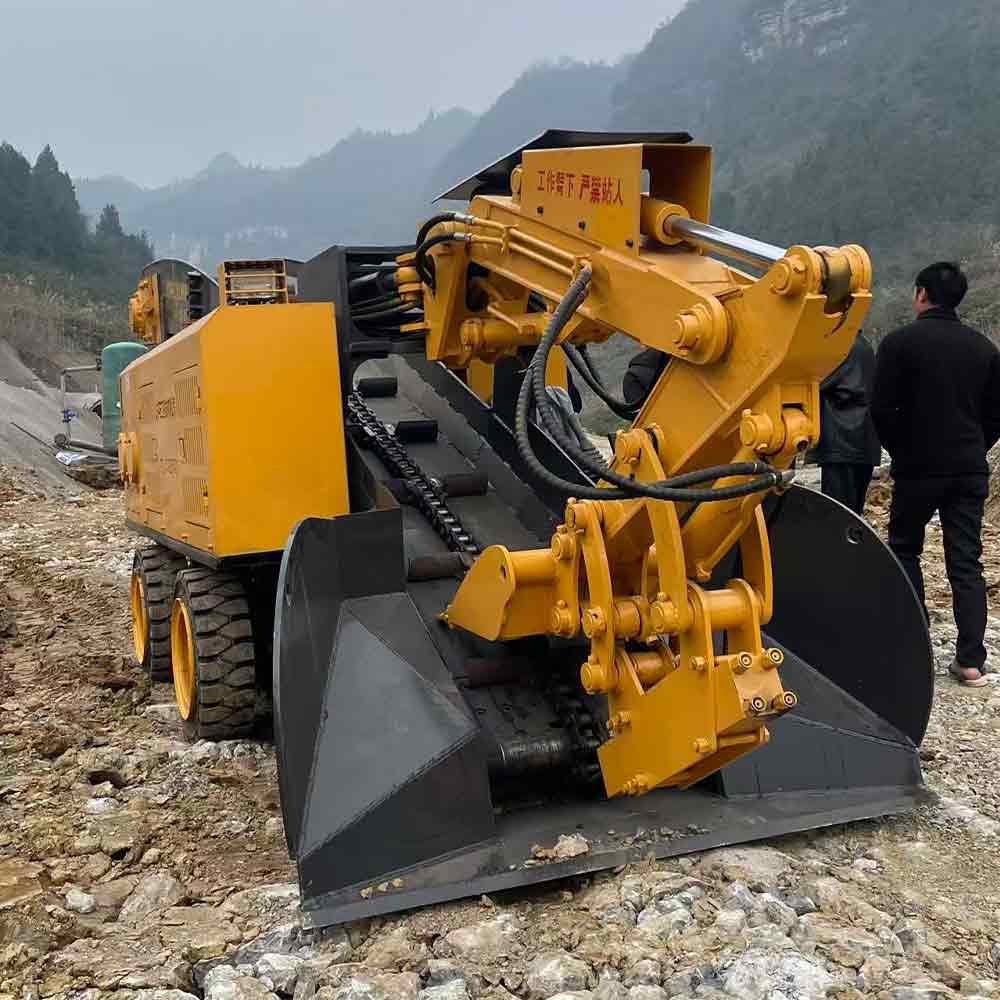
Mucking loaders, conveyors and underground haulage equipment therefore need to be planned together with the excavation machine.
The practical question is not simply:
“How fast can the tunnel drilling machine work?”
It should be:
“How quickly can the complete system excavate, clear and prepare the tunnel face for the next stage?”
That change in perspective often produces better equipment decisions.
Automation Is Changing Tunnel Excavation
Automation is becoming increasingly relevant in underground excavation, although the term needs to be used carefully.
Not every automated function requires a fully autonomous machine.
Useful automation may involve:
- Automatic drilling positioning
- Digital hole-pattern guidance
- Cutting-load monitoring
- Hydraulic system monitoring
- Equipment positioning assistance
- Recorded operating parameters
- Fault warnings
- Remote machine operation
- Camera-assisted control
- Automated operating sequences
These technologies reduce reliance on repeated manual adjustments and give operators more consistent information.
For a tunnel drilling machine, accurate positioning can improve the consistency of drilling patterns.
For mechanical cutting equipment, load monitoring can help operators understand how the machine is responding to changing material conditions.
Remote operation can also be useful in selected underground situations where the operator benefits from remaining farther from the active face.
The important distinction is that automation should solve an operating problem.
A digital feature that produces additional information without changing any decision has limited practical value.
Useful automation should improve accuracy, visibility, repeatability or response to abnormal conditions.
Condition Monitoring Is Becoming More Important
Heavy underground machinery operates under repeated vibration, hydraulic loading, dust and changing mechanical resistance.
Those conditions make equipment condition monitoring increasingly valuable.
Typical monitored parameters may include:
- Hydraulic pressure
- Oil temperature
- Motor temperature
- Motor current
- Rotational speed
- Vibration
- Operating hours
- Fault history
- Load condition
A single measurement rarely tells the complete story.
Suppose hydraulic temperature increases during a demanding excavation cycle. That may be completely normal.
If temperature continues increasing while hydraulic pressure becomes unstable and machine response deteriorates, the combination deserves more attention.
This is where monitoring becomes useful.
Instead of waiting for failure, maintenance personnel can observe trends and investigate unusual patterns.
The approach does not eliminate inspections.
In fact, it can make inspections more focused because technicians have more information about where to look.
Over time, tunnel drilling machine maintenance is likely to become increasingly condition-based, combining scheduled servicing with actual equipment behavior.
Reliability Matters More Than Unnecessary Complexity
Underground machinery operates in an environment where sophisticated technology must still survive demanding physical conditions.
This creates an important engineering balance.
Adding sensors, controllers and communication systems can improve machine intelligence, but every additional component also needs to remain reliable and maintainable.
When evaluating a tunnel drilling machine, ask practical questions about its electronic systems.
Are sensors protected from impact and contamination?
Can cables and connectors be accessed for inspection?
Can fault codes be interpreted by maintenance personnel?
Can essential machine functions still be diagnosed efficiently?
Are critical systems protected appropriately?
This matters because a complicated monitoring system that cannot be maintained easily may eventually reduce equipment availability rather than improve it.
Good underground engineering does not add technology simply because it is available.
It adds technology where the operational benefit justifies the additional system complexity.
How to Choose a Tunnel Drilling Machine
Equipment selection should begin with the tunnel rather than the machine catalogue.
Start with geology.
Understand expected rock strength, abrasiveness, fracturing and geological variation.
Then evaluate tunnel geometry.
Record the required width, height, excavation profile, gradient and available working space.
Next, determine the excavation method.
Does the operation require drilled blast holes? Would mechanical cutting provide suitable performance? Is full-face boring technically justified?
After that, consider the complete excavation cycle.
What equipment removes excavated material?
How is material transported?
How frequently must the machine relocate?
What ground-support activities must take place between excavation cycles?
Maintenance should also be reviewed before deployment.
Look at access to wear components, hydraulic systems, drilling tools or cutting tools. Consider how easily technicians can diagnose faults and perform routine inspections.
Finally, evaluate the machine under realistic operating conditions rather than theoretical maximum output.
A useful selection checklist includes:
| Selection Factor | Questions to Ask |
| Geology | What material will actually be drilled or cut? |
| Tunnel geometry | Can the machine work throughout the required profile? |
| Excavation method | Is drilling, selective cutting or full-face boring appropriate? |
| Machine mobility | Can equipment relocate and turn efficiently underground? |
| Material handling | Can muck be removed at the required rate? |
| Tool consumption | How will changing geology affect wear? |
| Monitoring | Which operating conditions can the machine track? |
| Maintenance | Can critical components be inspected efficiently? |
| Equipment coordination | Does the machine match loading and haulage capacity? |
| Operator requirements | Is the control system practical for the intended working environment? |
This approach prevents one specification from dominating the decision.
The right tunnel drilling machine is the one that fits the complete underground operating system.
Common Equipment Selection Mistakes
One common mistake is choosing equipment according to power alone.
More power can be useful, but only when the tunnel geometry and geology allow that power to be used effectively.
Another mistake is ignoring material handling.
Improving excavation capacity without improving muck removal often moves the bottleneck from the tunnel face to the loading stage.
A third problem is relying on average geological conditions.
Underground formations can change. Equipment should be evaluated against the harder or more abrasive conditions that may realistically appear during excavation.
Maintenance accessibility is also frequently underestimated.
A machine can have excellent theoretical performance but produce poor long-term availability if everyday service tasks are unnecessarily difficult.
Finally, different excavation machines should not be treated as interchangeable.
A drilling rig, roadheader and TBM may all appear under searches for tunnel drilling machine, but their engineering roles are different.
Understanding the excavation method before comparing equipment makes the rest of the selection process much clearer.
Where Tunnel Excavation Technology Is Heading
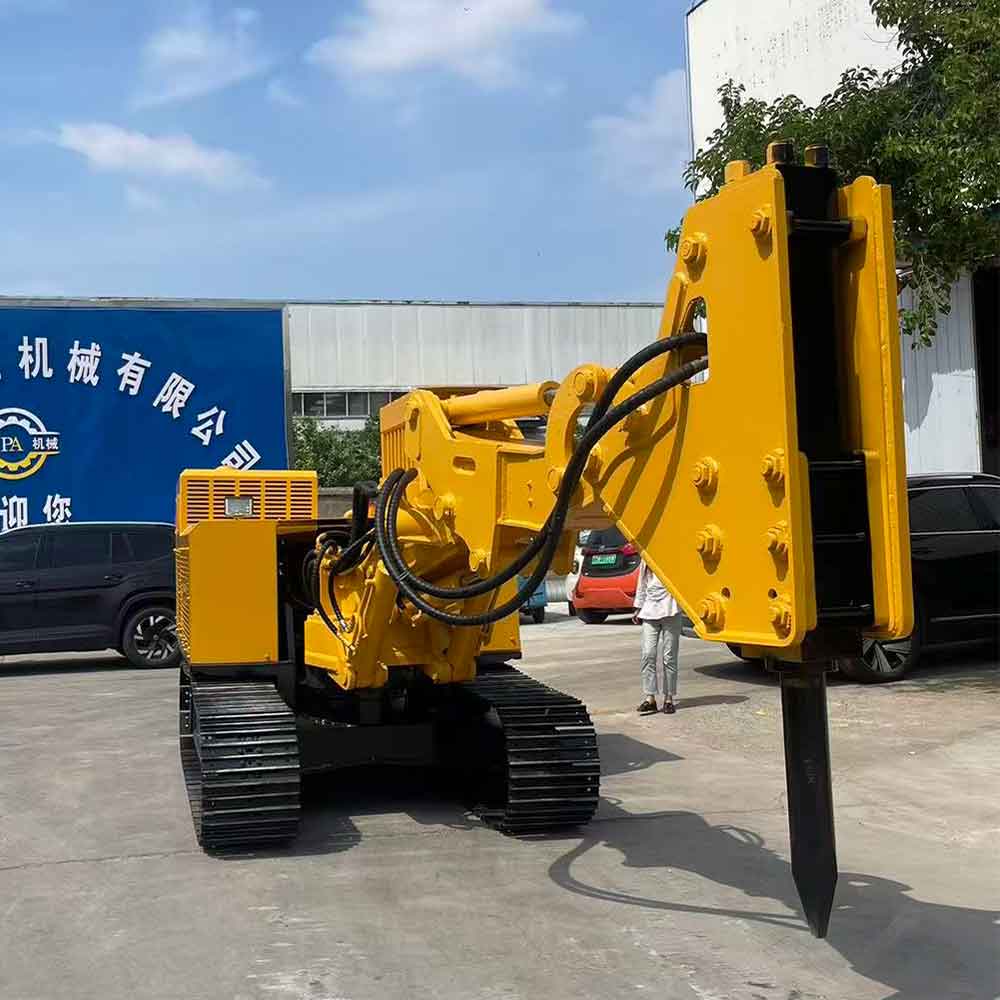
The development direction for tunnel machinery is becoming clearer.
Machines are collecting more operating data.
Positioning and control systems are becoming more precise.
Remote operation is becoming more practical.
Condition monitoring is giving maintenance teams more information.
Excavation equipment is also becoming more closely connected with loading and transport systems.
The next major improvement may therefore come from coordination rather than raw machine power.
A tunnel drilling machine that shares useful operating information with the rest of the underground system can contribute to better scheduling and fewer unnecessary delays.
Mechanical excavation systems may also become more adaptive.
Instead of using fixed operating parameters regardless of conditions, control systems can increasingly respond to changes in load or material resistance.
Drilling systems can similarly benefit from better positioning, data recording and automated pattern execution.
Human expertise will remain important throughout this development.
Underground geology is too variable to treat every excavation cycle as identical.
The strongest future systems will combine machine accuracy with experienced engineering judgment.
Conclusion
Choosing a tunnel drilling machine is ultimately an excavation-system decision.
The machine must match the geology, tunnel dimensions and required excavation method, but it must also work effectively with material removal, transport, support and maintenance operations.
That is why headline specifications tell only part of the story.
Drilling accuracy, cutting capability and machine power matter. So do maneuverability, tool wear, maintainability, monitoring and compatibility with the surrounding production system.
Technology is adding another dimension.
Automation, remote operation and equipment-condition monitoring are helping underground teams understand machine behavior more clearly and respond to changing conditions earlier.
But smarter technology does not remove the basic engineering requirements.
A well-selected tunnel drilling machine still begins with a clear understanding of the ground, the tunnel and the complete excavation workflow.
When those factors are evaluated together, underground equipment becomes easier to select, easier to integrate and more capable of delivering consistent performance over the full excavation cycle.
FAQ
What is a tunnel drilling machine used for?
A tunnel drilling machine is used during underground excavation to create openings through rock or other geological materials. Depending on the machine type, it may drill blast holes, mechanically cut the tunnel face or support continuous boring. The correct equipment depends on geology, tunnel dimensions and excavation method.
Is a tunnel drilling machine the same as a tunnel boring machine?
Not necessarily. A tunnel drilling machine often refers to equipment that drills holes for excavation, while a TBM mechanically excavates most or all of the tunnel face. Search terminology can overlap, so equipment should be compared by excavation principle, working profile, geological suitability and project requirements.
What should I consider when choosing a tunnel drilling machine?
Start with rock conditions, tunnel width and height, excavation profile and available working space. Then consider drilling or cutting capability, mobility, tool wear, material-removal capacity, maintenance access and monitoring functions. The machine should fit the complete underground excavation workflow rather than one specification alone.
Can a tunnel drilling machine work in narrow underground tunnels?
Yes, provided the machine dimensions and working range match the available space. Overall width and height are only part of the evaluation. Turning radius, boom movement, ground clearance, access space, gradient capability and room for ventilation, support and material-removal equipment must also be considered.
How is automation improving tunnel drilling machines?
Automation can improve positioning, drilling-pattern accuracy, operating-data collection, condition monitoring and remote control. These functions help operators perform repetitive tasks more consistently and identify abnormal machine behavior earlier. Their real value depends on reliability and how effectively the data supports operating decisions.