
Table of Contents
Introduction
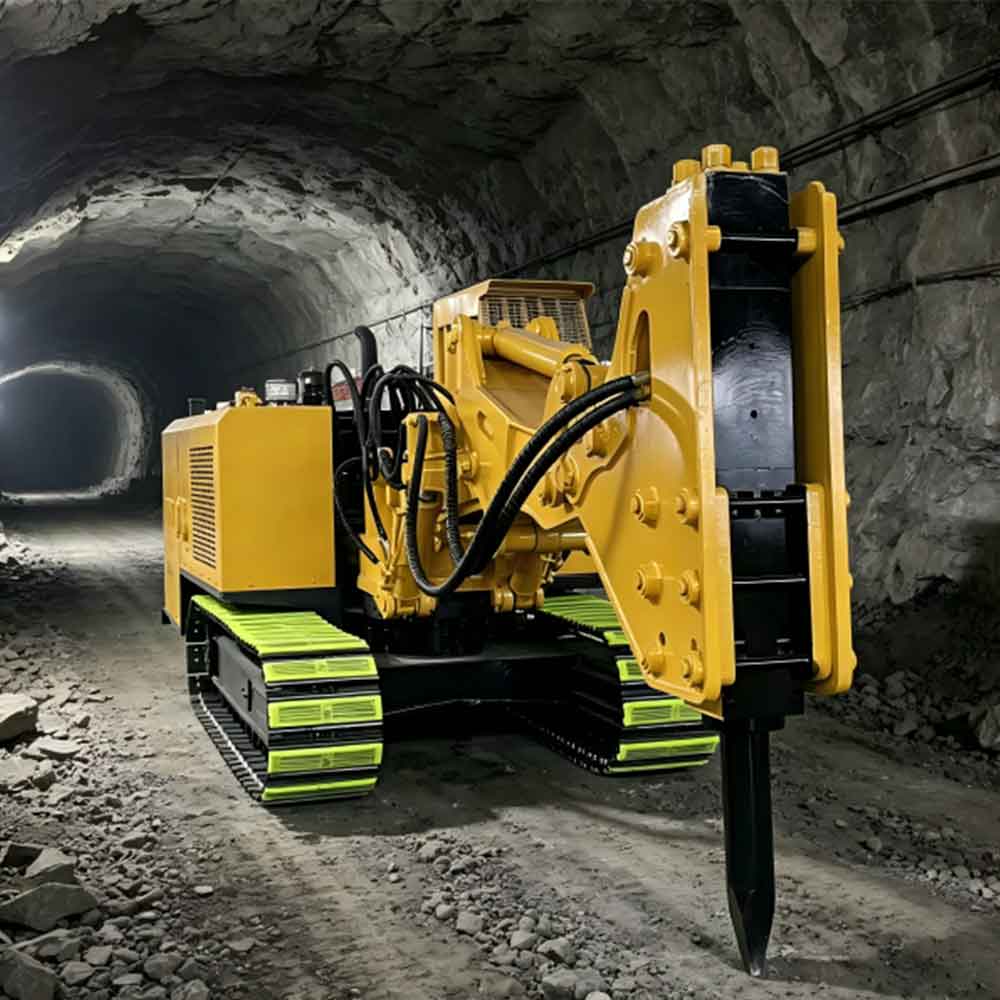
Coal mining machinery is entering a stage where mechanical strength alone is no longer enough to define equipment performance. Cutting capability, hydraulic power, structural reliability and mobility remain essential, but modern underground operations increasingly expect machinery to provide something more: useful information.
In 2026, smart coal mining machinery is becoming better at monitoring its own condition, recognizing abnormal operating patterns, supporting maintenance decisions and helping operators work from safer or more efficient positions. Remote control, sensor networks, intelligent hydraulic systems, predictive maintenance and equipment connectivity are gradually changing how underground machinery is selected and managed.
The most important changes include:
- More reliable real-time equipment monitoring
- Earlier identification of abnormal operating conditions
- Greater use of condition-based maintenance
- Remote and semi-autonomous machine control
- Smarter excavation and hydraulic control
- Better adaptation to narrow underground workings
- Improved coordination between excavation, loading and haulage machinery
- More useful equipment data for operational decisions
The key point is that smart mining is not simply about adding more electronics to equipment. Intelligence only creates value when it helps operators make better decisions, maintain machinery more effectively and keep underground production moving consistently.
What Makes Coal Mining Machinery Smart in 2026?
The term “smart machinery” is sometimes used too broadly. A machine does not become intelligent simply because it includes a touchscreen, several electronic sensors or a digital control panel.
Useful intelligence begins when the equipment can observe what is happening during operation and turn that information into something meaningful.
Modern coal mining machinery may monitor hydraulic pressure, oil temperature, motor current, vibration, operating hours, machine load and fault signals. These parameters give operators and maintenance teams a more detailed understanding of how the machine is behaving.
Traditional machinery often depends heavily on periodic inspections and operator experience. Experienced operators remain extremely important, but electronic monitoring gives them another source of evidence.
For example, an operator may notice that a machine sounds different or cuts less smoothly than before. A monitoring system may show that motor load, hydraulic temperature or vibration has gradually changed at the same time.
That combination of human experience and measurable equipment data is more valuable than either source alone.
The most practical definition of smart coal mining machinery is therefore equipment that can sense operating conditions, interpret useful signals, communicate abnormal behavior and support an appropriate response.
Real-Time Monitoring Is Changing Underground Equipment Management
One of the clearest developments in coal mining machinery is the move from occasional inspection toward continuous equipment awareness.
Underground machinery operates under demanding conditions. Loads change frequently, dust is unavoidable, working space can be restricted and hydraulic systems often operate for long periods under significant pressure. Small changes in machine behavior can eventually develop into larger problems if they remain unnoticed.
Real-time monitoring helps make those changes visible earlier.
Common monitoring parameters may include:
- Hydraulic system pressure
- Hydraulic oil temperature
- Electric motor current
- Motor temperature
- Vibration
- Cutting load
- Machine operating hours
- Travel status
- Working status
- Fault records
- Alarm history
The important issue is not how much data the machine can collect. It is whether the information helps someone make a better decision.
A single temperature alarm, for example, provides limited context. If the same temperature increase appears together with higher hydraulic pressure and unusual motor load, the maintenance team has a clearer reason to investigate.
This is one reason modern underground coal mining machinery is increasingly being designed around monitoring and early-warning functions instead of relying only on basic fault alarms.
Smart monitoring should answer practical questions.
What has changed?
Is the change temporary or persistent?
Which system may require inspection?
Can the machine continue operating safely?
A useful monitoring system reduces uncertainty. A poorly designed system simply generates more information.
Predictive Maintenance Is Becoming More Practical
Unexpected downtime is one of the biggest operational challenges associated with heavy underground machinery.
Traditional maintenance usually relies on two approaches.
The first is reactive maintenance. The machine is repaired after a fault has already occurred.
The second is preventive maintenance. Components are inspected or serviced according to a predefined schedule.
Both methods are still necessary, but predictive maintenance introduces another layer.
Instead of asking only when maintenance is scheduled, teams can increasingly ask whether actual machine condition suggests that maintenance is becoming necessary.
Research into intelligent coal mine equipment published in recent years has repeatedly emphasized real-time operating perception, fault diagnosis and predictive maintenance as important parts of mine digitalization. These approaches use actual equipment behavior rather than maintenance intervals alone.
Consider two identical machines.
One operates in relatively consistent material and moderate loading conditions.
The other regularly experiences high hydraulic loads, difficult cutting conditions and longer heavy-duty operating periods.
A fixed maintenance schedule may treat them almost identically.
Condition-based maintenance can treat them differently.
If one machine shows rising vibration, unstable pressure or a gradual temperature change, the maintenance team can investigate before the condition develops into a larger failure.
This does not mean that software can predict every breakdown.
Predictive maintenance should be understood as risk detection rather than certainty.
Its value lies in recognizing abnormal trends early enough to allow technicians to plan inspections, prepare replacement components and avoid unnecessary emergency repairs.
Remote Control Is Redefining the Operator’s Role
Another major change in coal mining machinery is the increasing separation between the operator and the immediate working area.
Traditional underground machinery often requires the operator to remain close to the equipment. Remote control allows selected tasks to be performed from a more suitable position while the operator continues to supervise machine behavior.
The wider development of automated mining includes remote-controlled, semi-autonomous and autonomous machinery, but underground coal applications require especially careful implementation because tunnel geometry, visibility, geological conditions and communication quality may change rapidly.
Remote operation can be particularly useful during tasks such as:
- Mechanical excavation
- Breaking oversized material
- Loading fragmented material
- Working close to unstable material
- Operating machinery in restricted spaces
- Handling selected tasks near an active excavation face
The goal is not necessarily to remove operators.
Instead, intelligent machinery changes what the operator needs to do.
The operator becomes less dependent on direct physical proximity and more dependent on camera visibility, equipment status information, alarm feedback and reliable communication.
This means remote operation should never be evaluated as a simple control feature.
It should be evaluated as a complete operating system.
Camera coverage must be adequate. Machine feedback must be understandable. Communication needs to remain reliable. Emergency controls must be clear. Operators also need enough information to understand what the machine is experiencing even when they are not sitting directly beside it.
In many underground applications, semi-autonomous operation may therefore be more practical than complete autonomy.
Repetitive machine functions can be assisted or automated, while experienced operators continue handling unusual geology, unexpected material conditions and higher-level decisions.
Smarter Excavation Is Important in Narrow Underground Workings
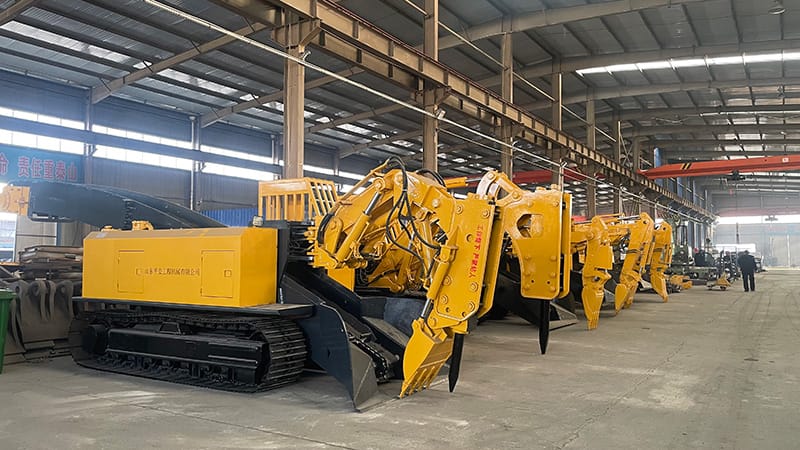
Underground coal operations often place strict limitations on equipment dimensions.
A machine may need to work in a roadway where height, width, turning radius and floor conditions all restrict movement. At the same time, it still needs sufficient cutting force, hydraulic performance and stability.
This creates a more difficult engineering problem than simply building the most powerful machine possible.
Smart control can help equipment perform more consistently within those limitations.
Intelligent Control for Roadheaders
Roadheaders are a useful example.
Traditional roadheader evaluation often focuses on cutting power, cutting range, machine dimensions and crawler performance. Those factors remain essential, but modern machines can also monitor load conditions and provide more information about the cutting process.
A crawler tunnel milling roadheader combines mechanical excavation with a crawler platform designed for underground operation. When intelligent monitoring is added to this type of equipment, operators can better understand changing machine loads and unusual operating conditions.
This matters because underground material is rarely completely uniform.
Cutting resistance can change as geology changes. Higher resistance may increase motor load, vibration and hydraulic demand. Instead of treating these changes as isolated numbers, smart control systems can help operators interpret them in context.
The best results come when mechanical engineering and control engineering are developed together.
A sophisticated monitoring system cannot compensate for unsuitable machine dimensions or poor mechanical design. Likewise, reliable mechanical equipment becomes more useful when operators can see how it is performing in real time.
Coal Mining Machinery Is Becoming a Connected Production System
One of the most important changes in underground mining is the gradual shift from optimizing individual machines to optimizing the entire workflow.
Coal mining machinery rarely works alone.
Excavation creates material.
Breaking equipment may reduce oversized material.
Loading machinery removes fragmented material from the face.
Transport machinery moves it farther through the underground network.
If one stage works much faster than the next, the whole process can still slow down.
For example, improving excavation output does not automatically improve overall production if loading or haulage capacity remains unchanged. The excavation machine may simply spend more time waiting.
This is why intelligent mining increasingly focuses on coordination.
Machine data can help identify where delays occur, how long equipment remains idle and which stage is limiting material flow.
Instead of asking only whether one machine is productive, operators can ask whether the complete equipment combination is balanced.
This leads to a different approach to coal mining machinery selection.
A roadheader should not be evaluated only by cutting capability.
A mucking loader should not be evaluated only by loading speed.
An underground transport machine should not be evaluated only by carrying capacity.
Each machine should also be considered in relation to the equipment operating before and after it.
In the future, connected equipment systems are likely to become increasingly important because individual machine productivity has limited value when the overall production system remains unbalanced.
Smart Coal Mining Machinery Can Support Safer Operations
Safety is another important reason coal mining machinery is becoming more intelligent.
Research programs focused on mine safety have increasingly studied AI-assisted machinery, sensor systems, digital warnings, mechanical excavation automation and remote operation. The common objective is not technology for its own sake. It is better situational awareness and reduced exposure to hazardous working conditions.
Smart machinery can support safety in several ways.
First, machine protection systems can monitor operating conditions.
If hydraulic temperature, pressure, motor current or another parameter moves outside expected limits, the operator can receive an early warning.
Second, remote operation can reduce the need for personnel to remain close to selected working zones.
Third, machine-status systems can help supervisors understand whether machinery is operating normally before personnel approach it for inspection.
Fourth, recorded fault information can improve troubleshooting. Instead of relying entirely on memory after an abnormal event, technicians can examine what happened before the fault appeared.
However, intelligent machinery does not replace fundamental mine safety practices.
Ventilation, equipment inspection, operating procedures, operator training, communication systems and engineering controls remain essential.
Smart systems should be considered another layer of risk management rather than a replacement for existing safety measures.
Traditional Coal Mining Machinery vs Smart Coal Mining Machinery
The difference between traditional and smart machinery is easier to understand when equipment is compared according to actual operating functions.
| Evaluation Area | Traditional Machinery | Smart Coal Mining Machinery | Practical Benefit |
|---|---|---|---|
| Equipment condition | Periodic inspection | Continuous or frequent monitoring | Earlier awareness of abnormal behavior |
| Fault response | Action after alarm or failure | Trend analysis and early warning | Better preparation before shutdown |
| Maintenance | Mainly fixed schedules | Condition-supported maintenance | More targeted maintenance |
| Operator location | Primarily local control | Local and remote control options | Greater flexibility in selected tasks |
| Machine information | Limited operating history | Recorded status and fault data | Better troubleshooting |
| Hydraulic control | Mainly fixed operator input | Electronic monitoring and control assistance | More consistent operation |
| Excavation control | Based mainly on operator experience | Operator experience supported by machine data | Better awareness of changing loads |
| Equipment planning | Individual machine selection | Workflow-based selection | Better production balance |
| Decision-making | Experience driven | Experience plus machine data | Improved operational visibility |
The table highlights an important point.
Smart coal mining machinery is not defined by how many digital features appear on the specification sheet.
Its value depends on whether those features support useful decisions.
A straightforward warning system that helps prevent a serious hydraulic fault can be more valuable than a complicated dashboard displaying dozens of parameters that operators rarely use.
What Smart Coal Mining Machinery Still Cannot Do
Technology is improving quickly, but there are limits to what intelligent machinery can solve automatically.
Underground geology remains unpredictable.
A machine can monitor cutting resistance and load, but it cannot eliminate sudden changes in ground conditions.
Sensors also have limitations.
Dust, vibration, moisture, impact and long operating periods can affect sensor reliability. Measurements therefore need to be interpreted together with physical inspection and maintenance experience.
Communication infrastructure is another challenge.
Remote operation and connected machinery depend on reliable data transmission. A sophisticated control system has limited value if the underground network cannot support consistent communication.
Algorithms can also misinterpret context.
An increase in motor current may indicate harder material, aggressive operation, cutter wear or a developing mechanical fault.
The system needs enough information to distinguish these possibilities.
This is why experienced operators and maintenance technicians remain essential.
Smart coal mining machinery should improve human decisions rather than pretending that human judgment is no longer necessary.
The strongest operating model is likely to remain a combination of machinery intelligence, engineering knowledge and practical underground experience.
How to Evaluate Smart Coal Mining Machinery
When evaluating equipment in 2026, asking whether a machine “uses AI” is not enough.
A more useful evaluation should focus on what the intelligent functions actually do.
Start with equipment monitoring.
Which parameters does the machine record? Are those parameters related to important mechanical, hydraulic or electrical systems? Can operators recognize abnormal conditions easily?
Next, examine fault information.
A useful system should do more than display a generic fault message. It should help technicians narrow the problem to a specific system or condition.
Historical data is also valuable.
Operating records can reveal recurring problems, heavy-load periods and changes in machine behavior that may not be obvious during a single inspection.
Remote operation deserves separate attention.
Does the operator receive enough visual and machine-status feedback? Are emergency functions clear? Is communication suitable for the expected underground environment?
Maintainability remains equally important.
Intelligent systems introduce sensors, wiring, controllers and communication components. These elements need to be accessible enough for inspection and repair.
Machine geometry must still come first.
No amount of intelligent control can make an oversized machine suitable for a restricted roadway.
Working height, width, ground clearance, turning radius, gradient capability and operating range should therefore be evaluated before advanced electronic features.
Finally, consider how the machine will fit into the complete production process.
If excavation capacity greatly exceeds loading or haulage capacity, additional machine intelligence will not eliminate the bottleneck.
Smart equipment selection should therefore combine mechanical suitability, monitoring capability and system compatibility.
What Will Happen After 2026?
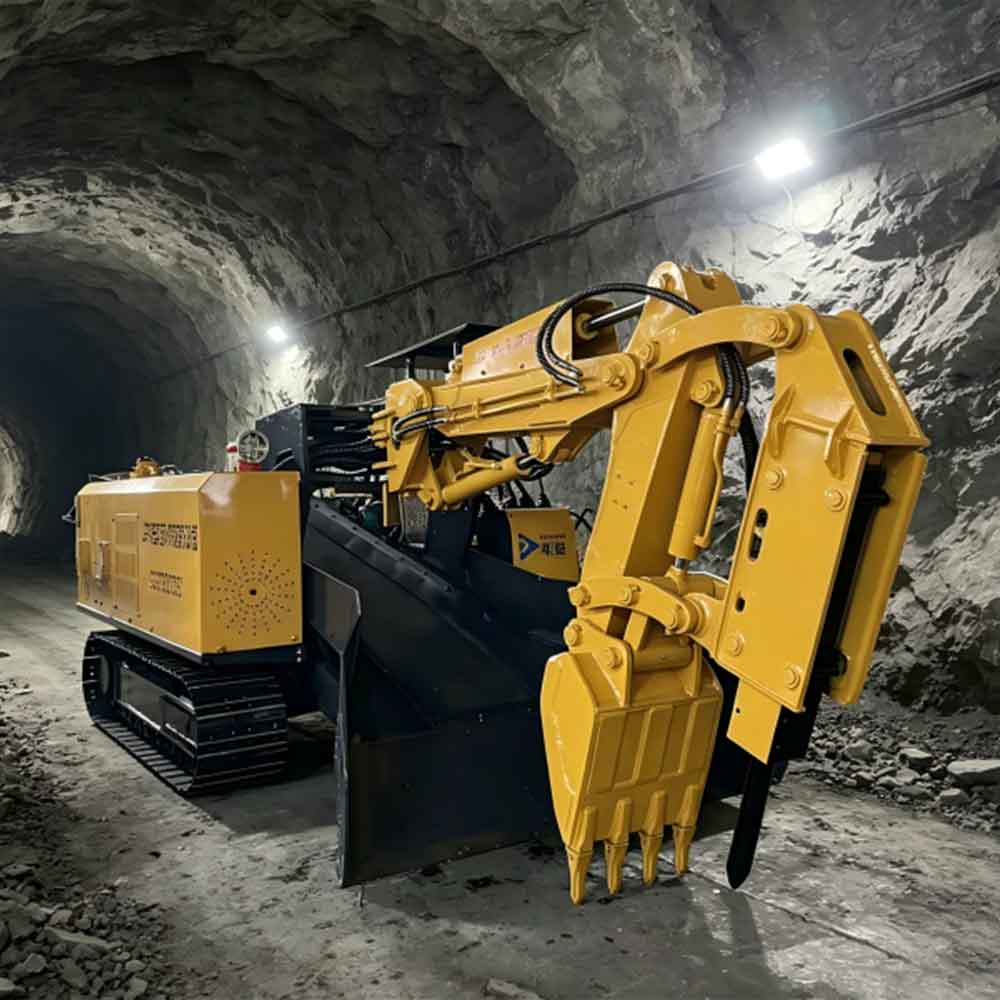
The next stage of coal mining machinery development is likely to focus less on individual intelligent features and more on integration.
Sensors already exist.
Remote controls already exist.
Condition monitoring already exists.
Machine diagnostics already exist.
The larger opportunity is making these technologies work together.
Condition monitoring may increasingly influence machine control. Instead of merely recording high load, equipment may adjust selected operating parameters when resistance changes.
Equipment coordination may also improve.
Excavation, loading and transportation machinery could share more operational information, helping mine management understand where material flow is slowing down.
Digital twins are another likely development.
Their practical value will depend on whether they can support maintenance and troubleshooting rather than simply provide a digital visualization of the machine.
Remote technical support may also become more useful.
Machine histories, fault records and operating trends can give technicians more information before they begin physical inspection.
Artificial intelligence will contribute to many of these developments, but AI itself should not become the objective.
The objective remains better equipment performance.
If a digital function cannot improve maintenance decisions, reduce avoidable downtime, support safer operation or help equipment work more effectively together, it adds complexity without enough operational value.
Conclusion
Coal mining machinery is becoming smarter in 2026 because underground equipment is becoming better at understanding and communicating its own operating condition.
Real-time monitoring gives operators more visibility into machinery performance. Early-warning systems make abnormal behavior easier to identify. Predictive maintenance allows teams to respond to equipment condition instead of relying only on fixed schedules. Remote operation can separate operators from selected working zones, while connected equipment creates new opportunities to improve the complete excavation, loading and haulage process.
However, intelligence does not replace good machinery engineering.
Structural reliability, hydraulic performance, suitable dimensions, maintainability and correct machine selection remain the foundation of underground productivity.
The most effective smart coal mining machinery combines those mechanical fundamentals with useful digital information.
For operators and equipment managers, that is the most practical definition of intelligence: machinery that helps people recognize problems earlier, understand operating conditions more clearly and make better decisions throughout the underground production process.
FAQ
What is smart coal mining machinery?
Smart coal mining machinery combines traditional mechanical systems with sensors, electronic controls, monitoring and communication technologies. These functions help operators understand equipment condition, identify abnormal behavior earlier and make more informed decisions about operation and maintenance.
How does predictive maintenance help coal mining machinery?
Predictive maintenance analyzes operating signals such as temperature, vibration, motor load and hydraulic pressure to identify developing equipment problems. It allows maintenance teams to inspect machinery based on actual condition instead of depending only on fixed service intervals or waiting for a failure.
Can coal mining machinery be operated remotely?
Many underground machines can incorporate remote or semi-remote operating functions. Remote control can reduce the need for operators to remain close to selected cutting, breaking or loading areas, but successful use also depends on reliable communication, clear camera coverage and effective emergency-control systems.
Is smart coal mining machinery suitable for narrow underground tunnels?
It can be, but machine dimensions remain critical. Intelligent monitoring and control cannot compensate for unsuitable height, width, turning radius or ground clearance. Equipment should first match the tunnel geometry, then smart systems can support more consistent operation and equipment-condition management.
What should I consider when choosing smart coal mining machinery?
Evaluate mechanical reliability, machine dimensions, hydraulic performance, monitored parameters, diagnostic functions, remote-control capability, maintenance accessibility and compatibility with other equipment. The best system is one that fits the underground conditions and supports practical operating decisions.